CM Yogi Orders Open Jail Plan, List of Vulnerable Inmates
Synopsis
Chief Minister Yogi Adityanath has directed UP officials to draft an open-jail action plan, list vulnerable inmates including the elderly and women with children, and fast-track multi-storey jail construction to ease chronic prison overcrowding.
Key Takeaways
CM Yogi Adityanath has declared the open-jail concept useful and ordered a special action plan for its implementation in Uttar Pradesh .
Only professional criminals and mafia elements are to be kept in conventional jails; a reformative approach is directed for minor offences.
Officials must prepare lists of prisoners aged 75 and above , those with incurable diseases, women with children in custody, and undertrials unable to pay bail.
Time-bound completion of under-construction jail projects has been ordered to reduce overcrowding.
Multi-storey jail construction has been prioritised given land constraints in the densely populated state.
The directive aligns with India's Model Prison Manual 2016 and longstanding judicial directions on reducing undertrial numbers.
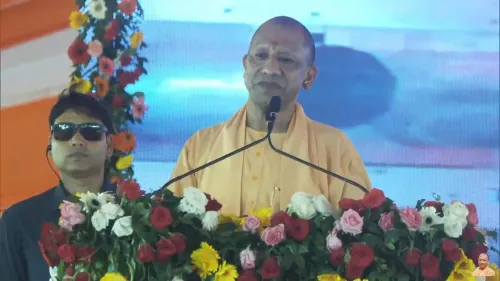
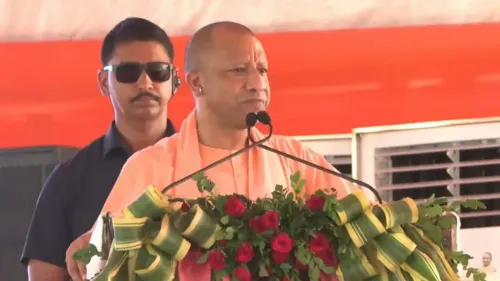
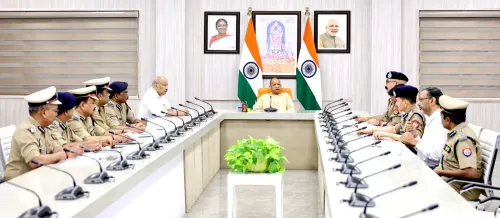
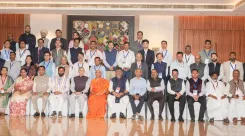
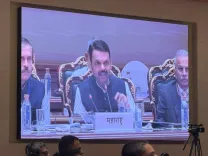
The Chief Minister's Office of Uttar Pradesh announced on Monday, 25 May 2026 that Chief Minister Yogi Adityanath has directed officials to prepare a special action plan for 'open jails' and ordered the listing of vulnerable prisoner categories — including the elderly, the terminally ill, women with children, and those unable to pay bail — as part of a broader push to reform the state's correctional system.
Context
Addressing prison officials, CM Yogi described the open-jail concept as useful, stating that 'केवल पेशेवर अपराधी और माफिया तत्वों को जेलों में रखने की आवश्यकता है' ('only professional criminals and mafia elements need to be kept in jails'), while minor offences should be handled through a reformative approach. He directed that lists be prepared of prisoners aged 75 years and above, inmates suffering from incurable diseases, women lodged in jail with their children, and undertrials who cannot deposit bail amounts.
The directive signals a deliberate bifurcation: hardened and organised criminals remain behind bars, while low-risk or vulnerable individuals are considered for alternative arrangements. This is consistent with CM Yogi's twin-track governance style — strict law enforcement against organised crime alongside rehabilitative measures for marginal offenders.
Policy Backdrop
India's Model Prison Manual 2016 had recommended open correctional facilities and differentiated treatment for habitual versus casual offenders, providing a national policy foundation for state-level experiments. Uttar Pradesh, which manages India's largest prison population, has periodically announced new jail construction since 2017 to address chronic overcrowding.
Open jails — where selected low-risk inmates are permitted to work and reside under limited supervision outside conventional prison walls — have been operational in states such as Rajasthan for decades. The UP government's move to formalise an action plan brings the state closer to mainstreaming this model. The Supreme Court of India has also issued directions over the years urging states to reduce undertrial populations, adding judicial weight to such reforms.
Stakeholders and Impact
The four categories identified by CM Yogi — elderly prisoners above 75, terminally ill inmates, women with children in custody, and those unable to furnish bail — represent among the most vulnerable segments of the prison population. Their identification is a precondition for any early-release, parole, or open-jail placement scheme.
For Uttar Pradesh's prison administration, the order also mandates time-bound completion of ongoing construction projects and prioritisation of multi-storey jail facilities to address decongestion. Land scarcity in a densely populated state makes vertical construction a practical necessity. Minor offenders and undertrial prisoners stand to benefit most directly from the reformative shift being signalled.
What's Next
Officials are now expected to compile the directed prisoner lists and present a special action plan for open jails to the Chief Minister's Office. The timeline for completing under-construction prison projects will be a key indicator of whether the decongestion drive translates into measurable relief. Advocates for prison reform will watch whether the open-jail framework is backed by dedicated infrastructure, staffing, and a legal framework for supervised release.
If implemented at scale, Uttar Pradesh's open-jail model could serve as a template for other large Indian states grappling with similar overcrowding and undertrial crises — placing the state at the centre of a national conversation on humane and efficient corrections policy.
Point of View
Cost-efficient corrections model. By explicitly ring-fencing mafia and professional criminals from low-risk inmates, the order provides political cover for what could otherwise be characterised as softness on crime. The focus on vulnerable categories — elderly, terminally ill, women with children, bail-unable undertrials — also pre-empts criticism by framing reform around humanitarian grounds rather than ideological ones. If the action plan is executed, it could redefine UP's prison governance and invite scrutiny of how quickly the state can move from directive to delivery.
NationPress
9 Oct 2026
Frequently Asked Questions
What is an open jail in India?
An open jail is a correctional facility where selected low-risk inmates are allowed to live and work under limited supervision outside conventional prison walls, focusing on rehabilitation rather than confinement. India's Model Prison Manual 2016 recommends this model, and states like Rajasthan have operated open prisons for decades.
Why did CM Yogi order an open jail plan for Uttar Pradesh?
CM Yogi described the open-jail concept as useful and directed a special action plan because UP's prisons are severely overcrowded. He stated that only professional criminals and mafia elements need conventional incarceration, while minor offenders should be handled through a reformative approach.
Which prisoners will be listed under CM Yogi's new directive?
Officials have been directed to list four categories: prisoners aged 75 years and above, inmates suffering from incurable diseases, women lodged in jail with their children, and undertrials who are unable to deposit their bail amounts.
How is UP addressing jail overcrowding?
CM Yogi has ordered time-bound completion of under-construction prison projects and prioritised the construction of multi-storey jails to maximise capacity within available land, alongside the open-jail initiative for low-risk inmates.
What is the Model Prison Manual 2016?
The Model Prison Manual 2016 is a central government document that provides guidelines for prison administration across India, recommending open correctional facilities and differentiated treatment for habitual versus first-time or casual offenders.