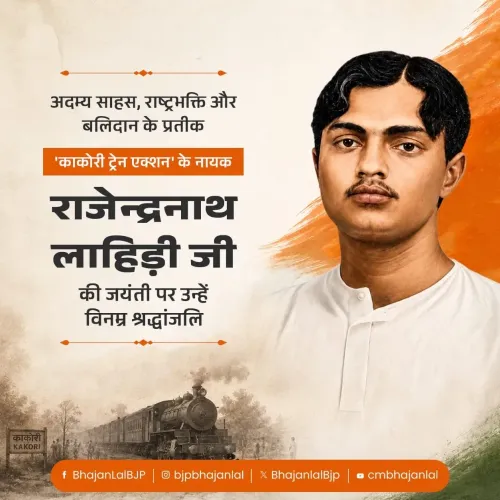
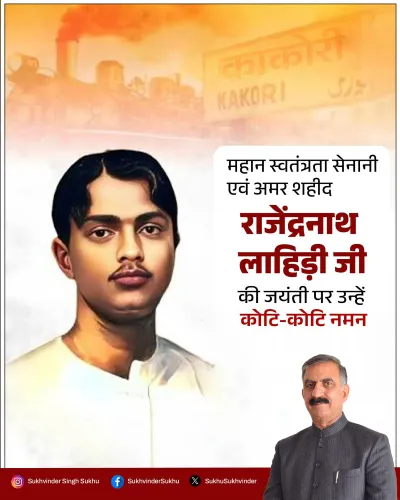
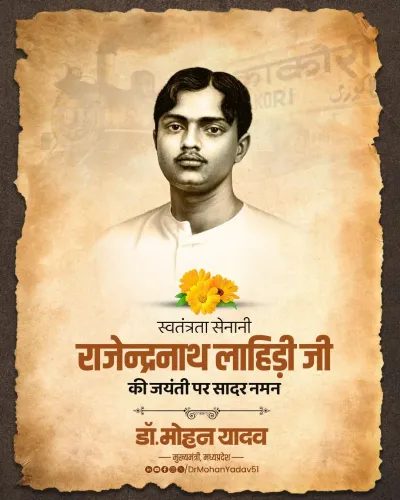
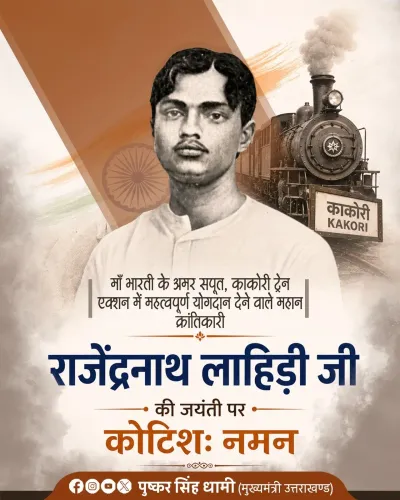
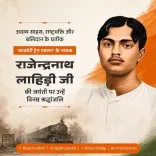
CM Yogi Pays Tribute to Kakori Hero Rajendranath Lahiri
Synopsis
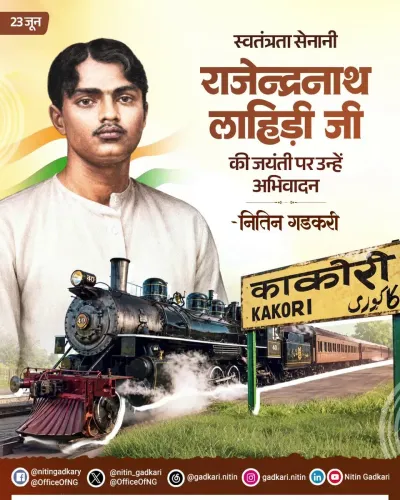
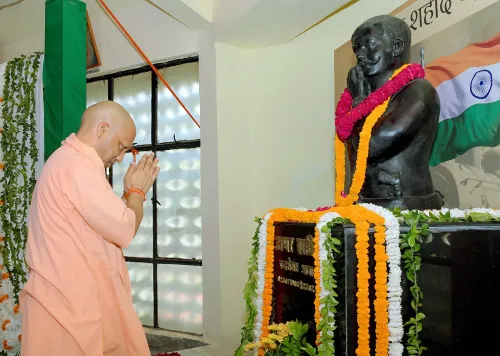
Uttar Pradesh Chief Minister Yogi Adityanath on 29 June 2026 honoured Rajendranath Lahiri — a key figure in the 1925 Kakori Train Action — on his birth anniversary, calling his sacrifice an enduring inspiration for India's youth to embrace patriotism and national service.
Key Takeaways
CM Yogi Adityanath paid tribute to revolutionary Rajendranath Lahiri on his birth anniversary, 29 June 2026 .
Lahiri was a leading member of the Hindustan Republican Association and a key figure in the Kakori Train Action of 9 August 1925 .
He was hanged on 17 December 1927 at Gonda Jail , Uttar Pradesh , becoming one of the youngest martyrs of India's independence movement.
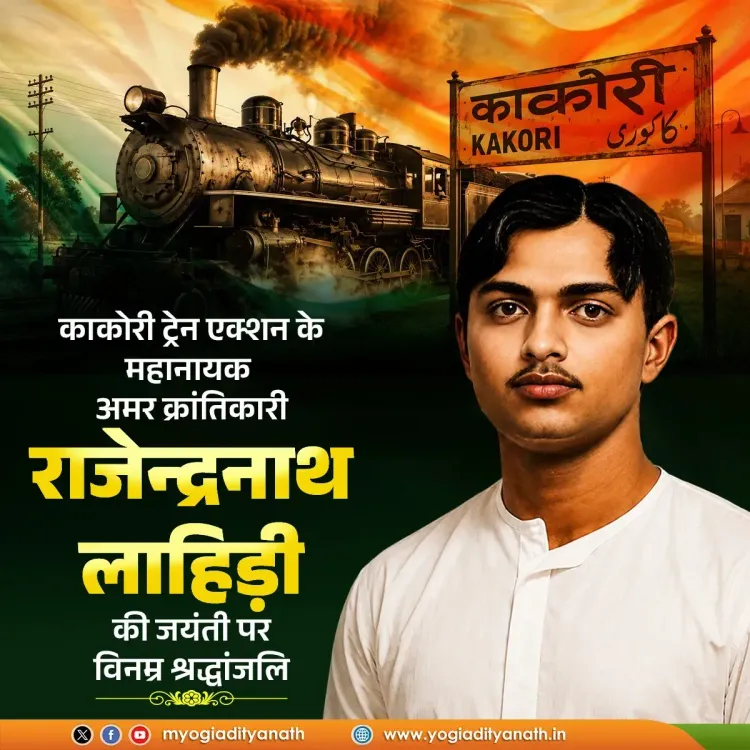
CM Yogi described Lahiri as an 'unwavering traveller on the path of revolution' and a 'Mahanayak' (great hero) of the Kakori action.
The Chief Minister stated Lahiri's supreme sacrifice will 'always inspire the nation's youth to walk the path of patriotism, sacrifice, and service to the nation.'
Uttar Pradesh Chief Minister Yogi Adityanath on Monday, 29 June 2026, paid homage to revolutionary freedom fighter Rajendranath Lahiri on his birth anniversary, honouring him as an unyielding hero of the Kakori Train Action and calling his supreme sacrifice an eternal inspiration for India's youth.
Context
In his post, CM Yogi described Lahiri as 'क्रांति पथ के अडिग राही' (an unwavering traveller on the path of revolution) and offered a humble tribute on his birth anniversary. He wrote that Lahiri's supreme sacrifice for the freedom of the motherland 'राष्ट्र के युवाओं को सदैव देशभक्ति, त्याग और राष्ट्रसेवा के मार्ग पर चलने हेतु प्रेरित करता रहेगा' — 'will always inspire the nation's youth to walk the path of patriotism, sacrifice, and service to the nation.'
Rajendranath Lahiri was born on 29 June 1901 in Bengal and became one of the most prominent members of the Hindustan Republican Association (HRA), the revolutionary organisation that planned and executed the historic Kakori Train Action of 9 August 1925.
Policy Backdrop
The Kakori Train Action — also widely known as the Kakori Conspiracy — involved a group of Indian revolutionaries stopping a train near Kakori in present-day Uttar Pradesh and seizing British government treasury funds, in a direct challenge to colonial rule. The act sent shockwaves through the British administration and led to widespread arrests of HRA members.
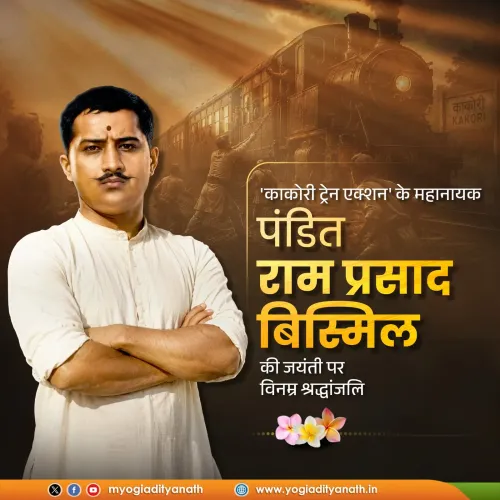
Lahiri was tried under the Kakori Conspiracy case and sentenced to death. He was hanged on 17 December 1927 at Gonda Jail, making him one of the youngest martyrs of the independence movement. His execution came two days before that of his comrades Ram Prasad Bismil, Ashfaqullah Khan, and Roshan Singh, reportedly at the British administration's insistence to prevent any organised protest.
Stakeholders and Impact
Tributes to Rajendranath Lahiri carry particular resonance in Uttar Pradesh, the state where the Kakori action took place and where the memory of the 1925 uprising is deeply embedded in local historical consciousness. CM Yogi's acknowledgement of Lahiri as a 'Mahanayak' (great hero) of the Kakori Train Action underscores the state government's continued emphasis on honouring pre-Independence revolutionary figures alongside Gandhian leaders.
For India's youth — a demographic the Chief Minister specifically addressed — such commemorations are positioned as moral and civic touchstones, linking the sacrifices of the freedom struggle to contemporary values of patriotism and national service.
What's Next
As India approaches the centenary of the Kakori Train Action in August 2025 — a milestone already marked with state-level commemorations — tributes to figures like Lahiri are expected to intensify in official and cultural spaces. Uttar Pradesh, as the site of the original action, is likely to remain at the centre of centenary observances, with the state government continuing to foreground the revolutionary strand of the freedom movement in public memory.
Point of View
Armed strand of the freedom movement — distinct from the Gandhian mainstream — in the state's official historical narrative. Uttar Pradesh's geographic connection to the Kakori action gives these tributes a local resonance that reinforces the BJP's broader project of reclaiming pre-Independence revolutionary icons. Addressing the tribute specifically to 'the nation's youth' signals that these commemorations are framed as civic pedagogy, not merely ceremonial remembrance. As the centenary of the Kakori Train Action recedes into recent memory, sustained official attention to figures like Lahiri suggests this historical strand will remain a live element of political culture in the state.
NationPress
29 Jun 2026
Frequently Asked Questions
Who was Rajendranath Lahiri?
Rajendranath Lahiri was a Bengali revolutionary freedom fighter born on 29 June 1901 and a prominent member of the Hindustan Republican Association. He played a key role in the Kakori Train Action of 1925 and was hanged on 17 December 1927 at Gonda Jail in Uttar Pradesh.
What was the Kakori Train Action?
The Kakori Train Action, carried out on 9 August 1925, was an operation by Indian revolutionaries of the Hindustan Republican Association who stopped a British government train near Kakori in present-day Uttar Pradesh and seized colonial treasury funds as an act of armed resistance against British rule.
Why did CM Yogi Adityanath pay tribute to Rajendranath Lahiri?
CM Yogi Adityanath paid tribute on 29 June 2026 to mark Lahiri's birth anniversary, honouring him as a hero of the Kakori Train Action and invoking his sacrifice as an inspiration for India's youth to pursue patriotism and national service.
When was Rajendranath Lahiri executed?
Rajendranath Lahiri was hanged on 17 December 1927 at Gonda Jail in Uttar Pradesh, two days before his fellow Kakori convicts Ram Prasad Bismil, Ashfaqullah Khan, and Roshan Singh were executed.
What is the significance of the Kakori Train Action for Uttar Pradesh?
The Kakori Train Action took place in present-day Uttar Pradesh in 1925, making the state the historical site of one of the most daring acts of armed resistance during India's independence movement. Uttar Pradesh has been central to commemorations of the event, including its centenary observances.