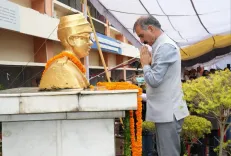
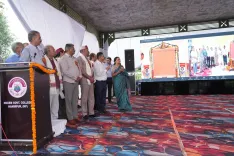
CM Yogi pays tribute to saint Paramahamsa Ramchandra Das Ji
Synopsis
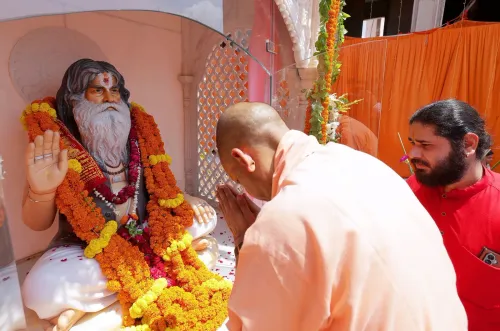
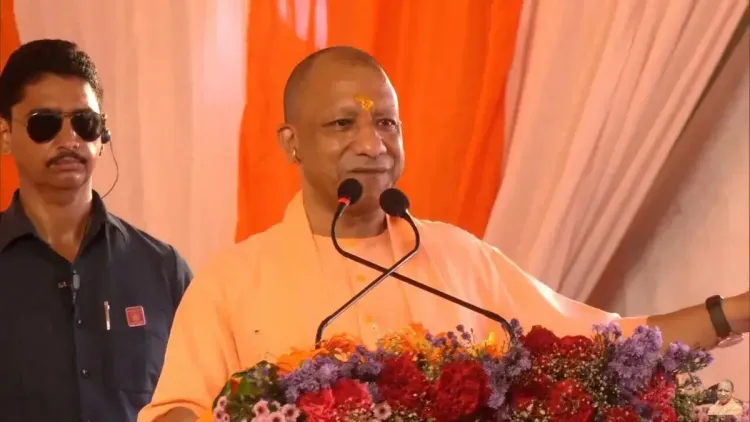
UP Chief Minister Yogi Adityanath paid tribute to Pujya Sant Paramahamsa Ramchandra Das Ji Maharaj on 14 August 2026, declaring that successive governments came and went but none could diminish the revered saint's enduring spiritual authority.
Key Takeaways
CM Yogi Adityanath posted a tribute to Pujya Sant Paramahamsa Ramchandra Das Ji Maharaj on 14 August 2026 .
The tribute states that no government across successive political eras could 'shake' the saint's standing or influence.
Yogi Adityanath is head of the Gorakhnath Math in Gorakhpur , a Nath monastic institution with deep roots in eastern Uttar Pradesh.
The post aligns with Yogi's consistent public emphasis on the continuity of Hindu religious heritage beyond political cycles.
The tribute was posted on the eve of Independence Day , amplifying its resonance about enduring pillars of Indian society.
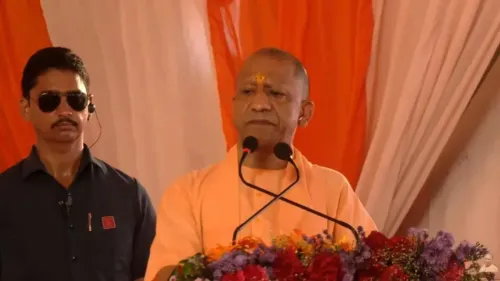
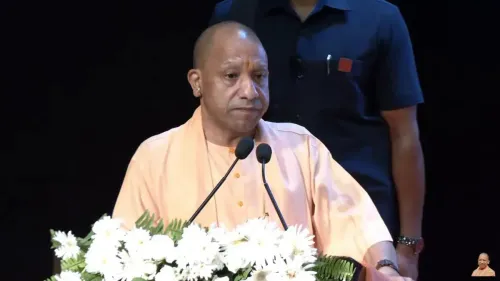
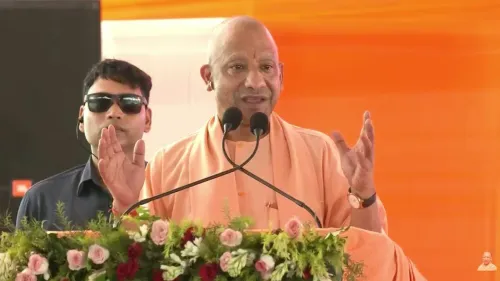
Across decades of shifting political power in Uttar Pradesh, one constant endured — the unshaken spiritual authority of Pujya Sant Paramahamsa Ramchandra Das Ji Maharaj. On Friday, 14 August 2026, Uttar Pradesh Chief Minister Yogi Adityanath invoked that legacy in a tribute post on X, drawing a sharp line between the impermanence of governments and the permanence of sainthood.
In his words: 'Sarkaarein aayin-gayin, lekin koi sarkaar Pujya Sant Paramahamsa Ramchandra Das Ji Maharaj ko diga nahi saki' — 'Governments came and went, but no government could shake Pujya Sant Paramahamsa Ramchandra Das Ji Maharaj.'
A saint beyond the reach of political cycles
The tribute frames the saint's legacy not merely as religious but as structurally resistant to political pressure — a pointed observation from a sitting Chief Minister who is himself the head of the Gorakhnath Math, the historic Nath monastic institution in Gorakhpur that has shaped eastern Uttar Pradesh's religious and political landscape for centuries.
Yogi Adityanath has consistently used his public platform to assert that the influence of Hindu saints and monastic figures outlasts electoral cycles. This tribute fits squarely within that pattern — positioning spiritual authority as a force that transcends the ordinary churn of governance.
Gorakhnath Math's long shadow over UP politics
The Gorakhnath Math is not a passive religious institution. Its mahants have historically commanded deep loyalty across caste lines in eastern Uttar Pradesh, and Yogi Adityanath's own political identity is inseparable from it. When the Chief Minister speaks of a saint whom 'no government could shake,' he speaks from inside a tradition that has itself weathered multiple political eras.
The tribute, posted on the eve of Independence Day, carries an additional resonance — a reminder, implicit but unmistakable, that certain pillars of society stood firm even through the turbulence of pre- and post-independence governance.
Devotees and religious communities associated with the Nath tradition are likely to receive the tribute as an affirmation of their heritage's durability. The Gorakhnath Math and affiliated monastic institutions may echo the sentiment in the days ahead.
In a political landscape where legacies are routinely contested and rewritten, Yogi Adityanath's message is blunt: saints endure. Governments do not.
Point of View
The statement reinforces a dual legitimacy that conventional politicians cannot claim. It also subtly positions the Nath monastic tradition, and by extension Gorakhnath Math, as an institution whose credibility no ruling dispensation — past or present — could erode. On the eve of Independence Day, the timing sharpens the message: some foundations of Indian public life predate, and will outlast, any government.
NationPress
14 Aug 2026
Frequently Asked Questions
Who is Pujya Sant Paramahamsa Ramchandra Das Ji Maharaj?
Pujya Sant Paramahamsa Ramchandra Das Ji Maharaj is a revered Hindu saint honoured by Uttar Pradesh Chief Minister Yogi Adityanath in a tribute posted on 14 August 2026. Specific biographical details about the saint are not independently verified in available records.
Why did CM Yogi Adityanath post this tribute?
CM Yogi Adityanath posted the tribute to honour the enduring spiritual legacy of Paramahamsa Ramchandra Das Ji Maharaj, asserting that the saint's influence remained unshaken across successive state governments.
What is the Gorakhnath Math and its connection to CM Yogi?
The Gorakhnath Math is a historic Nath monastic institution based in Gorakhpur, eastern Uttar Pradesh. Yogi Adityanath serves as its head mahant, a role that is central to his public identity alongside his position as Chief Minister.
What did CM Yogi say in his tribute post?
CM Yogi wrote in Hindi that 'governments came and went, but no government could shake Pujya Sant Paramahamsa Ramchandra Das Ji Maharaj' — emphasising the saint's unassailable spiritual standing across political eras.
When did CM Yogi post this tribute?
The tribute was posted on Friday, 14 August 2026 , the eve of India's Independence Day.