CM Yogi Marks Children's Day with Child Safety Pledge
Synopsis
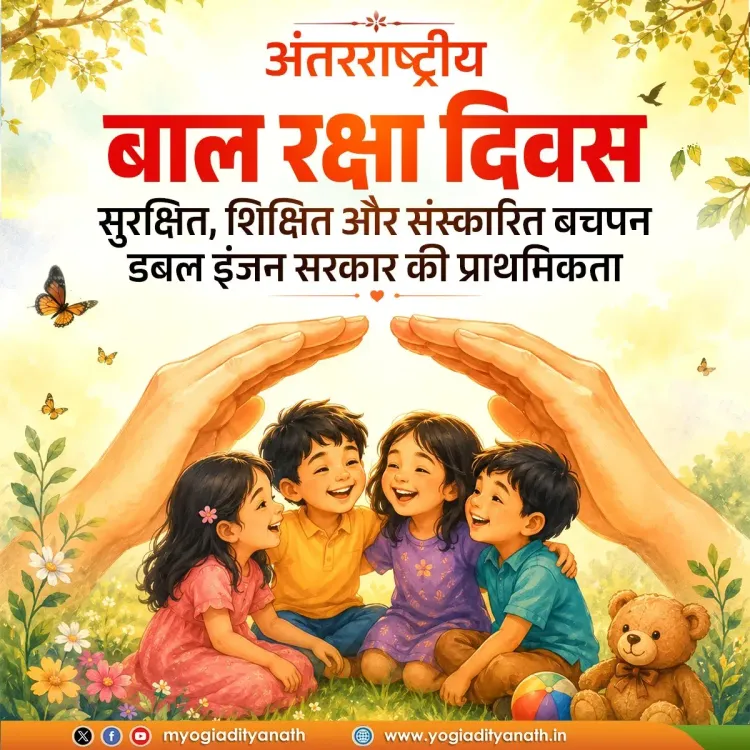
On International Child Protection Day, Uttar Pradesh CM Yogi Adityanath declared child safety, education and a fear-free environment the top priority of the double engine government, urging citizens to recommit to children's rights, health and protection.
Key Takeaways
CM Yogi Adityanath posted on June 1, 2026 , marking International Child Protection Day .
He described ensuring children are 'safe, educated, cultured and able to shape their dreams in a fear-free environment' as the top priority of the double engine government.
The post called on citizens to pledge fulfilment of responsibilities towards children's rights, education, health and protection .
The 'double engine government' framing refers to simultaneous BJP rule at the Centre and in Uttar Pradesh , enabling coordinated policy delivery.
Key national policy anchors include the POCSO Act (2012) and the Beti Bachao Beti Padhao scheme launched in 2015 .
Upcoming UP child welfare and education budget allocations will be watched for concrete follow-through on these commitments.
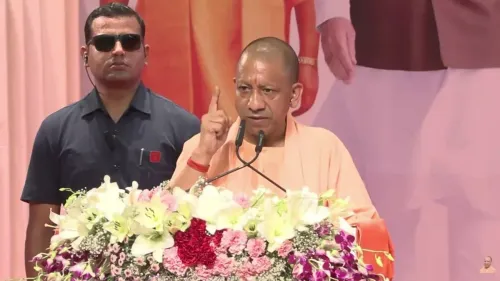
Uttar Pradesh Chief Minister Yogi Adityanath on Monday, June 1, 2026, marked the occasion of International Child Protection Day by calling for a renewed commitment to children's rights, education, health and safety, describing child welfare as the top priority of the 'double engine government.'
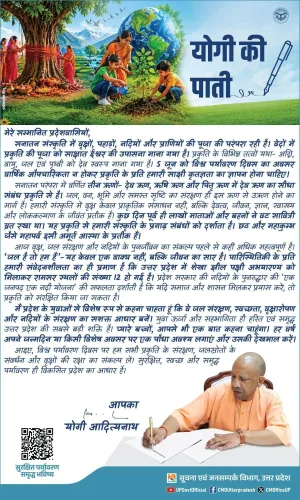
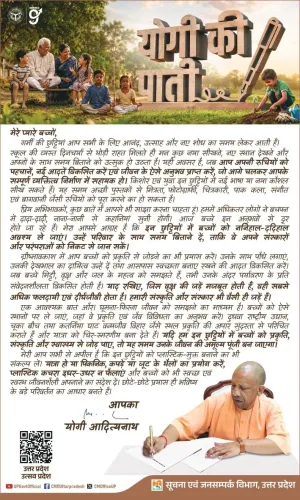
In a post on X, CM Yogi wrote: 'बच्चे सुरक्षित, शिक्षित, संस्कारित हों और भयमुक्त वातावरण में अपने सपनों को आकार दे सकें, यह डबल इंजन सरकार की शीर्ष प्राथमिकता है।' ['Children should be safe, educated, and cultured, and should be able to shape their dreams in a fear-free environment — this is the top priority of the double engine government.'] He urged citizens to take a pledge to fulfil their responsibilities towards children's rights, education, health and protection.
Context
International Child Protection Day, observed on June 1, is marked globally as a call to action on the safety and well-being of children. CM Yogi's message positions Uttar Pradesh — India's most populous state — as actively aligned with these international obligations at both the state and national level.
The reference to a 'fear-free environment' (bhaymukt vatavaran) echoes a phrase the BJP-led Uttar Pradesh government has repeatedly used in the context of law-and-order reforms since 2017, now extended explicitly to the domain of child welfare.
Policy Backdrop
Child protection in India is anchored by the Protection of Children from Sexual Offences (POCSO) Act, 2012, which strengthened legal safeguards for minors and mandated fast-track courts for such cases. State-level enforcement of POCSO provisions, including case disposal rates, remains a key metric watched by child rights advocates.
At the national level, the Beti Bachao Beti Padhao scheme, launched in 2015, has sought to address the child sex ratio and promote girls' education and safety across states including Uttar Pradesh. The 'double engine government' framing — simultaneous BJP rule at the Centre and in the state — is invoked to signal coordinated delivery of such central schemes through state machinery.
Stakeholders and Impact
The primary stakeholders are Uttar Pradesh's children, parents and school systems, in a state that accounts for a significant share of India's child population. Commitments made on platforms such as this are watched by child rights organisations and opposition parties for corresponding budgetary and administrative follow-through.
The emphasis on 'sanskar' (values and moral upbringing) alongside safety and education reflects the BJP's consistent framing of child-centric governance as encompassing both material welfare and cultural formation — a combination that appeals to its core voter base while also addressing universal welfare benchmarks.
What's Next
Attention will now turn to Uttar Pradesh's next annual child welfare and education budget allocations, as well as any state-level review of POCSO case disposal rates, which would give concrete shape to the commitments articulated on this occasion. Advocates and policymakers will watch whether the International Child Protection Day messaging translates into measurable administrative action in the months ahead.
Point of View
Keeping it aspirational rather than accountable — a pattern consistent with social-media governance communication ahead of budget cycles. Observers will gauge its seriousness by whether it is followed by measurable moves on POCSO case disposal or child welfare spending in Uttar Pradesh.
NationPress
16 Oct 2026
Frequently Asked Questions
What did CM Yogi say on International Child Protection Day 2026?
CM Yogi Adityanath posted on June 1, 2026, stating that ensuring children are safe, educated, cultured and able to pursue their dreams in a fear-free environment is the top priority of the double engine government, and urged citizens to pledge their commitment to children's rights, education, health and safety.
What is the 'double engine government' in the context of child welfare?
The 'double engine government' refers to simultaneous BJP rule at both the Centre and in Uttar Pradesh, which the party argues enables faster and more coordinated delivery of welfare schemes — including those targeting child safety and education such as POCSO enforcement and Beti Bachao Beti Padhao.
What is the POCSO Act and how does it relate to UP?
The Protection of Children from Sexual Offences (POCSO) Act, passed in 2012, provides strong legal safeguards for minors and mandates fast-track courts. Uttar Pradesh, as India's most populous state, is a key jurisdiction for POCSO implementation, and case disposal rates there are closely monitored by child rights advocates.
What is Beti Bachao Beti Padhao and its relevance to Uttar Pradesh?
Beti Bachao Beti Padhao is a national scheme launched in 2015 aimed at improving the child sex ratio and promoting girls' education and safety. Uttar Pradesh is one of the major states where the scheme has been implemented, and its progress is a marker of the state government's child welfare record.
What should we watch for after CM Yogi's child protection pledge?
Key indicators to watch include Uttar Pradesh's next annual child welfare and education budget allocations, state-level POCSO case disposal rates, and any new administrative directives issued by the UP government translating the International Child Protection Day commitment into concrete policy action.