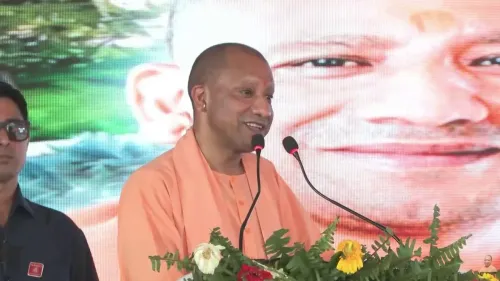
CM Yogi marks International Tiger Day, pledges conservation
Synopsis
On International Tiger Day, Uttar Pradesh CM Yogi Adityanath greeted conservationists and reaffirmed the 'double engine government's' commitment to protecting India's national animal, citing the tiger as a symbol of the country's biodiversity and natural heritage.
Key Takeaways
CM Yogi Adityanath posted on International Tiger Day, 29 July 2026 , greeting nature lovers and wildlife conservationists.
He described the tiger as a symbol of India's 'rich forest wealth, biodiversity, and natural heritage.' He invoked the BJP's 'double engine government' framing to signal coordinated central-state commitment to tiger conservation.
Uttar Pradesh hosts the Dudhwa Tiger Reserve , a key protected habitat under the central Project Tiger scheme launched in 1973 .
The National Tiger Conservation Authority (NTCA) periodically conducts all-India tiger estimations that benchmark conservation progress.
Every year on 29 July, the world pauses to reckon with one of nature's most iconic survivors — and Uttar Pradesh Chief Minister Yogi Adityanath used International Tiger Day 2026 to reaffirm his government's commitment to protecting India's national animal.
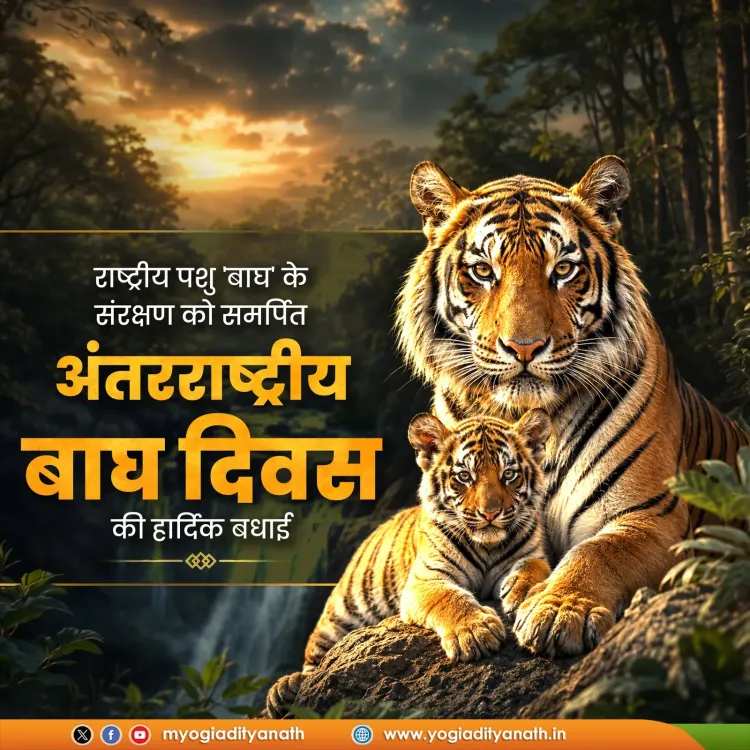
In a post on X, CM Yogi extended greetings to nature lovers and wildlife conservationists, calling the tiger 'हमारी समृद्ध वन संपदा, जैव विविधता और प्राकृतिक विरासत का गौरवशाली प्रतीक' — 'a proud symbol of our rich forest wealth, biodiversity, and natural heritage.' He described the tiger as a 'living embodiment of courage and strength' and called on citizens to collectively resolve to protect this 'priceless natural legacy.'
The 'double engine' promise on wildlife
CM Yogi invoked the BJP's signature 'double engine government' framing — signalling coordinated action between the Uttar Pradesh state administration and the central government in New Delhi — to underline his administration's commitment to tiger conservation. The phrase has become a recurring shorthand in BJP political communication for central-state policy alignment, applied here to the environmental domain.
Uttar Pradesh is home to the Dudhwa Tiger Reserve, one of India's significant protected habitats for the Bengal tiger, located along the Nepal border in the Terai belt. The reserve falls under the ambit of Project Tiger, the landmark central scheme launched in 1973 that established a network of dedicated tiger reserves across the country and is widely credited with pulling the species back from the brink of extinction.
Why 29 July matters for India's tigers
International Tiger Day was established to raise global awareness about tiger conservation and the urgent need to protect natural habitats. India holds the world's largest wild tiger population and periodic all-India tiger estimations — conducted by the National Tiger Conservation Authority (NTCA) — have become benchmark exercises watched closely by global conservation bodies.
Indian political leaders across parties routinely mark the day with statements, but the attention also serves a practical function: it keeps public and policy focus on reserve management, anti-poaching enforcement, and habitat corridor protection — issues that wildlife conservationists argue require sustained, not seasonal, attention.
With the next All-India Tiger Estimation report from the NTCA anticipated, statements like CM Yogi's signal that state governments are expected to account for their role in the broader national conservation picture. For Dudhwa and Uttar Pradesh's forest corridors, that accountability is more than ceremonial.
Point of View
Positioning environmental stewardship as a governance achievement rather than a standalone gesture. With the NTCA's next tiger estimation on the horizon, state-level commitments like this will face scrutiny against actual reserve management outcomes. For Uttar Pradesh, where Dudhwa's health is a measurable indicator, the rhetoric sets a benchmark the administration will eventually have to answer to.
NationPress
13 Sept 2026
Frequently Asked Questions
When is International Tiger Day celebrated?
International Tiger Day is observed every year on 29 July to raise global awareness about tiger conservation and the protection of natural habitats.
What did CM Yogi Adityanath say on International Tiger Day 2026?
CM Yogi greeted nature lovers and wildlife conservationists, called the tiger a proud symbol of India's biodiversity and natural heritage, and pledged that the 'double engine government' is fully committed to its conservation.
Which tiger reserve is in Uttar Pradesh?
Dudhwa Tiger Reserve , located in the Terai belt along the Nepal border, is Uttar Pradesh's principal tiger reserve and is part of India's Project Tiger network.
What is Project Tiger in India?
Project Tiger is a central government scheme launched in 1973 to conserve tigers in designated reserves across India. It is widely credited with reversing the decline of the Bengal tiger population.
What is the National Tiger Conservation Authority?
The National Tiger Conservation Authority (NTCA) is the central body responsible for overseeing tiger reserves, enforcing conservation standards, and conducting periodic all-India tiger population estimations.