CM Yogi Flags UP's Rural Connectivity, Power and Irrigation Push
Synopsis
Chief Minister Yogi Adityanath's office says Uttar Pradesh is simultaneously expanding village road connectivity, ensuring uninterrupted electricity and delivering irrigation water to every farm — a three-pillar rural agenda the state has pursued consistently since 2017.
Key Takeaways
The Chief Minister's Office of Uttar Pradesh posted on 7 August 2026 citing CM Yogi Adityanath's statement on rural development.
The government says every village in Uttar Pradesh is being linked with better road connectivity.
Seamless and robust electricity supply is being ensured across rural areas, building on the Saubhagya electrification scheme.
Adequate irrigation water is being made available to every farm field through canal modernisation and micro-irrigation works.
The three-pillar approach — connectivity, power, water — has been a consistent feature of state budgets and rural policy reviews since 2017 .
Updated village-coverage and irrigation figures are expected in the next rural development department progress report.
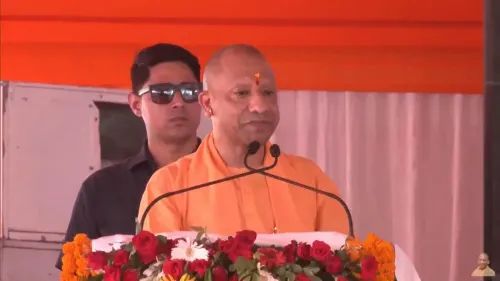
Villages across Uttar Pradesh are being stitched into the modern economy — one road, one power line, one irrigation channel at a time. The Chief Minister's Office of Uttar Pradesh posted on X on 7 August 2026, sharing a statement from Chief Minister Yogi Adityanath that frames rural connectivity, uninterrupted electricity and farm-level irrigation as the three simultaneous pillars of the state's development drive.
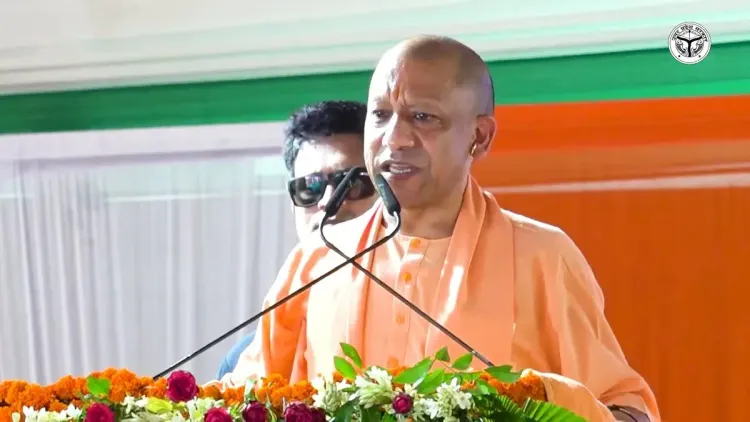
In the post, CM Yogi Adityanath stated: 'Today, every village in Uttar Pradesh is being connected with better connectivity. Seamless and robust electricity supply is being ensured. Adequate water for irrigation is being made available to every field.'
Three pillars, one rural vision
The statement is not accidental in its grouping. Since 2017, the Yogi Adityanath government has consistently presented rural roads, reliable power and irrigation as an inseparable triad — a package deal for the state's roughly 97,000 revenue villages. Roads move produce to markets. Electricity keeps pump-sets running after dark. Water determines whether a crop survives a dry spell. Pull any one leg away and the stool falls. On connectivity, the state built on the national Pradhan Mantri Gram Sadak Yojana framework, extending all-weather road links to unconnected habitations. On power, Uttar Pradesh joined the national Saubhagya scheme from 2017 to drive near-universal household electrification, then layered on feeder-separation projects and 24-hour rural power supply initiatives to move beyond mere connection to actual reliability — a distinction that matters enormously to farmers running irrigation pumps.Irrigation: the field-level frontier
Water is where the policy detail gets granular. State irrigation policy after 2017 prioritised minor irrigation works, canal modernisation and micro-irrigation schemes — drip and sprinkler systems — aimed at expanding the irrigated area district by district. The logic: Uttar Pradesh is India's most populous state and one of its largest agricultural producers, yet large swathes of its farmland historically depended on erratic monsoon rains. Closing that gap directly lifts farm income and reduces the distress migration that has long drained rural communities. The three-point framing in Tuesday's post echoes language that has appeared repeatedly in state budgets and annual rural development reviews since 2017 — a signal that the government views this as an ongoing, measurable agenda rather than a one-off announcement. The next hard test will come with the release of the Uttar Pradesh rural development department's progress report, where updated village-coverage figures and irrigation-potential-created data will reveal how far the on-ground reality has caught up with the policy ambition. Until then, the Chief Minister's message is clear: the infrastructure of rural life — the road outside the door, the light after sunset, the water in the field — is the government's declared priority, and it intends to be held to it.Point of View
Electricity and irrigation into a single statement, the government signals that it views these as interdependent outputs, not siloed schemes. For Uttar Pradesh — a state where agricultural distress and rural-to-urban migration have been chronic political vulnerabilities — demonstrable progress on all three fronts would carry significant electoral weight. The real accountability moment, however, lies in the next round of official data, where coverage claims must be matched against ground-level delivery.
NationPress
22 Sept 2026
Frequently Asked Questions
What did CM Yogi Adityanath say about Uttar Pradesh villages?
CM Yogi Adityanath stated that every village in Uttar Pradesh is being connected with better road connectivity, seamless electricity supply is being ensured, and adequate irrigation water is being made available to every farm field.
What is the Saubhagya scheme and how does it relate to UP?
Saubhagya was a national scheme launched in 2017 to achieve near-universal household electrification. Uttar Pradesh participated from the outset and subsequently added feeder-separation and 24-hour rural power supply initiatives to improve reliability beyond basic connection.
What irrigation steps has the UP government taken for farmers?
Since 2017 , the Uttar Pradesh government has prioritised minor irrigation works, canal modernisation and micro-irrigation schemes such as drip and sprinkler systems to expand the irrigated area across districts.
What is Pradhan Mantri Gram Sadak Yojana and its role in UP villages?
Pradhan Mantri Gram Sadak Yojana is a national programme to provide all-weather road links to unconnected rural habitations. Uttar Pradesh built on this framework after 2017 to extend connectivity to its roughly 97,000 revenue villages.
Why does UP focus on roads, electricity and irrigation together?
The three elements are interdependent: roads move farm produce to markets, electricity powers irrigation pump-sets and keeps rural households functional, and water determines crop survival. The Yogi Adityanath government has treated them as a single package since 2017 because progress on one without the others delivers limited agricultural or economic benefit.