CM Yogi Orders Stamp Dept Overhaul on Passport Seva Lines
Synopsis
Chief Minister Yogi Adityanath on 8 June 2026 reviewed Uttar Pradesh's Stamp and Registration Department in Lucknow and ordered registry offices to be rebuilt on Passport Seva Kendra lines — transparent, technology-driven, and citizen-centric — to match the state's fast-growing economy and rising investment activity.
Key Takeaways
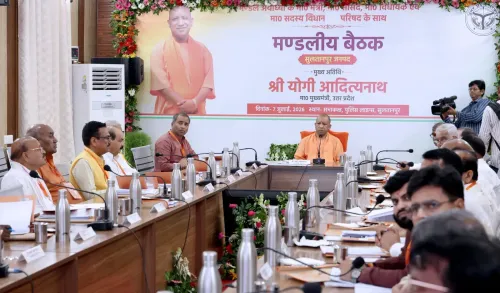
CM Yogi Adityanath chaired a review of the Stamp and Registration Department in Lucknow on 8 June 2026 .
He directed the department to be made more transparent, technology-based, accountable, and public-convenience oriented.
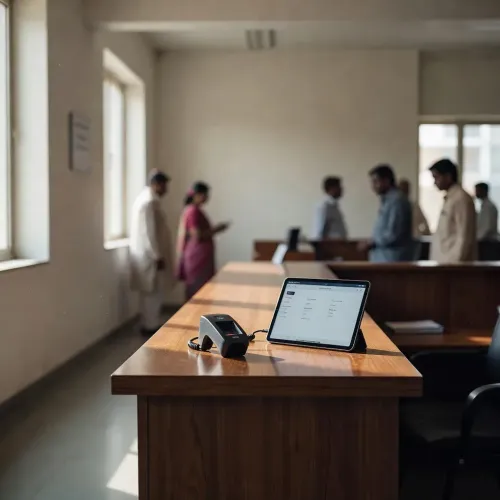
Registry offices are to be developed on the lines of Passport Seva Kendras for better citizen service delivery.
The reform is aimed at matching Uttar Pradesh's rapidly growing economy, investment activity, and urbanisation needs.
The move builds on earlier national programmes — NLRMP (2008) and Digital India (2015) — that laid the groundwork for digitised land records and e-stamping.
Key beneficiaries include property buyers, real estate investors, and urban citizens who regularly use registry office services.
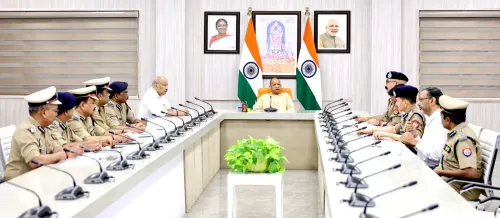
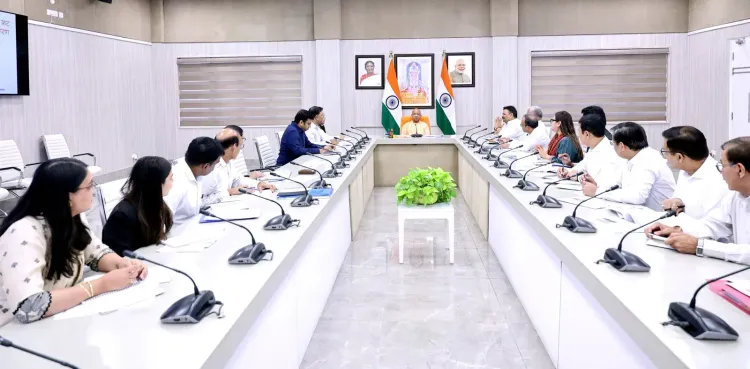
The Chief Minister's Office of Uttar Pradesh announced on Monday, 8 June 2026 that Chief Minister Yogi Adityanath chaired a review of the Stamp and Registration Department in Lucknow, directing a comprehensive modernisation of the department to align with the state's expanding economy, rising investment activity, and rapid urbanisation.
In the review meeting, CM Yogi stated — 'रजिस्ट्री कार्यालय आमजन के प्रत्यक्ष संपर्क वाले कार्यालय हैं' ['Registry offices are offices in direct contact with ordinary citizens'] — and accordingly instructed that their systems must be made modern, organised, and citizen-centric. He called for the department to be made 'more transparent, technology-based, accountable, and public-convenience oriented' in keeping with the state's growth trajectory.
Context
CM Yogi specifically directed that registry offices across Uttar Pradesh be developed on the lines of Passport Seva Kendras — the nationwide citizen service centres run by the Ministry of External Affairs — so that residents receive a markedly improved service experience. Passport Seva Kendras are widely regarded as a benchmark for efficient, queue-managed, and technology-enabled public delivery in India.
The directive places the Stamp and Registration Department at the centre of the state's broader push to reduce physical interface in citizen services and cut opportunities for procedural delays. Registry offices handle property document registration, stamp duty collection, and land records — services that touch millions of ordinary citizens and investors every year.
Policy Backdrop
The review builds on a long chain of digitisation efforts in Uttar Pradesh's revenue administration. The National Land Records Modernization Programme (NLRMP), launched in 2008, set the groundwork for computerising land records and registration workflows across Indian states, including Uttar Pradesh.
The Digital India programme, announced in 2015, gave fresh impetus to online property registration and e-stamping systems in the state. CM Yogi Adityanath, who has led the state since 2017, has overseen multiple rounds of administrative and revenue department reforms aimed at improving ease of doing business rankings and investor confidence.
Stakeholders and Impact
The immediate beneficiaries of the proposed overhaul are property buyers, real estate investors, and urban citizens who interact with registry offices for property transactions. Uttar Pradesh has seen sustained growth in investment inflows and urban expansion, making the efficiency of registration infrastructure increasingly critical to economic activity.
For the real estate and construction sectors — both significant contributors to the state's GDP — a Passport Seva Kendra-style upgrade would mean predictable appointment systems, reduced wait times, and standardised documentation processes. The shift also aligns with national priorities around formalising property markets and reducing litigation over land records.
What's Next
The immediate focus will be on whether the state government issues follow-up orders covering technology procurement, staffing norms, and a timeline for pilot modernised registry offices. Observers will watch for the selection of pilot districts and any budget allocation for infrastructure upgrades.
If the Passport Seva Kendra model is adopted at scale, it could set a template for other high-growth states seeking to streamline stamp duty and registry workflows — reinforcing Uttar Pradesh's positioning as a reform-oriented state in national ease-of-doing-business assessments.
Point of View
Nationally recognised benchmark to what is otherwise a procedural administrative reform. By framing the overhaul in terms of citizen convenience rather than revenue efficiency, the government signals that the reform is aimed at the electorate as much as at investors. The instruction fits a consistent pattern in Uttar Pradesh of deploying technology-and-transparency rhetoric to signal administrative seriousness ahead of investment summits and ease-of-doing-business assessments. Whether the directive translates into funded, time-bound implementation or remains an aspirational instruction will determine its real policy weight.
NationPress
23 Oct 2026
Frequently Asked Questions
What did CM Yogi say about UP registry offices?
CM Yogi Adityanath directed that registry offices in Uttar Pradesh be developed on the lines of Passport Seva Kendras, making them modern, organised, transparent, technology-based, and citizen-centric.
What is the Passport Seva Kendra model for registry offices?
Passport Seva Kendras are efficient, appointment-based citizen service centres run by the Ministry of External Affairs. CM Yogi has proposed using this model to upgrade UP's registry offices with better queue management, digital processes, and standardised service delivery.
Why is UP reforming its Stamp and Registration Department?
The reform is aimed at aligning the department with Uttar Pradesh's fast-growing economy, rising investment activity, and rapid urbanisation, while reducing procedural delays and physical interface for citizens.
Which citizens will benefit from UP registry office modernisation?
Property buyers, real estate investors, and urban citizens who use registry offices for property transactions will be the primary beneficiaries of the proposed overhaul.
What is the background of land records digitisation in Uttar Pradesh?
UP has been digitising land records since the National Land Records Modernization Programme launched in 2008, with further acceleration under the Digital India programme from 2015 onwards.