CM Yogi Directs UP Stamp Dept to Fast-Track AI, Paperless Registration

Synopsis
Chief Minister Yogi Adityanath has directed Uttar Pradesh's Stamp and Registration Department to fast-track AI-based workflows, paperless registration, geo-tagging, and Aadhaar-biometric verification for property and marriage registrations, reinforcing the state's push for transparent, technology-driven revenue administration.
Key Takeaways
CM Yogi Adityanath issued directives to the Stamp and Registration Department on 8 June 2026 .
The department is to strengthen Aadhaar authentication , biometric and iris-based verification, and online document verification.
Khatauni-based digital scrutiny will link land records directly to the registration process to flag disputes upfront.
A fully paperless registration system and digitisation of all records were ordered for rapid rollout.
AI-based workflows and geo-tagging of registered properties are to be implemented at pace.
The Chief Minister stressed that citizen satisfaction and service quality must accompany revenue growth targets.
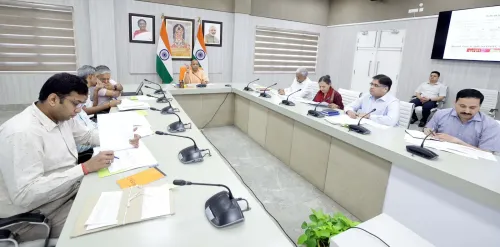
The Chief Minister's Office of Uttar Pradesh on Monday, 8 June 2026 announced that Chief Minister Yogi Adityanath has directed the Stamp and Registration Department to accelerate digitisation, deploy artificial intelligence, and strengthen Aadhaar-based verification across property and marriage registration services in the state.
Context
The Chief Minister described the Stamp and Registration Department as 'rajya ki rajasva vyavastha ka mahatvapurna aadhar' — 'an important pillar of the state's revenue system' — and stressed that revenue growth must be pursued alongside service quality and citizen satisfaction. He instructed officials to reinforce systems including Aadhaar authentication, biometric and iris-based verification, online document verification, and khatauni-based (land-record-linked) digital scrutiny for property and marriage registrations.
He further directed the rapid implementation of a paperless registration system, digitisation of records, AI-based workflows, and geo-tagging of registered properties.
Policy Backdrop
The directives build on India's Digital India programme, launched in 2015, which mandated paperless service delivery across states, and the National Land Records Modernization Programme initiated in 2008 to computerise land records and reduce disputes. Uttar Pradesh, India's most populous state, has progressively integrated digital tools into its revenue administration since Yogi Adityanath assumed office in 2017.
States such as Maharashtra and Karnataka have already implemented Aadhaar-linked and geo-tagged registration systems over the past decade, and UP's push reflects a broader national pattern of leveraging technology to curb fraud and improve revenue transparency.
Stakeholders and Impact
The reforms directly affect property owners, citizens registering marriages, and revenue department officials across Uttar Pradesh. A paperless, biometric-verified registration process is expected to reduce opportunities for document fraud, cut processing time at sub-registrar offices, and improve the ease of doing business ranking for the state.
Khatauni-based digital scrutiny — linking land-record extracts to the registration process — is designed to flag encumbrances or ownership disputes at the point of registration itself, offering an additional safeguard for buyers and sellers.
What's Next
Implementation pace will be visible in upcoming state budget disclosures on stamp-duty revenue trends and any amendments to registration rules that enable fully paperless operations. AI-based workflow integration and mandatory geo-tagging are the two most technically complex elements of the directive and will serve as benchmarks for how quickly the department can execute the Chief Minister's instructions.
Observers will watch whether the department issues formal circulars or a revised registration framework in the weeks ahead, which would signal concrete progress beyond the policy announcement.
Point of View
Biometrics, geo-tagging, and paperless operations into a single push, the government is aligning UP's land-administration stack with the most advanced state-level models in the country. The emphasis on citizen satisfaction alongside revenue growth is a notable framing shift — it suggests awareness that public-facing friction at sub-registrar offices has been a persistent governance liability. Whether the department can operationalise these layers simultaneously, rather than in piecemeal fashion, will determine whether this announcement translates into measurable reform or remains aspirational.
NationPress
26 Oct 2026
Frequently Asked Questions
What changes did CM Yogi order for UP's Stamp and Registration Department?
CM Yogi Adityanath directed the department to implement Aadhaar-based biometric and iris verification, online document verification, khatauni-linked digital scrutiny, a fully paperless registration system, AI-based workflows, record digitisation, and geo-tagging of registered properties.
What is khatauni-based digital verification in property registration?
Khatauni is an official land-record extract in Uttar Pradesh. Khatauni-based digital verification means the registration system will automatically cross-check a property's ownership and encumbrance details from the land-records database at the time of registration, reducing fraud and disputes.
How does Aadhaar biometric verification help in property registration?
Aadhaar biometric and iris-based verification confirms the identity of parties involved in a transaction using their unique biometric data, making it significantly harder to impersonate an owner or forge signatures during property or marriage registration.
Is UP moving to fully paperless property registration?
Yes, CM Yogi Adityanath has directed the Stamp and Registration Department to implement a paperless registration system and digitise all records, though specific timelines for full rollout have not been publicly announced yet.
Why is the Stamp and Registration Department important for UP's revenue?
The department collects stamp duty and registration fees on property and marriage transactions, making it one of the largest non-tax revenue sources for the Uttar Pradesh government. CM Yogi described it as 'an important pillar of the state's revenue system.'