CM Yogi Reviews UP Budget 2026-27, Sets 70% Sanction Target
Synopsis
Chief Minister Yogi Adityanath reviewed Uttar Pradesh's fiscal year 2026-27 budget in Lucknow on 27 September, directing departments to issue 70% of financial sanctions and achieve 60% actual expenditure within the next two months.
Key Takeaways
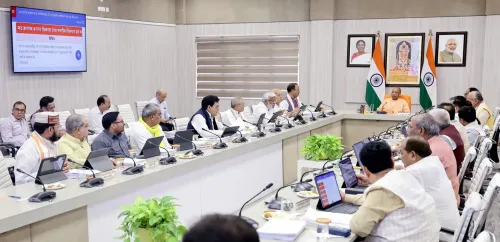
CM Yogi Adityanath chaired a budget review meeting in Lucknow on 27 September 2026 .
The review covered budget provisions, financial sanctions, and actual expenditure for fiscal year 2026-27 .
Departments have been directed to issue at least 70% of financial sanctions within the next two months .
A minimum of 60% of the total allocated budget must be actually spent within the same period.
The directives target both approval bottlenecks and on-ground fund utilisation simultaneously.
Follow-up reviews are expected to monitor compliance with the time-bound expenditure targets.
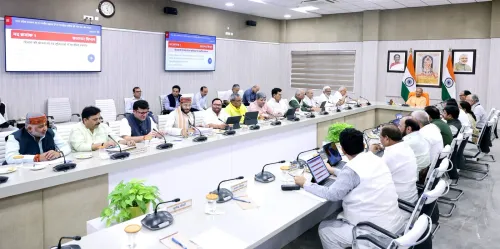
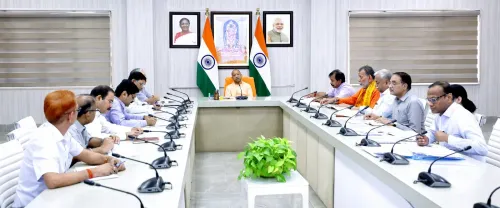
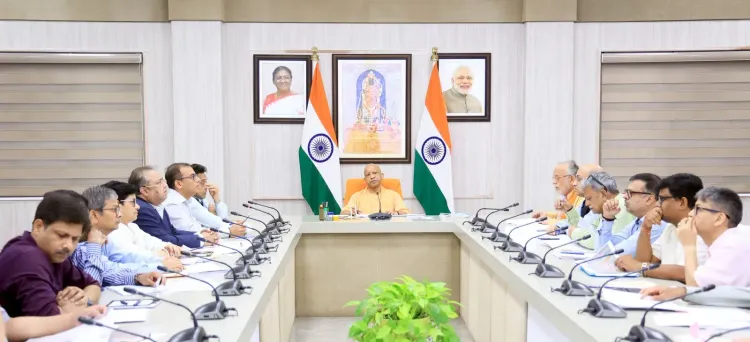
With less than half the fiscal year remaining, Chief Minister Yogi Adityanath is pushing Uttar Pradesh's administrative machinery into high gear — demanding that departments clear financial bottlenecks before the window closes. On Sunday, 27 September 2026, the Chief Minister's Office of Uttar Pradesh announced that CM Yogi chaired a comprehensive review of budget provisions, financial sanctions, and actual expenditure for fiscal year 2026-27 in Lucknow.
The Numbers CM Yogi Has Put on the Clock
The directives are blunt and time-bound. CM Yogi has ordered that at least 70 percent of financial sanctions against approved budget provisions must be issued within the next two months — no exceptions. Alongside that, departments must ensure that a minimum of 60 percent of the total allocated budget is actually spent within the same window.
The dual mandate — sanctions and actual expenditure — signals that the government is not just tracking approvals on paper. It wants money moving on the ground. Stalled sanctions, bureaucratic delays, and slow disbursements are precisely the failure points this review is designed to force-close.
Why Lucknow's Spending Pace Matters Right Now
Every state government in India battles the same seasonal curse: funds pile up unspent in the first half of the fiscal year, then departments scramble to exhaust allocations in the final quarter — often with poor outcomes and wasteful rushing. Uttar Pradesh, India's most populous state and one of its largest budget spenders, is a bellwether for how well this pattern can be corrected through political will at the top.
Under CM Yogi's tenure since 2017, the state has repeatedly positioned financial discipline and administrative efficiency as signature priorities. Periodic high-level reviews — where department heads are held directly accountable for utilisation rates — have become a governance tool in their own right. Today's session fits squarely in that pattern, but the two-month deadline adds an unusually hard edge to what can sometimes be ritual.
What Departments Are Now Expected to Deliver
The directive puts implementing agencies on notice across every spending department. Sanctions must be converted into concrete approvals, and approvals must translate into money reaching projects, contractors, and beneficiaries. The review covered the gap between budget provisions — what was allocated — and where financial sanctions and real expenditure currently stand, with the Chief Minister reviewing that gap in detail before issuing the targets.
Follow-up reviews on whether departments meet the 70 percent sanction mark and the 60 percent expenditure floor will determine how consequential today's meeting turns out to be. For now, the signal from Lucknow is unambiguous: the fiscal clock is running, and the Chief Minister is watching it.
Point of View
60% expenditure realised, both within two months — reflects a familiar but real tension in Indian state finance: political ambition collides with bureaucratic inertia mid-year. CM Yogi's decision to personally chair this review, rather than delegate it, is itself a governance signal: the Chief Minister's Office is treating fund utilisation as a political deliverable, not a technocratic routine. For a state the size of Uttar Pradesh, even marginal improvements in mid-year expenditure velocity can translate into thousands of crores reaching infrastructure and welfare beneficiaries before the fiscal year's final-quarter rush distorts priorities. The hard deadline strategy is increasingly common among reform-minded chief ministers, but its success depends entirely on whether the follow-up enforcement matches the rhetoric of today's directive.
NationPress
28 Sept 2026
Frequently Asked Questions
What did CM Yogi Adityanath announce in the Lucknow budget review?
CM Yogi directed that at least 70% of financial sanctions against budget provisions must be issued, and 60% of total allocated budget must be spent, within the next two months of the fiscal year 2026-27.
What is the deadline CM Yogi has set for UP's financial sanctions?
CM Yogi has set a two-month deadline, ordering departments to issue a minimum of 70% of financial sanctions within that period without exception.
Why does Uttar Pradesh hold mid-year budget expenditure reviews?
State governments in India conduct these reviews to prevent the common problem of funds sitting unspent in the first half of the fiscal year, forcing departments to rush spending poorly in the final quarter.
What is the UP government's budget expenditure target for 2026-27?
The Chief Minister has mandated that at least 60% of the total allocated budget for 2026-27 must be actually spent — not just sanctioned — within the next two months.
Who is Yogi Adityanath and how long has he been Uttar Pradesh's Chief Minister?
Yogi Adityanath is the Chief Minister of Uttar Pradesh and has held the position since 2017, with administrative efficiency and financial discipline among his stated governance priorities.