CM Yogi says UP framed 36 sectoral investment policies
Synopsis
The Chief Minister's Office of Uttar Pradesh quoted CM Yogi Adityanath as saying the state has framed 36 sectoral policies, each with differentiated incentives for investors. The remarks sit in a longer push since 2017 to diversify beyond agriculture.
Key Takeaways
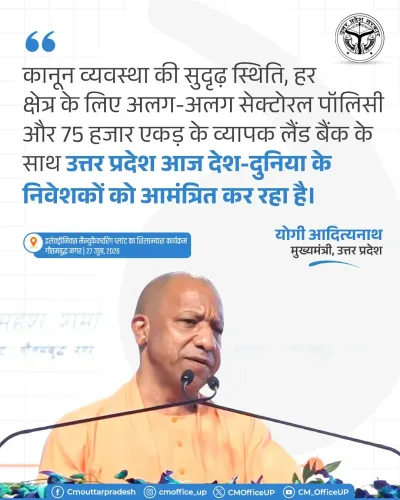
On 28 November 2026, the Chief Minister's Office of Uttar Pradesh quoted CM Yogi Adityanath as saying the state has created 36 sectoral policies.
He said a separate policy has been prepared for every sector, with different incentives for each sector and every investor.
The Uttar Pradesh Industrial Investment and Employment Promotion Policy 2017 set the earlier frame for sector-specific incentives.
The UP Global Investors Summit from 2018 onward has been used to showcase sectoral policies to domestic and foreign capital.
The model tracks differentiated-incentive strategies used in Gujarat, Maharashtra and Tamil Nadu.
Markets will next watch implementation, investment inflows and any fresh summit announcements.
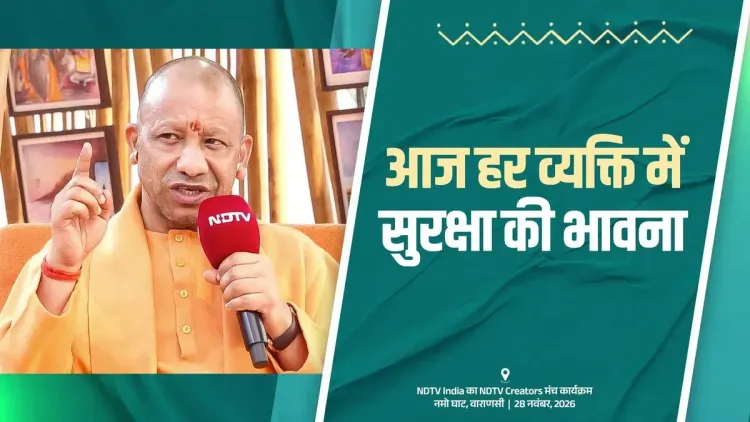
Uttar Pradesh is selling a simple pitch to capital: pick a sector, and the rulebook is already written for you. On 28 November 2026, the Chief Minister's Office of Uttar Pradesh amplified remarks by Chief Minister Yogi Adityanath that the state has prepared 36 sectoral policies, each carrying a distinct incentive package for investors.
In the post, the Chief Minister is quoted as saying: 'We have created 36 sectoral policies in Uttar Pradesh. A separate policy has been prepared for every sector. In these policies, different incentives have been provided for each sector and every investor.' The Hindi original stressed har sector (every sector) and alag-alag incentive (differentiated incentives) for each investor.
CM Yogi's 36-policy pitch to every sector
The number is the headline. The method is the story. Rather than one statewide industrial brochure, the Chief Minister described a stack in which each industry gets its own policy and its own incentive design.
That framing is aimed squarely at private capital — manufacturers, services firms and project sponsors who compare states on land, power, subsidies and clearance speed before they sign.
From the 2017 industrial policy to investor summits
The lineage runs through the Uttar Pradesh Industrial Investment and Employment Promotion Policy 2017, which first set a statewide frame for sector-specific incentives and ease-of-doing-business reforms. The UP Global Investors Summit of 2018 and later editions then became the shop window for newer sectoral playbooks aimed at domestic and foreign money.
Since 2017, when Yogi Adityanath took office, Lucknow has tried to reduce the state's historic reliance on agriculture and improve its standing in national investment rankings. Differentiated policies are the chosen instrument.
Why Gujarat, Maharashtra and Tamil Nadu sit in the rear-view
The approach mirrors strategies long used in Gujarat, Maharashtra and Tamil Nadu, where incentives are split across manufacturing and services rather than poured into a single scheme. Uttar Pradesh is trying to close that gap with a thicker rulebook of its own.
What remains unproven is conversion. Implementation details, actual investment inflows, and any fresh investor-summit announcements in the coming months will show whether those policies become pipelines — or stay on paper.
The next test is not how many policies Lucknow can list. It is how many of them actually move money.
Point of View
Rather than waiting for a single mega-policy to do all the work. The Chief Minister's emphasis on 36 separate policies is a signal that Lucknow wants to compete on tailored incentives, not just cheap labour and a large home market. The political bet is that a thick policy stack will show up in investment rankings and factory jobs. Delivery, not the count of documents, will decide whether the pitch holds.
NationPress
28 Nov 2026
Frequently Asked Questions
How many sectoral policies has Uttar Pradesh prepared according to CM Yogi Adityanath?
The Chief Minister's Office quoted him as saying the state has created 36 sectoral policies, with a separate policy for every sector. He added that the policies provide different incentives for each sector and every investor.
What did the 2017 Uttar Pradesh industrial policy change?
The Uttar Pradesh Industrial Investment and Employment Promotion Policy 2017 set the framework for sector-specific incentives and ease of doing business reforms. Later investor summits used that frame to showcase newer sectoral policies.
Why is Uttar Pradesh announcing sector-specific industrial policies?
The state has been trying since 2017 to diversify away from agriculture and climb national investment rankings. Sector-by-sector incentives are meant to compete with industrial states that already use differentiated policy menus.
Who is the target of Uttar Pradesh's sectoral incentive policies?
Private investors across industrial sectors are the primary audience. The Chief Minister's remarks present a dedicated policy and incentive line for each sector and investor.
When did Uttar Pradesh start showcasing sectoral policies to investors?
The UP Global Investors Summit in 2018 and subsequent editions highlighted new sectoral policies to attract domestic and foreign investment. That summit series followed the 2017 industrial policy.