CM Yogi Accuses SP, Congress of Using Students as Political Pawns
Synopsis
Uttar Pradesh Chief Minister Yogi Adityanath on 22 July 2026 alleged on X that Samajwadi Party and Congress workers surrounded Parliament in Delhi under the guise of a student protest, calling it a bid to defame students for political gain.
Key Takeaways
CM Yogi Adityanath posted on X on 22 July 2026 alleging opposition workers surrounded Parliament House, New Delhi .
He accused Samajwadi Party and Congress 'goons' of using students as cover to defame them politically.
The post was accompanied by a video , which Adityanath cited as evidence of the alleged incident.
Students were framed as victims of political manipulation rather than organisers of the demonstration.
No formal response from Samajwadi Party or Congress had been issued at the time of publication.
The episode fits a broader pattern of BJP–opposition clashes over the framing of protests near Parliament.
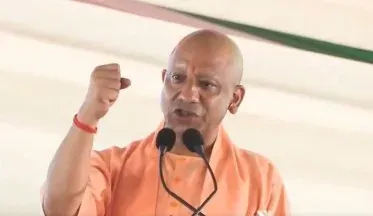
Uttar Pradesh Chief Minister Yogi Adityanath on Wednesday, 22 July 2026, took to X to allege that workers of the Samajwadi Party and the Indian National Congress had surrounded Parliament in New Delhi, using students as cover to defame them politically.
In his post, Chief Minister Adityanath wrote: 'aap sabhī ne dekhā hogā ki kaise chhātroṃ ko badnām karne ke lie Samājwādī Pārṭī aur Kāṃgres ke guṃḍoṃ ne Dillī meṃ Sansad kā gherāv kiyā' — translated as: 'You all must have seen how the goons of the Samajwadi Party and Congress surrounded Parliament in Delhi in order to defame students.'
Context
The post refers to a demonstration near Parliament House, New Delhi, which the Chief Minister characterised as an orchestrated act by opposition party workers rather than a genuine student-led movement. Adityanath framed the protest as an attempt to malign students by associating them with what he called political 'goons' (guṃḍe). The post was accompanied by a video, the contents of which the Chief Minister presumably used to support his assertion.
Student-related protests near Parliament have periodically become flashpoints in Indian politics, with ruling and opposition parties trading accusations over who is 'using' students for electoral advantage. July 2026 falls within a politically sensitive period, with state and national electoral cycles keeping inter-party tensions elevated.
Policy Backdrop
The Bharatiya Janata Party and the Samajwadi Party have long been principal rivals in Uttar Pradesh, the country's most populous state. Chief Minister Adityanath has frequently used social media to counter opposition narratives, particularly those touching on law and order or youth welfare — two themes central to his governance pitch since taking office in 2017.
The Indian National Congress, though a smaller force in Uttar Pradesh compared to the Samajwadi Party, remains a significant national opposition actor. BJP leaders at both the state and national level have consistently sought to portray Congress-SP coordination as a destabilising alliance, especially around Parliament sessions.
Stakeholders and Impact
Students are the central stakeholders invoked in Adityanath's post — presented simultaneously as victims of opposition manipulation and as a constituency the BJP seeks to protect. His framing positions the BJP government as a defender of student interests against what he describes as politically motivated disruption.
For the Samajwadi Party and Congress, the accusation carries reputational weight at a time when both parties have sought to cultivate youth support bases. Any formal response from either party, or statements from student organisations affiliated with them, will shape how the episode is received in the broader political discourse.
What's Next
Observers will watch for formal rebuttals from Samajwadi Party leadership or the Congress, as well as any statements from student unions on either side of the political divide. If Parliament is in session, the episode could surface in zero-hour proceedings or be raised through privilege notices.
The episode underscores a recurring dynamic in Indian politics: demonstrations near Parliament quickly become contested terrain, with each party racing to define the narrative around who is exploiting whom. How student bodies respond publicly may determine whether this remains a social-media exchange or escalates into a broader parliamentary controversy.
Point of View
He shifts the moral burden onto the SP and Congress before either party can consolidate a counter-message. The move fits a well-established BJP communications pattern of using the Chief Minister's high-follower social media presence to set the terms of debate around contentious street politics. For the opposition, the challenge is acute: any protest near Parliament that gets branded as 'anti-student' risks alienating the very youth constituency both the SP and Congress are courting ahead of the next electoral cycle. Whether this exchange stays confined to social media or bleeds into parliamentary proceedings will be a reliable indicator of how seriously both sides rate the political stakes of this particular episode.
NationPress
21 Oct 2026
Frequently Asked Questions
What did CM Yogi Adityanath say about the Parliament protest?
CM Yogi Adityanath alleged on X on 22 July 2026 that Samajwadi Party and Congress workers surrounded Parliament in Delhi to defame students, calling them 'goons' who used students as a political cover.
Which parties did Yogi Adityanath accuse over the Delhi Parliament gherao?
He specifically named the Samajwadi Party and the Indian National Congress, accusing their workers of orchestrating the demonstration near Parliament House in New Delhi.
What is a Parliament gherao in Indian politics?
A 'gherao' refers to the act of surrounding or blockading a building as a form of protest. Demonstrations near Parliament House in New Delhi are a common form of political agitation in India, often used by opposition parties to highlight grievances.
Did the Samajwadi Party or Congress respond to Yogi Adityanath's accusation?
No formal response from either the Samajwadi Party or the Indian National Congress had been reported at the time of publication. Observers are watching for official rebuttals.
Why do BJP leaders frequently comment on protests near Parliament?
Parliament-adjacent protests are high-visibility events that attract national media attention. BJP leaders, including those from Uttar Pradesh, have consistently sought to frame such demonstrations as politically motivated to counter opposition narratives on law and order and student welfare.