CM Yogi Targets 'Babua' in Jab at Old UP's Riot Era
Synopsis
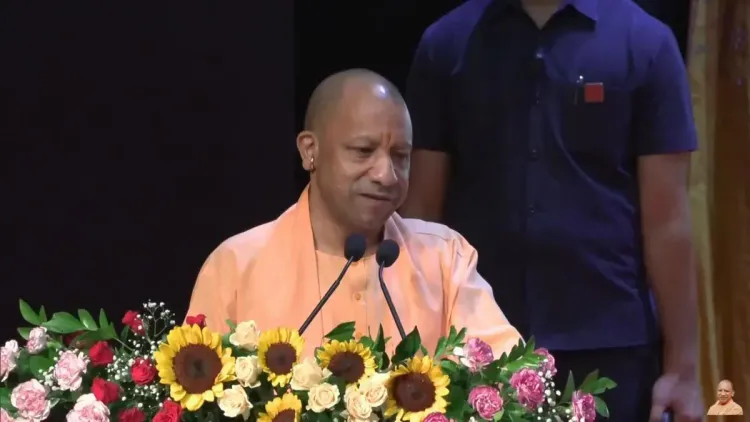
Uttar Pradesh CM Yogi Adityanath fired a political salvo on X on 7 August 2026, using the term 'Babua' to link past opposition leadership with months-long curfews and communal riots — a recurring contrast he draws with his own law-and-order record since 2017.
Key Takeaways
CM Yogi Adityanath posted on X on 7 August 2026 targeting a political figure referred to as 'Babua', a colloquial term implying immaturity.
He directly attributed communal riots and months-long curfews in Uttar Pradesh to this leadership failure.
The post fits a consistent pattern of CM Yogi contrasting his governance record since 2017 with the law-and-order situation under previous governments.
Uttar Pradesh has a documented history of communal incidents under multiple prior administrations.
The specific identity of 'Babua' has not been officially confirmed in the post itself.
Opposition responses and UP Police annual crime data are expected to follow as the political exchange develops.
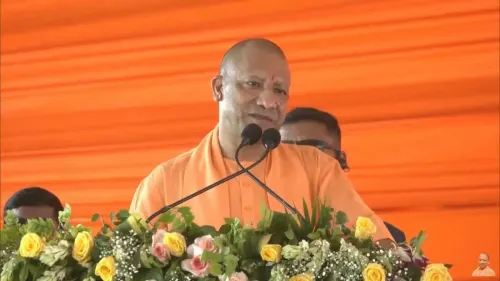
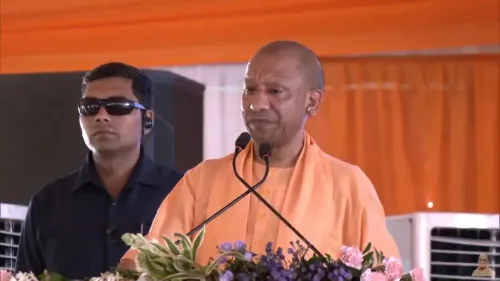
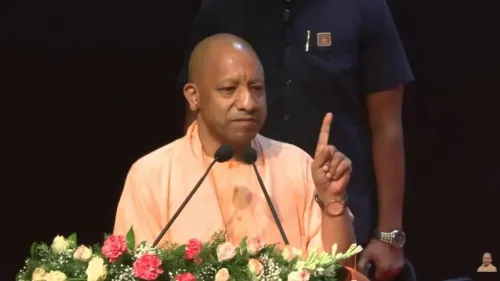
A pointed political barb from Uttar Pradesh Chief Minister Yogi Adityanath on Friday, 7 August 2026 has reignited the long-running debate over law and order in India's most populous state — and who was responsible for the communal violence that once defined it.
In a post on X, CM Yogi wrote: 'Kuch log jeevan bhar 'bachche' hi bane rehte hain, 'Babua' bhi yahi karte the...' — 'Some people remain 'children' all their lives. 'Babua' did the same... That is why riots happened, curfews lasted for months on end.'
'Babua' and the politics of a nickname
The term 'Babua' — a colloquial Hindi word for a pampered or immature young man — is widely understood in Uttar Pradesh political circles as a reference to a prominent opposition figure, though the research block cannot verify the specific target of this 2026 post. The choice of word is deliberate: it frames political immaturity not as a personal failing but as a governance catastrophe, directly linking it to riots and prolonged curfews.
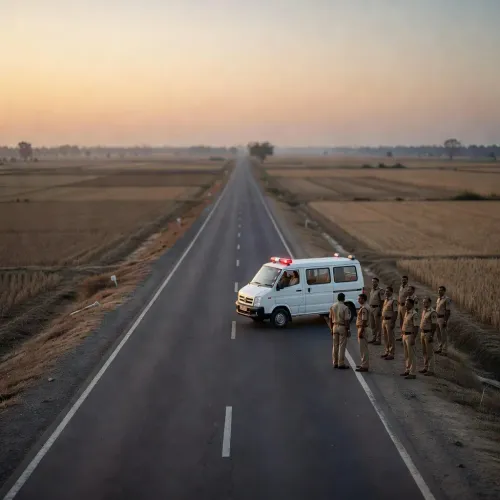
The sting is in the causality. CM Yogi does not merely mock; he assigns blame. Months-long curfews are not framed as administrative responses — they are presented as the consequence of weak, childlike leadership.
UP's communal history as a political weapon
Uttar Pradesh has a documented history of communal incidents under multiple prior governments, with curfews imposed across districts for extended periods. Since CM Yogi Adityanath took office in 2017, his administration has consistently highlighted anti-riot measures, police reforms, and a claimed reduction in communal violence as signature achievements.
This post fits a well-worn groove in his messaging: contrast the present with the past, name the chaos without always naming the person, and let the audience fill in the blank. It is a rhetorical device that has proved effective with his base — and reliably provocative to the opposition.
What the opposition will say next
The post arrives at a moment when UP Police annual crime data and opposition responses to historical law-and-order claims are closely watched. Opposition parties are likely to contest the premise — that riots were a product of individual immaturity rather than structural failures — and may push back with their own data on incidents since 2017.
The battlefield is familiar. The ammunition, however, keeps getting sharper.
Point of View
Preferring to let a loaded cultural reference do the political work while he occupies the moral high ground of 'restored order'. This messaging has been central to the BJP's UP narrative since 2017, tying personal leadership character to public safety outcomes. The move keeps the opposition perpetually on the defensive about a historical record they cannot easily rewrite. Whether the claim holds up to scrutiny of post-2017 crime data is the real test — and one the opposition will now be under pressure to mount.
NationPress
7 Aug 2026
Frequently Asked Questions
Who is 'Babua' that CM Yogi Adityanath mentioned on X?
'Babua' is a colloquial Hindi term for a pampered or immature young man, widely interpreted in Uttar Pradesh political circles as a reference to a prominent opposition figure. CM Yogi's post did not name the individual explicitly.
What did CM Yogi Adityanath say about riots and curfews in UP?
CM Yogi said that because some people remain 'children' all their lives — using 'Babua' as the example — riots occurred and curfews lasted for months on end in Uttar Pradesh under previous leadership.
Has CM Yogi made such comparisons before?
Yes. Since taking office in 2017, CM Yogi Adityanath has repeatedly contrasted his administration's law-and-order record with that of previous state governments, citing reduced communal incidents and police reforms.
What is the law and order situation in Uttar Pradesh under Yogi Adityanath?
The Yogi Adityanath government has highlighted anti-riot measures and police reforms since 2017 as evidence of improved public order. Uttar Pradesh had a documented history of communal incidents and extended curfews under multiple prior administrations.
What is the political significance of this post in 2026?
The post signals that law and order in Uttar Pradesh remains a live political battleground ahead of any electoral cycle, with CM Yogi reinforcing his governance credentials by invoking the chaos of the pre-2017 era.