CM Yogi highlights Operation Kayakalp gains in UP schools
Synopsis
Chief Minister Yogi Adityanath has stated that Operation Kayakalp is successfully providing various facilities to children in Basic Shiksha Parishad schools across Uttar Pradesh, with quality arrangements now in place at every government school in the state.
Key Takeaways
The Chief Minister's Office of Uttar Pradesh shared a statement from CM Yogi Adityanath on 25 June 2026 highlighting Operation Kayakalp's progress.
Operation Kayakalp aims to upgrade physical infrastructure — classrooms, toilets, drinking water, and boundary walls — in government primary schools.
The scheme is administered through the Basic Shiksha Parishad , which oversees primary and upper-primary schools across Uttar Pradesh .
The state aligned Kayakalp with the centrally sponsored Samagra Shiksha Abhiyan from 2018 onward.
Primary beneficiaries are students from rural and economically weaker households, with girl student retention a key metric.
The next watchpoint is the annual school facility compliance report and basic education allocations in the 2026-27 budget.
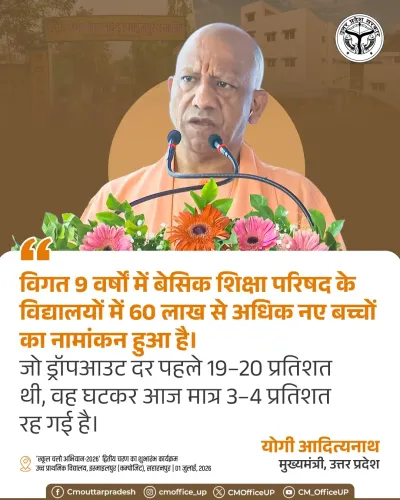
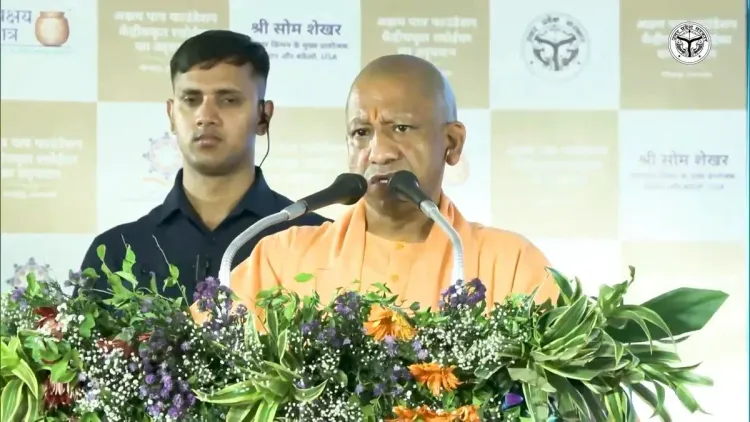
The Chief Minister's Office of Uttar Pradesh shared a statement from Chief Minister Yogi Adityanath on Thursday, 25 June 2026, underscoring that children enrolled in Basic Shiksha Parishad schools across the state are now being provided a range of facilities through Operation Kayakalp, with quality arrangements in place at every school.
Context
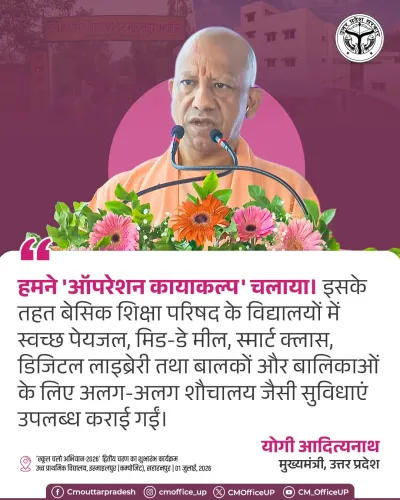
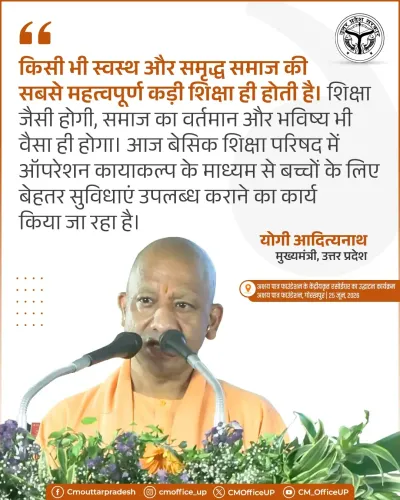
The Chief Minister's statement, posted by the official CMO account, reads: 'Aaj Basic Shiksha Parishad ke vidyalayon mein Operation Kayakalp ke madhyam se bacchon ke liye vibhinn suvidhaen upalabdh karayi ja rahi hain. Har vidyalaya mein gunavattapurn vyavasthaen upalabdh hain.' — 'Today, various facilities are being provided for children in Basic Shiksha Parishad schools through Operation Kayakalp. Quality arrangements are available in every school.' The remark is accompanied by a video, indicating on-ground documentation of the scheme's progress.
Policy Backdrop
Operation Kayakalp is a Uttar Pradesh government initiative launched to physically revamp government primary and upper-primary schools by adding or upgrading classrooms, toilets, drinking water access, and boundary walls. The programme gained momentum after the 2017 assembly elections, when the Yogi Adityanath administration made visible improvements in basic public services a stated priority. From 2018 onward, the state aligned these efforts with the centrally sponsored Samagra Shiksha Abhiyan, broadening the funding base for school infrastructure.
The Basic Shiksha Parishad — the statutory body that administers primary and upper-primary schools across Uttar Pradesh — oversees the implementation of Kayakalp at the school level. Uttar Pradesh is India's most populous state, with one of the largest networks of government primary schools in the country, making the scale of any statewide upgrade programme significant.
Stakeholders and Impact
The primary beneficiaries of Operation Kayakalp are students attending government schools run by the Basic Shiksha Parishad, the majority of whom come from rural and economically weaker households. For these families, the quality of physical infrastructure — functional toilets, safe drinking water, weatherproof classrooms — directly affects enrolment and retention rates, particularly for girl students.
Teachers posted at these schools and district-level basic education officers are the key implementation actors. Rural parents, who often weigh government schools against low-cost private alternatives, stand to benefit if the quality gap narrows. The broader messaging from the Chief Minister's Office signals continued administrative attention to this segment of the education system.
What's Next
The state government's next milestone will likely be the release of an annual compliance report on school facility coverage, which would provide verifiable data on how many schools have met the Kayakalp benchmarks. Supplementary budget provisions for basic education in the 2026-27 fiscal year will also be closely watched as an indicator of the programme's continued financial backing. Sustained follow-through on infrastructure maintenance — beyond initial construction — remains the longer-term test for the scheme's impact on learning outcomes.
Point of View
Particularly in education and health. Operation Kayakalp fits into a broader political narrative of transforming the visible face of government institutions in Uttar Pradesh — a state where poor school infrastructure was historically a point of public grievance. The timing, well into the government's current term, suggests an effort to consolidate a record of delivery rather than announce a new initiative. The real test, however, lies in independent verification of facility coverage and whether improved infrastructure translates into measurable gains in enrolment and learning outcomes.
NationPress
24 Sept 2026
Frequently Asked Questions
What is Operation Kayakalp in Uttar Pradesh?
Operation Kayakalp is a Uttar Pradesh government scheme to revamp government primary and upper-primary schools by providing facilities such as classrooms, toilets, drinking water, and boundary walls. It has been a key infrastructure drive under the Yogi Adityanath administration since 2017.
What is the Basic Shiksha Parishad?
The Basic Shiksha Parishad is the statutory body of the Uttar Pradesh government responsible for administering primary and upper-primary schools across the state. It oversees the implementation of schemes like Operation Kayakalp at the school level.
How is Operation Kayakalp funded?
The scheme draws on state government funds and is also aligned with the centrally sponsored Samagra Shiksha Abhiyan, which has provided additional financial support for school infrastructure upgrades in Uttar Pradesh since 2018.
Who benefits from Operation Kayakalp?
The primary beneficiaries are children enrolled in Basic Shiksha Parishad schools, most of whom come from rural and economically weaker households. Improved facilities such as functional toilets and safe drinking water particularly support girl student enrolment and retention.
What did CM Yogi Adityanath say about UP schools on 25 June 2026?
CM Yogi Adityanath stated that various facilities are being provided for children in Basic Shiksha Parishad schools through Operation Kayakalp and that quality arrangements are now available in every school. The statement was shared by the official Chief Minister's Office account on X.