CM Yogi Says UP Has Carved Its Own Identity on 'New India' Lines
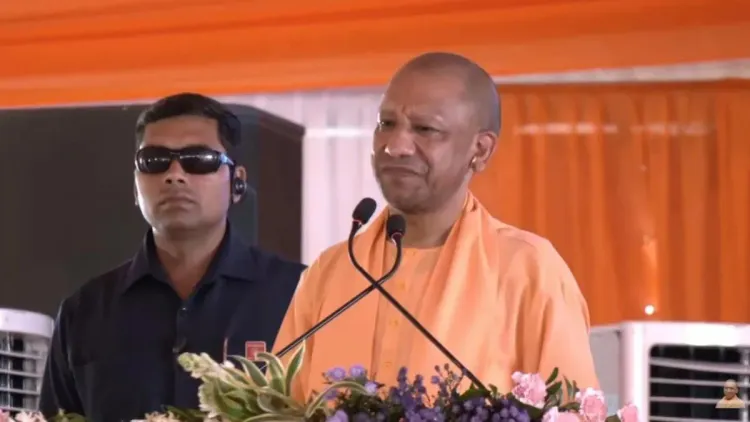
Synopsis
Uttar Pradesh Chief Minister Yogi Adityanath declared on 21 June 2026 that the state has forged its own identity on the lines of the 'New India' vision, reinforcing the BJP's double-engine governance narrative ahead of key investor and policy milestones.
Key Takeaways
CM Yogi Adityanath posted on 21 June 2026 that Uttar Pradesh has established a distinct identity modelled on the 'New India' vision.
The 'New India' framework was introduced by Prime Minister Narendra Modi after 2014 to signal economic modernisation and governance reform.
Uttar Pradesh has been governed by the BJP since 2017 , with the administration framing its agenda as aligned with central government priorities.
The 'double-engine' governance model — same party at state and centre — is the political lens through which CM Yogi presents the state's progress.
Key audiences include UP's youth, the investor community, and a national electorate in which the state's 80 Lok Sabha seats carry significant weight.
Upcoming investor summits and state budget presentations will be the next benchmarks for the claims made in this post.
Uttar Pradesh Chief Minister Yogi Adityanath on Sunday, 21 June 2026, took to X to assert that the state has established a distinct identity modelled on the 'New India' vision championed by the central government, drawing a direct parallel between Uttar Pradesh's governance trajectory and the national transformation agenda.
In his post, CM Yogi wrote: 'Naye Bharat' ki tarz par UP ne bhi apni pehchaan banayi hai — translated as 'On the lines of 'New India', UP has also carved its own identity.' The statement encapsulates the state government's sustained effort to position Uttar Pradesh as a frontrunner in India's development story.
Context
The phrase 'New India' was popularised by Prime Minister Narendra Modi after 2014 as a shorthand for economic modernisation, improved governance, and India's rising global stature. CM Yogi's invocation of the term signals that Uttar Pradesh — India's most populous state — views its own transformation since 2017 as a state-level expression of that same ambition.
Since the Bharatiya Janata Party came to power in Lucknow in 2017, the state government has consistently framed its policy agenda — spanning law-and-order reforms, infrastructure expansion, and investor outreach — as running in tandem with New Delhi's priorities under what the BJP calls the 'double-engine' governance model.
Policy Backdrop
The 'double-engine' framework argues that a state government and the central government belonging to the same party can deliver faster, more coordinated development. Uttar Pradesh has leaned heavily on this narrative, hosting large-scale investor summits and announcing flagship infrastructure projects to attract domestic and foreign capital.
Law-and-order improvement, industrial corridors, expressway construction, and digital governance initiatives have been the pillars the Yogi Adityanath administration has cited as evidence of the state's reinvention. The post on 21 June 2026 appears to reinforce that self-assessment at a moment when the state continues to benchmark its progress against the national transformation story.
Stakeholders and Impact
The primary audiences for this messaging are UP's youth, who represent a large share of the state's electorate and workforce, and the investor community that the government has been courting through successive Global Investors Summits. A confident state identity narrative is also aimed at the broader national political conversation, where Uttar Pradesh — with its 80 Lok Sabha seats — holds outsized electoral weight.
For citizens, the assertion carries an implicit promise: that the administrative and economic gains associated with 'New India' are not confined to the national capital or metropolitan centres but are being replicated across Uttar Pradesh's towns and districts.
What's Next
Observers will watch the next Uttar Pradesh Global Investors Summit and the state's forthcoming budget presentations for concrete announcements that can substantiate the identity claim made in this post. The pace of infrastructure project completions and employment generation figures will be the metrics against which the 'New India' parallel is likely to be tested by both supporters and critics of the current administration.
Point of View
' the Chief Minister is simultaneously claiming credit for state-level outcomes while reinforcing the ideological continuity between Lucknow and New Delhi. This kind of messaging typically intensifies ahead of investor summits or electoral cycles, when the party needs to demonstrate tangible returns on its 'double-engine' promise. The post also signals that UP's leadership sees the state not merely as a beneficiary of central schemes but as an independent driver of the New India story.
NationPress
20 Sept 2026
Frequently Asked Questions
What did CM Yogi Adityanath say about Uttar Pradesh and New India?
CM Yogi Adityanath posted on 21 June 2026 that Uttar Pradesh has carved its own identity on the lines of the 'New India' vision, drawing a parallel between the state's governance record and Prime Minister Modi's national transformation agenda.
What is the 'New India' vision that CM Yogi referred to?
'New India' is a governance and development framework championed by Prime Minister Narendra Modi since 2014, emphasising economic modernisation, infrastructure growth, administrative efficiency, and India's rising global standing.
What is the double-engine government model in Uttar Pradesh?
The double-engine model is a BJP concept arguing that having the same party in power at both the state and central government levels enables faster, more coordinated policy delivery — a frame the Yogi Adityanath administration has consistently used to describe UP's development.
What has Uttar Pradesh achieved under Yogi Adityanath since 2017?
Since 2017, the Yogi Adityanath government has highlighted law-and-order reforms, expressway construction, industrial corridor development, and large-scale investor summits as markers of Uttar Pradesh's transformation.
What should we watch for next regarding UP's development agenda?
The next Uttar Pradesh Global Investors Summit and forthcoming state budget presentations are the key events where fresh investment commitments and policy announcements are expected to substantiate the government's development claims.