CM Yogi: UP racing to become India's No. 1 economy
Synopsis
CM Yogi Adityanath declared on October 4 that Uttar Pradesh is sprinting toward becoming India's top economy, citing Single Window Clearance and the Nivesh Mitra, Nivesh Sarathi, and Udyami Mitra investor-support schemes as key drivers.
Key Takeaways
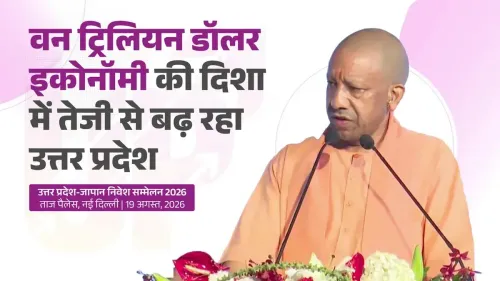
CM Yogi Adityanath declared on October 4, 2026 that UP is moving rapidly to become India's number-one economy .
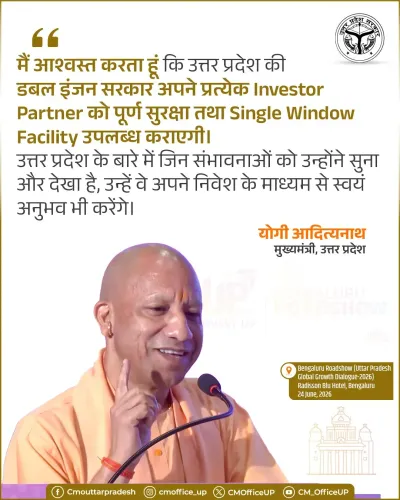
The state offers a Single Window Clearance system to streamline business approvals.
Nivesh Mitra is UP's online investment facilitation platform for faster business registration and approvals.
Nivesh Sarathi guides investors through the state's incentive framework.
Udyami Mitra provides dedicated support to small and medium entrepreneurs.
UP competes against Maharashtra , Tamil Nadu , and Gujarat for top industrial investment rankings in India.
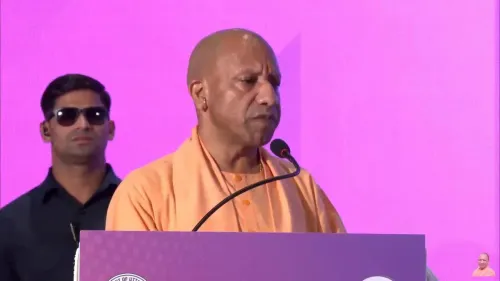
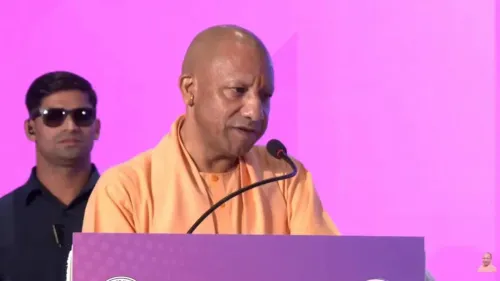
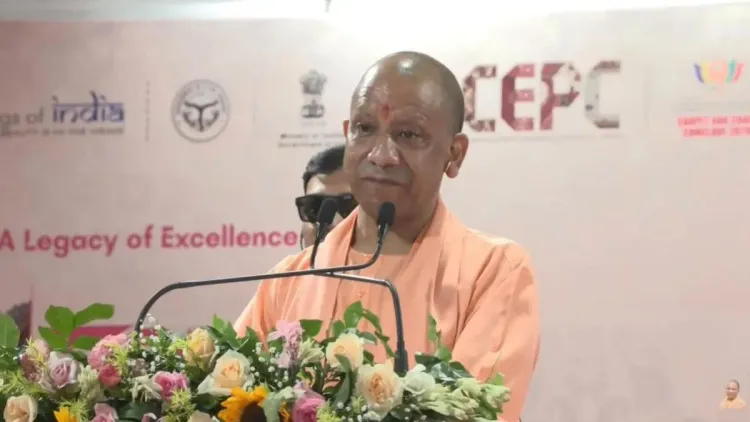
Uttar Pradesh Chief Minister Yogi Adityanath made a bold claim on Sunday, October 4, 2026 — that India's most populous state is now in a sprint to become the country's top economy, backed by a suite of investor-friendly reforms already in place.
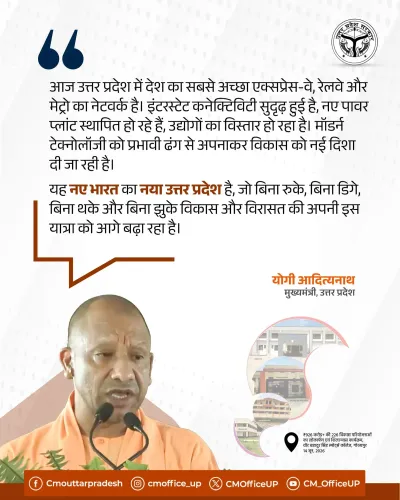
Posting on X, CM Yogi stated, 'देश की नंबर-1 अर्थव्यवस्था बनने की ओर यूपी तेजी के साथ बढ़ रहा है' ('UP is moving rapidly towards becoming the number-one economy of the country'). He pointed to three specific policy pillars: a Single Window Clearance system, and the Nivesh Mitra, Nivesh Sarathi, and Udyami Mitra schemes as active advantages already available to investors in the state.
Single Window, three schemes — what UP is offering investors
The Single Window Clearance facility is designed to cut the red tape that has historically slowed industrial approvals in large states, allowing businesses to obtain multiple regulatory permissions through a single portal. Nivesh Mitra is UP's dedicated online investment facilitation platform, aimed at making it easier for entrepreneurs to register businesses and track approvals. Nivesh Sarathi and Udyami Mitra extend that ecosystem — the former focused on guiding investors through the state's incentive framework, the latter on supporting small and medium entrepreneurs at the ground level.
Together, these instruments represent a concerted push by the Yogi administration to position Uttar Pradesh — long associated with bureaucratic delays and infrastructure gaps — as a streamlined, investor-ready destination. The ambition is unmistakable: leapfrog states like Maharashtra, Tamil Nadu, and Gujarat, which have historically dominated India's industrial investment rankings.
The scale of the ambition — and what it would take
Uttar Pradesh is already India's most populous state and has, in recent years, climbed the rankings of state GDP size. Claiming the top spot, however, would require sustained high-growth manufacturing, services, and logistics investment over several years — not just policy announcements. The government's confidence appears rooted in the momentum built through successive investor summits and the expansion of expressway and industrial corridor infrastructure across the state.
For domestic and foreign investors watching India's states compete fiercely for capital, UP's policy stack — single window plus three named investor-support programmes — is a signal worth tracking. Whether the on-ground execution matches the architecture is the question every industrialist in the room will be asking next.
Point of View
A more sophisticated pitch to boardrooms than to rallies. However, with no fresh data cited, the assertion of 'rapid movement' toward pole position remains a political claim that will be tested by actual investment inflow and GDP growth numbers in the quarters ahead. The race between UP and India's established industrial states is real — the outcome is still open.
NationPress
4 Oct 2026
Frequently Asked Questions
What did CM Yogi Adityanath say about UP's economy on October 4 2026?
CM Yogi Adityanath stated that Uttar Pradesh is moving rapidly to become India's number-one economy, citing Single Window Clearance and the Nivesh Mitra, Nivesh Sarathi, and Udyami Mitra schemes as key policy advantages.
What is Nivesh Mitra in Uttar Pradesh?
Nivesh Mitra is UP's online investment facilitation portal that allows businesses to register and track regulatory approvals in one place, reducing bureaucratic delays for investors.
What is the Single Window Clearance system in UP?
The Single Window Clearance system enables businesses to obtain multiple government approvals through a single platform, cutting red tape and speeding up the process of setting up industries in Uttar Pradesh.
What is Udyami Mitra scheme in UP?
Udyami Mitra is an Uttar Pradesh government scheme designed to provide dedicated facilitation and support to small and medium entrepreneurs looking to set up or expand businesses in the state.
Is UP currently India's number-one economy?
As of the available data, Uttar Pradesh is not yet India's top economy by GDP — Maharashtra, Tamil Nadu, and Gujarat typically rank higher — but the state government has set this as a stated policy ambition.