CM Yogi: UP shed mafia era, now draws investors from 5 states
Synopsis
Chief Minister Yogi Adityanath says Uttar Pradesh's transformation from a mafia-dominated state under Congress and SP to a law-and-order success story has made it a magnet for entrepreneurs from Maharashtra, Punjab, Gujarat, Karnataka, and Tamil Nadu.
Key Takeaways
CM Yogi Adityanath claimed on 11 August 2026 that entrepreneurs from Maharashtra, Punjab, Gujarat, Karnataka, and Tamil Nadu are now approaching Uttar Pradesh for investment.
He attributed the shift to his government's crackdown on organised crime since 2017 , contrasting it with what he called a 'mafia system' under Congress and SP rule.
The remark included a direct allegation that 'one family's control' over UP during SP tenure had choked investment prospects — a pointed reference to the Yadav family leadership of the Samajwadi Party.
Uttar Pradesh has hosted investor summits in 2018 and 2023 to project improved ease of doing business and attract domestic capital.
No verified investment figures or named entrepreneurs from the five states have been publicly confirmed to date.
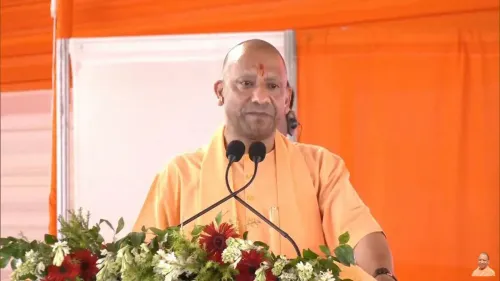
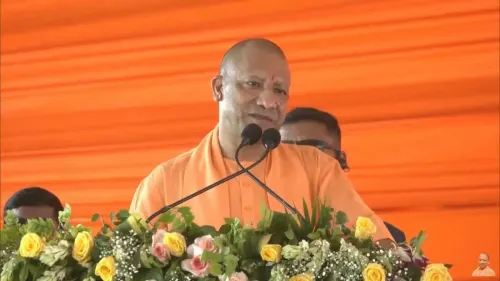
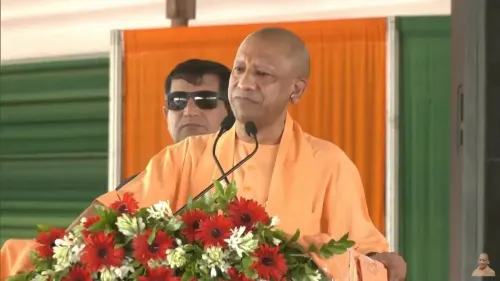
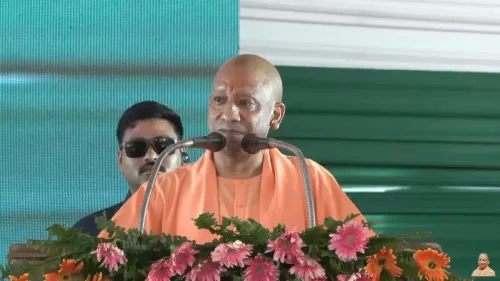
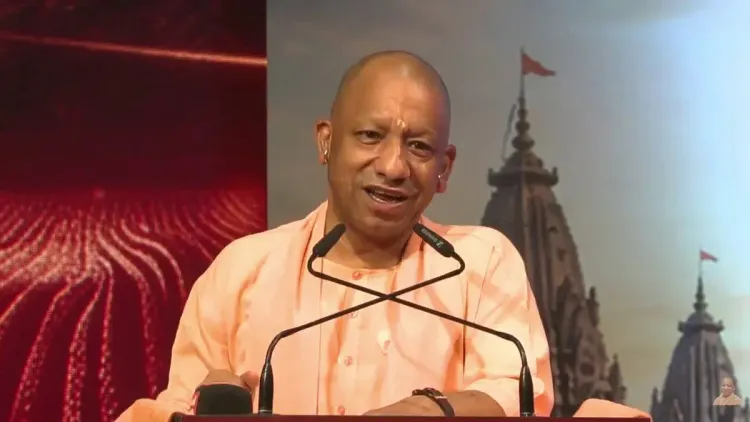
When criminal networks ran Uttar Pradesh, capital stayed away. Now, Uttar Pradesh Chief Minister Yogi Adityanath says entrepreneurs from Maharashtra, Punjab, Gujarat, Karnataka, and Tamil Nadu are knocking on the state's door — a shift he attributes directly to the dismantling of what he calls a 'mafia system' that flourished under previous governments.
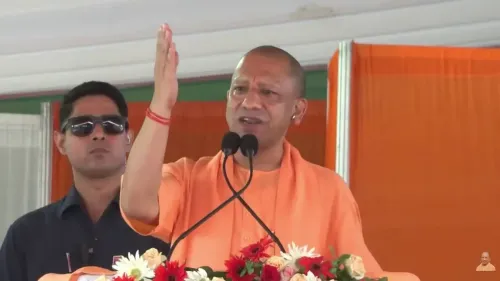
Speaking on Tuesday, 11 August 2026, the Chief Minister said in Hindi: 'Jab mafia tantra haavi tha tab koi nivesh nahin aata tha' — 'When the mafia system was dominant, no investment would come.' He went further, alleging that during the tenures of the Indian National Congress and the Samajwadi Party, a single family's grip over the state's affairs choked any prospect of outside capital.
The 'mafia tantra' charge and what it points to
The accusation is not new, but the framing is pointed. Since taking office in 2017, the Adityanath government has run a sustained crackdown on organised crime and land mafia networks across Uttar Pradesh's districts, positioning law-and-order reform as the precondition — not the byproduct — of economic revival. The political argument is deliberate: that governance failure under the SP's 2012–2017 term and earlier Congress-era administrations allowed criminal syndicates to embed themselves in local administration, making Uttar Pradesh a state where investors calculated risk differently than elsewhere.
The reference to 'ek khaandan ka kabza' — 'one family's control' — is a direct jab at the Samajwadi Party's Yadav family leadership, a line of attack that has been central to the BJP's political messaging in the state for nearly a decade.
Five states, one signal
The specific mention of Maharashtra, Punjab, Gujarat, Karnataka, and Tamil Nadu is strategically loaded. These are among India's most industrialised and commercially active states. Gujarat in particular is synonymous with manufacturing and entrepreneurial culture; Maharashtra anchors the country's financial and industrial base. That entrepreneurs from these states are now engaging with Uttar Pradesh — if the trend holds at the scale implied — would represent a meaningful reorientation of domestic investment geography.
Uttar Pradesh has hosted investor summits in 2018 and 2023 to build exactly this kind of credibility, projecting improved ease of doing business and a safer operating environment. The Chief Minister's remarks appear to be a public validation of that longer arc — a claim that the summits were not theatre but a turning point.
The numbers still to come
What the post does not offer — and what analysts will press for — are hard figures: named companies, committed capital, and jobs created. The research base confirms no verifiable investment data or named entrepreneurs behind the five-state claim. The next round of official investor summit data releases will be the real test of whether the narrative matches the ledger.
For now, the Chief Minister has drawn the sharpest possible contrast: a Uttar Pradesh that once repelled capital through fear, against one that now draws it through stability. The argument is political, but the audience it is aimed at — domestic entrepreneurs from India's industrial heartlands — is very much real.
Point of View
He is attempting to convert a governance claim into an economic credential ahead of future electoral cycles. The absence of hard investment figures, however, leaves the argument vulnerable to the same challenge that has dogged previous UP investor summits — the gap between intent letters and actual capital deployed. Whether the 'mafia-free UP' brand translates into measurable GDP and employment data will determine how durable this political asset proves to be.
NationPress
11 Aug 2026
Frequently Asked Questions
What did CM Yogi Adityanath say about investment in Uttar Pradesh?
CM Yogi Adityanath said that when a 'mafia system' was dominant in Uttar Pradesh under Congress and SP governments, no investment came to the state. He claimed that since his government's crackdown on organised crime, entrepreneurs from Maharashtra, Punjab, Gujarat, Karnataka, and Tamil Nadu have begun approaching UP for investment.
Which states does CM Yogi say are now sending investors to UP?
CM Yogi named Maharashtra, Punjab, Gujarat, Karnataka, and Tamil Nadu as states whose entrepreneurs are now approaching Uttar Pradesh, citing improved law and order as the reason.
What is the 'mafia tantra' CM Yogi referred to?
'Mafia tantra' refers to the organised criminal networks that the Adityanath government has accused of thriving under Samajwadi Party and Congress administrations in Uttar Pradesh, allegedly deterring investment and influencing local administration.
What has the Yogi Adityanath government done to attract investment in UP?
Since 2017, the Adityanath government has conducted a sustained anti-mafia crackdown and hosted investor summits in 2018 and 2023 to improve ease of doing business and attract domestic capital from other Indian states.
Is there verified data on investment flowing into UP from these five states?
As of now, no official verified figures or named companies have been publicly confirmed for the specific inflows CM Yogi referenced from Maharashtra, Punjab, Gujarat, Karnataka, and Tamil Nadu. Official investor summit data releases are expected to provide more clarity.