CM Yogi's Office Invokes Sant Ravidas to Frame 'Naya UP'
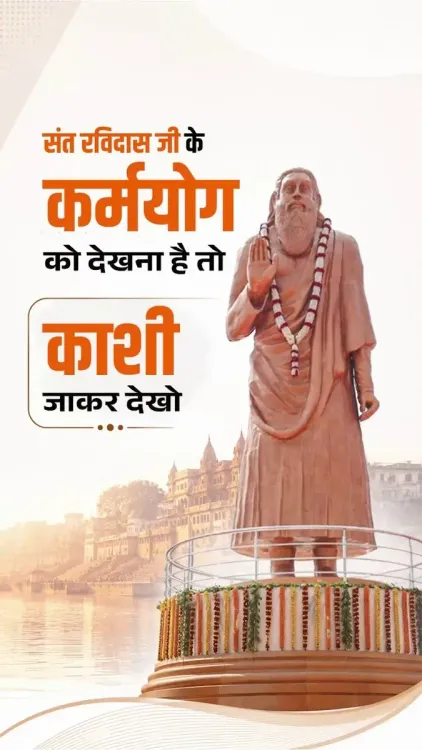
Synopsis
The Chief Minister's Office of Uttar Pradesh invoked 15th-century Bhakti saint Sant Ravidas on 29 July 2026, declaring that 'Naya Uttar Pradesh' is the bearer of his tradition of harmony, equality and goodwill — linking a medieval egalitarian legacy to the state's current governance identity.
Key Takeaways
The CMOfficeUP posted on 29 July 2026 linking 'Naya Uttar Pradesh' to Sant Ravidas's philosophy.
Sant Ravidas was a 15th–16th century Bhakti saint from the Varanasi region who preached equality and rejection of caste discrimination.
The post invokes three specific values: samrasta (harmony), samanta (equality), and sadbhav (goodwill).
The phrase 'Naya Uttar Pradesh' has served as the Yogi Adityanath government's governance brand since 2017 .
Sant Ravidas is particularly revered among Scheduled Caste communities across India.
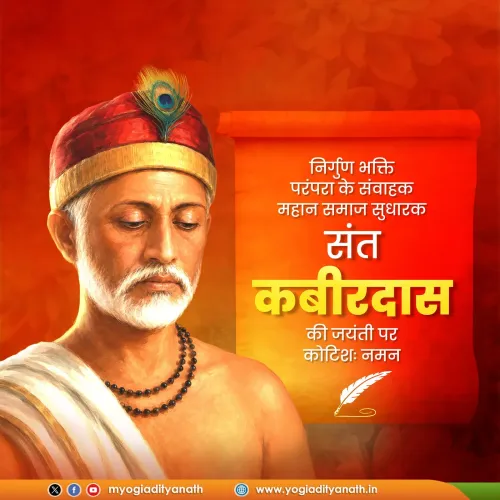
A 15th-century Bhakti saint's centuries-old message of equality is being held up as the living soul of modern Uttar Pradesh. The Chief Minister's Office of Uttar Pradesh declared on Wednesday, 29 July 2026 that the state's identity as 'Naya Uttar Pradesh' (New Uttar Pradesh) is rooted in the tradition of Sant Ravidas — a tradition of samrasta, samanta aur sadbhav (harmony, equality and goodwill).
The post, shared from the official CMOfficeUP handle, reads: 'Sant Ravidas ji ki samrasta, samanta aur sadbhav ki parampara ka samvahak hai Naya Uttar Pradesh' — 'New Uttar Pradesh is the bearer of Sant Ravidas ji's tradition of harmony, equality and goodwill.'
Who Sant Ravidas Was — and Why His Name Still Carries Weight
Sant Ravidas, born in the Varanasi region in the 15th–16th century, was one of the most consequential voices of the Bhakti movement. A leatherworker by birth, he preached the irrelevance of caste and the primacy of devotion and inner dignity — a radical position in medieval India. His verses are enshrined in the Guru Granth Sahib and are revered across communities, particularly among Scheduled Caste communities for whom he remains an icon of self-respect and spiritual equality.
His legacy is not abstract. Uttar Pradesh, the state most closely associated with his life and teachings, has for decades organised Sant Ravidas Jayanti commemorations and memorials. Invoking his name is a deliberate act of cultural and political signalling.
'Naya Uttar Pradesh' — Governance Brand Meets Bhakti Tradition
The phrase 'Naya Uttar Pradesh' has been the Yogi Adityanath government's governance brand since 2017 — used to frame a break from the state's earlier image of lawlessness and economic stagnation. Anchoring that brand to Sant Ravidas's philosophy of samrasta (social harmony) is a specific rhetorical move: it positions the administration not merely as an economic reformer, but as the institutional heir to a centuries-old egalitarian tradition.
State governments in Uttar Pradesh have long drawn on medieval Bhakti saints to frame contemporary social narratives. What is notable here is the directness of the equation — the post does not merely honour Ravidas, it claims his tradition as the defining characteristic of the state under its current identity.
Point of View
Invoking Ravidas is never merely ceremonial; it is an assertion of ideological alignment with a community that has historically been courted by multiple political formations. The move also fits a broader BJP pattern of reclaiming Bhakti saint legacies — figures who transcended caste orthodoxy — as part of a 'Hindu samrasta' narrative. Whether this messaging translates into concrete welfare action for Scheduled Caste communities in UP will be the sharper question observers will track.
NationPress
29 Jul 2026
Frequently Asked Questions
Who was Sant Ravidas and why is he important in Uttar Pradesh?
Sant Ravidas was a 15th–16th century Bhakti saint and poet from the Varanasi region of Uttar Pradesh who preached equality, devotion, and the rejection of caste discrimination. He is especially revered among Scheduled Caste communities and his verses are part of the Guru Granth Sahib.
What is 'Naya Uttar Pradesh'?
'Naya Uttar Pradesh' (New Uttar Pradesh) is the governance branding used by the Yogi Adityanath government since 2017 to signal a transformation in the state's law-and-order situation and economic development.
What did the CMOfficeUP post about Sant Ravidas on 29 July 2026?
The Chief Minister's Office of Uttar Pradesh declared that 'Naya Uttar Pradesh' is the bearer of Sant Ravidas's tradition of harmony (samrasta), equality (samanta), and goodwill (sadbhav).
What is Sant Ravidas Jayanti and when is it celebrated?
Sant Ravidas Jayanti is the birth anniversary of Sant Ravidas, celebrated on the full moon day of the Hindu month of Magh — typically falling in January or February. The Uttar Pradesh government has historically held state-level commemorations on this occasion.
Why do UP governments invoke Bhakti saints like Sant Ravidas?
State governments in Uttar Pradesh have long drawn on medieval Bhakti saints to frame narratives of social harmony. These saints, who challenged caste orthodoxy, carry cross-community moral authority and are used to signal inclusive governance, particularly to Scheduled Caste voters.