CMFRI Unveils Rs 5 Crore Research Project on Seamount Fisheries in the Arabian Sea
Synopsis
Discover how the CMFRI's groundbreaking research project aims to unveil the mysteries of seamount fisheries in the Arabian Sea, focusing on the vital cephalopod species and their ecological importance.
Key Takeaways
Project Budget: Rs 4.986 crore funded by the Ministry of Earth Sciences.
Focus Species: Cephalopods, including squid, cuttlefish, and octopus.
AI Technology: Tools for automated species identification to enhance biodiversity monitoring.
Collaborative Effort: Involves CMFRI and NIT Surathkal.
Research Importance: Aims to inform sustainable fishing practices and conservation policies.
Kochi, March 17 (NationPress) The Central Marine Fisheries Research Institute (CMFRI) has launched a two-year research initiative worth Rs 4.986 crore aimed at investigating fishery resources associated with seamount ecosystems in the Arabian Sea, particularly focusing on both commercially and ecologically vital cephalopods.
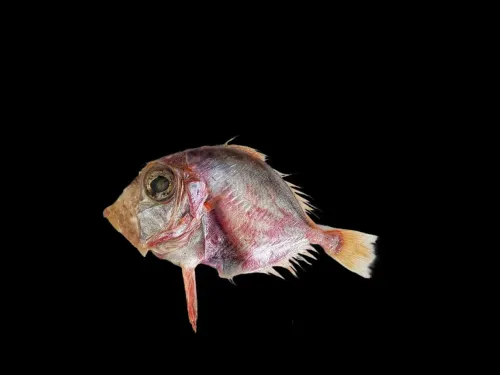
Backed by the Ministry of Earth Sciences, this project intends to catalogue the diversity, distribution, ecology, and biology of populations of squid, cuttlefish, and octopus found around seamounts in the eastern Arabian Sea.
This initiative is part of Vertical-3 of the Deep Ocean Mission, underlining the government's commitment to enhancing the scientific and economic understanding of marine resources.
A significant outcome of the project will be the creation of Artificial Intelligence-powered tools for automated species identification.
These innovative tools are projected to improve taxonomic accuracy, decrease the time required for manual classifications, and facilitate large-scale monitoring of deep-sea biodiversity, an area that remains largely uncharted in Indian waters.
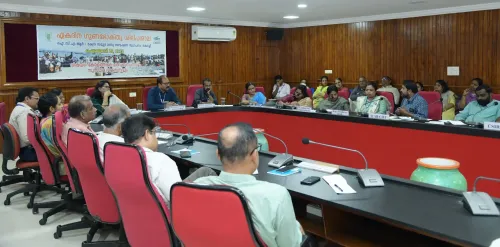
The research is a collaborative effort between CMFRI’s headquarters in Kochi and its Mangaluru Regional Centre, in partnership with the National Institute of Technology, Surathkal.
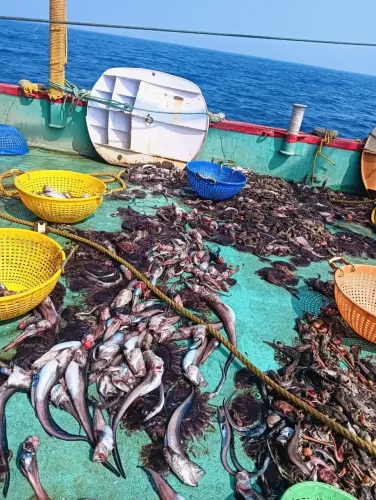
The initial exploratory survey has already been completed, focusing on specific seamounts in the southeastern Arabian Sea.
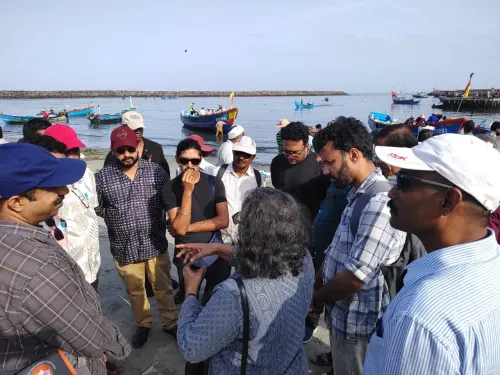
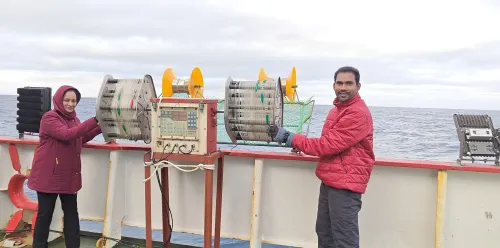
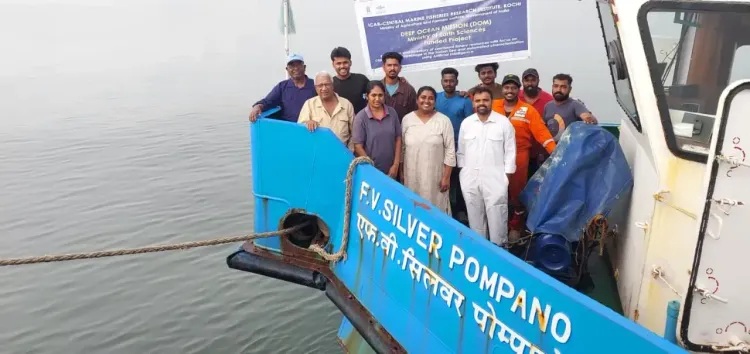
Fieldwork was conducted aboard CMFRI’s research vessel, the F.V. Silver Pompano, led by senior scientists, with additional sampling missions taking place from the Azheekal Fishing Harbour in Kollam.
The surveys primarily concentrated on mapping cephalopod assemblages and examining their relationships with seamount habitats.
Project researchers anticipate that the results will yield essential insights into deep-sea ecosystem dynamics and contribute to sustainable exploitation strategies.
This initiative gains importance as global interest in seamounts rises, which are increasingly acknowledged as biodiversity hotspots that support dense populations of both demersal and benthopelagic species.
Seamounts, defined as underwater elevations rising more than 100 meters from the ocean floor, are known to harbor rich biological communities due to nutrient upwelling and unique habitat structures.
As the scientific and commercial interest in these ecosystems expands, the CMFRI-led initiative could significantly influence India’s long-term policies on deep-sea fisheries and conservation.
Point of View
The CMFRI's initiative represents a significant step towards understanding and conserving India's marine biodiversity. The collaboration between various research institutions highlights a unified approach to tackling the challenges posed by climate change and overfishing in our oceans.
NationPress
24 Sept 2026
Frequently Asked Questions
What is the main focus of the CMFRI's new project?
The project primarily focuses on exploring fishery resources linked to seamount ecosystems in the Arabian Sea, with an emphasis on ecologically and commercially significant cephalopods such as squid, cuttlefish, and octopus.
How is this project funded?
The project is funded by the Ministry of Earth Sciences of India.
What technology will be used in this research?
The research will utilize Artificial Intelligence-based tools for automated species identification, enhancing taxonomic precision and monitoring capabilities.
Where is the research being conducted?
The research is being conducted by CMFRI's Kochi headquarters and its Mangaluru Regional Centre, in collaboration with the National Institute of Technology, Surathkal.
What significance do seamounts have in marine ecosystems?
Seamounts are recognized as biodiversity hotspots that support dense populations of marine species due to their unique habitat structures and nutrient upwelling.