Has CMFRI Achieved a Breakthrough in Mangrove Clam Restoration?
Synopsis
Discover how the ICAR–Central Marine Fisheries Research Institute (CMFRI) has achieved a groundbreaking feat in the induced breeding of mangrove clams, potentially transforming estuarine aquaculture and mangrove conservation efforts.
Key Takeaways
CMFRI has successfully achieved induced breeding of mangrove clams.
This breakthrough is pivotal for mangrove conservation and community-managed aquaculture.
Mangrove clams are important for local diets and ecosystems.
Standardizing hatchery practices can lead to sustainable clam farming.
Addressing overharvesting and habitat degradation is crucial for clam population recovery.
Kochi (Kerala), Feb 9 (NationPress) In a remarkable advancement for the restoration of a quickly dwindling estuarine resource, the ICAR–Central Marine Fisheries Research Institute (CMFRI) has successfully induced breeding of the mangrove clam (Geloina erosa) in controlled environments.
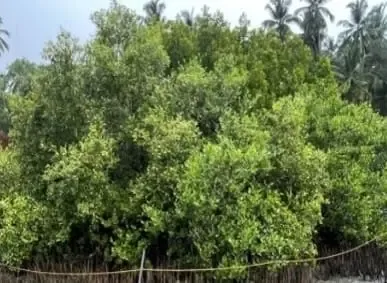
This scientific milestone is anticipated to significantly contribute to the development of community-managed estuarine aquaculture models that are intricately linked with mangrove conservation.
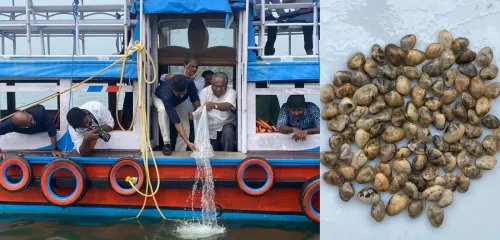
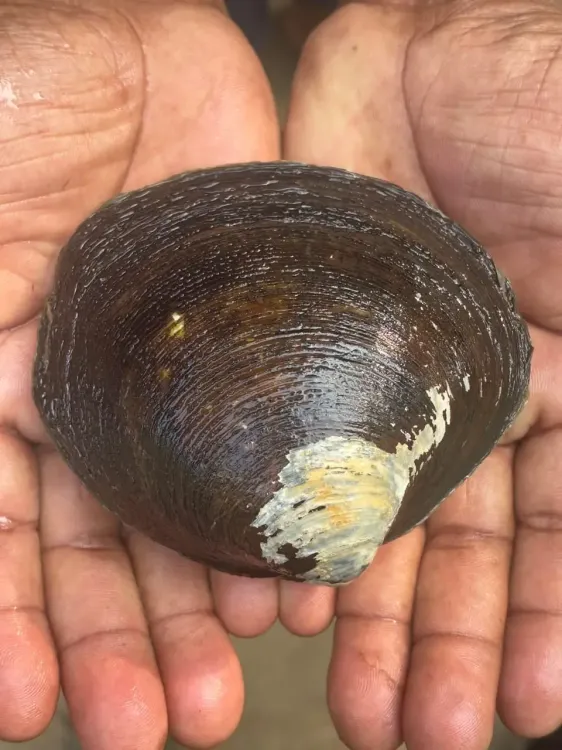
Mangrove clams, often referred to as mud clams, are ecologically significant but increasingly rare bivalve species found in mangrove and estuarine ecosystems throughout South and Southeast Asia.
Although their numbers are dwindling, they remain a cherished local delicacy in various regions of India, especially in northern Kerala, where they are fondly called 'Kandal Kakka'.
This clam typically resides in organic-rich muddy substrates located in intertidal mangrove zones.
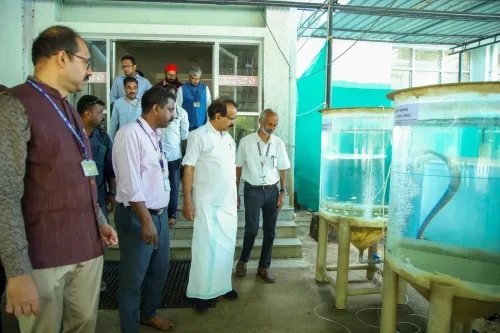
Researchers at CMFRI’s Mariculture Division successfully initiated spawning in captive broodstock while overseeing the complete embryonic and larval development cycle under regulated conditions.
The team recorded successful spat settlement from the 18th day post-spawning, showcasing the potential for producing viable seeds within a hatchery setup.
This achievement stands as one of the few globally documented cases of induced breeding, larval rearing, and spat production of the mangrove clam.
Following this success, CMFRI scientists are now focused on standardizing larval rearing and nursery management protocols to enhance survival rates and facilitate large-scale seed production.
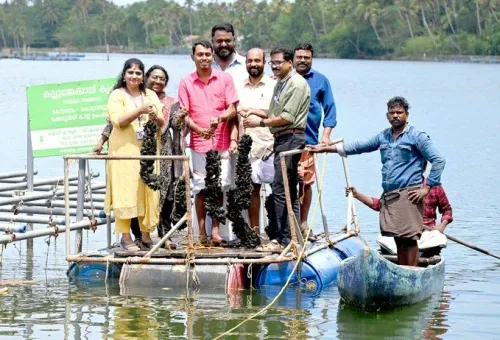
The researchers suggest that the establishment of robust hatchery technology, combined with grow-out farming in appropriate estuarine environments, could lead to low-input, environmentally sustainable aquaculture.
They emphasize that hatchery-produced seeds can be utilized for ranching in degraded or critical mangrove ecosystems, which would simultaneously bolster clam stock enhancement and mangrove restoration.
This breakthrough is anticipated to create new opportunities for sustainable livelihoods and nutritional security for communities that rely on mangroves, particularly along the coast of Kerala.
Farming initiatives utilizing hatchery-produced seeds could aid in restoring depleted natural stocks, alleviate pressure on wild populations, and provide stable income prospects for coastal families.
Throughout India—especially along the eastern coast and in island territories—wild mangrove clam stocks have been consistently declining due to indiscriminate harvesting, habitat degradation, pollution, and coastal development.
The lack of scientific stock assessments, size regulations, and seasonal harvesting controls has exacerbated the depletion, resulting in noticeable declines in both population and shell size.
As one of the largest mud clams globally, capable of reaching shell widths of up to 10 cm, this species plays a vital ecological role by recycling nutrients, stabilizing sediments, and reinforcing mangrove ecosystems, while also supporting food security and livelihoods in coastal areas.
Point of View
I believe this achievement by CMFRI not only showcases the institute's dedication to marine research but also highlights a critical step towards sustainable aquaculture and environmental conservation. It reflects our commitment to supporting local communities while preserving vital ecosystems.
NationPress
1 Oct 2026
Frequently Asked Questions
What is the significance of induced breeding in mangrove clams?
Induced breeding allows for the controlled reproduction of mangrove clams, which can enhance their populations and support sustainable aquaculture efforts.
How does this breakthrough affect local communities?
This achievement is expected to provide sustainable livelihoods and improve nutritional security for mangrove-dependent communities along the Kerala coast.
What role do mangrove clams play in the ecosystem?
Mangrove clams contribute to nutrient recycling, sediment stabilization, and the overall health of mangrove ecosystems.
What challenges do mangrove clam stocks face?
Mangrove clam stocks are threatened by overharvesting, habitat degradation, pollution, and lack of regulatory measures.
What are the future plans of CMFRI regarding mangrove clams?
CMFRI aims to standardize larval rearing and nursery management protocols to further improve survival rates and support large-scale seed production.