CMO Punjab Marks World Nature Conservation Day 2026
Synopsis
The Chief Minister's Office of Punjab observed World Nature Conservation Day on 28 July 2026, emphasising the protection of natural resources and sustainable management. The message aligns with Punjab's ongoing environmental challenges, including groundwater depletion and air quality concerns, within India's broader federal conservation framework.
Key Takeaways
World Nature Conservation Day is observed annually on 28 July to promote protection of natural resources and sustainable environmental practices.
The Chief Minister's Office of Punjab issued a statement on the day under CM Bhagwant Mann's leadership, aligning the state with the global observance.
Punjab faces significant environmental pressures including groundwater depletion, soil degradation, and air pollution linked to agricultural practices.
India's National Environment Policy (2006) and National Action Plan on Climate Change (2008) form the national framework within which Punjab's conservation efforts operate.
No new schemes or allocations were announced in the post; the communication signals ongoing policy focus on environmental conservation.
Upcoming state budget decisions and participation in climate forums will indicate how Punjab translates this awareness messaging into concrete action.
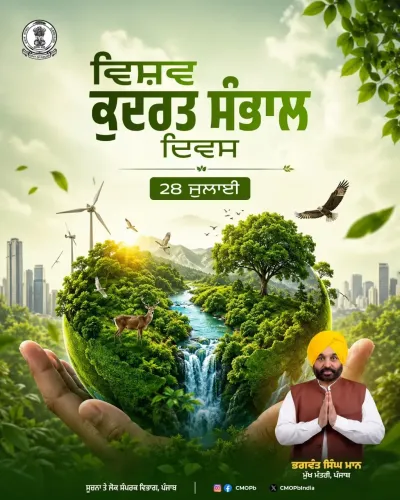
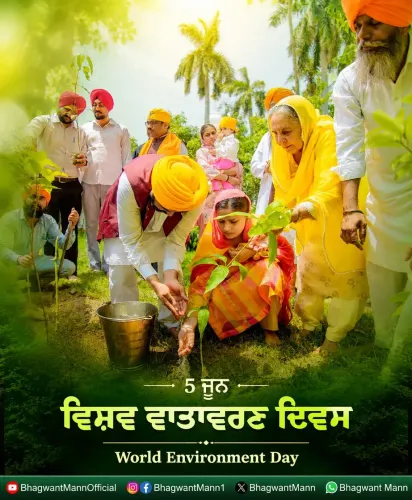
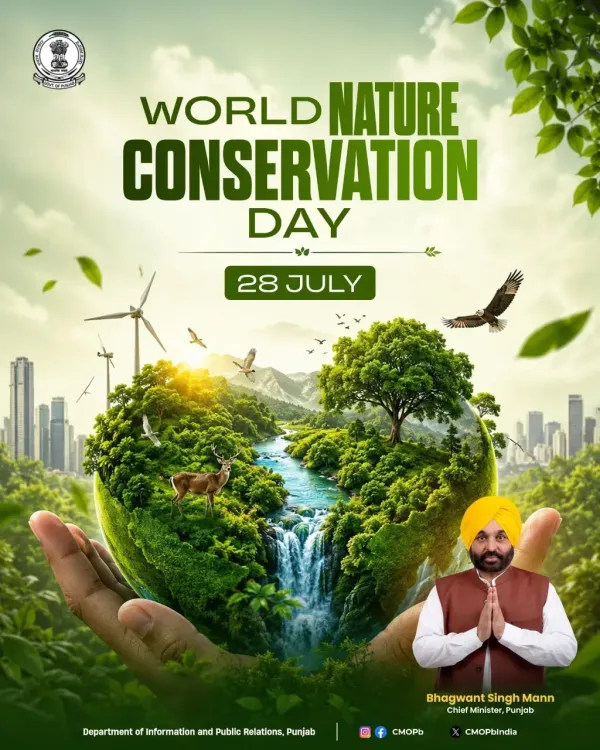
The Chief Minister's Office of Punjab on Tuesday, 28 July 2026 marked World Nature Conservation Day, using the annual global observance to highlight the importance of protecting natural resources, addressing environmental challenges, and advancing sustainable resource management.
The official post stated that World Nature Conservation Day is observed annually on 28 July 'to highlight environmental issues, protect natural resources, promote conservation, and ensure sustainable management.' The message was shared under the hashtags #CMBhagwantMann and #CMOPunjab, signalling the state government's alignment with the global observance.
Context
World Nature Conservation Day is a globally recognised annual observance held every 28 July to raise awareness about the need to protect the planet's natural resources — including forests, water bodies, soil, and biodiversity — for present and future generations. The day encourages governments, institutions, and individuals to commit to sustainable environmental practices.
Indian state governments routinely issue statements on such observance days to align local messaging with national and international sustainability goals. The Chief Minister's Office of Punjab, under Chief Minister Bhagwant Mann of the Aam Aadmi Party, has used the occasion to signal the state's ongoing focus on environmental stewardship.
Policy Backdrop
Punjab is a predominantly agrarian state in northern India with well-documented environmental pressures, including groundwater depletion, soil health degradation, and air quality concerns — particularly linked to stubble burning during the post-harvest season. These challenges make environmental conservation messaging especially significant in the state's policy context.
At the national level, India's National Environment Policy of 2006 laid the foundational framework for conservation and sustainable resource use, while the National Action Plan on Climate Change, launched in 2008, established eight national missions addressing adaptation, mitigation, and sustainable natural resource management. State governments, including Punjab, operate within this broader federal environmental architecture.
Stakeholders and Impact
The primary stakeholders engaged by this observance include Punjab's farming communities, who are directly affected by groundwater availability and soil health; urban residents facing air quality concerns; and civil society conservation groups active in the state. For farmers in particular, sustainable water and soil management practices carry direct economic consequences.
Communications of this nature serve to keep environmental awareness in public discourse and can precede or accompany concrete policy announcements, budget allocations, or scheme launches — though no new measures were announced in this post.
What's Next
Observers will watch for follow-through in the form of state budget allocations or new schemes targeting afforestation, water conservation, or pollution control in the months ahead. Any Punjab government participation in national or international climate-related forums later in 2026 will also indicate how this symbolic messaging translates into policy action.
The broader pattern across Indian states suggests that observance-day communications increasingly serve as anchors for longer policy cycles — making the months following World Nature Conservation Day a meaningful window to assess Punjab's environmental commitments under CM Bhagwant Mann.
Point of View
Typical of how Indian governments use global observance days to reinforce policy priorities without making binding commitments. For Punjab, however, the stakes are higher than for most states — chronic groundwater overextraction and stubble-burning-linked air pollution give conservation messaging an urgency that goes beyond ceremony. The Bhagwant Mann government, which came to power in 2022 on a governance reform platform, has used such occasions to build a narrative of environmental responsibility, even as concrete legislative or budgetary follow-through remains the key test. Analysts will treat this post as a baseline marker against which Punjab's environmental policy actions in the second half of 2026 can be measured.
NationPress
26 Oct 2026
Frequently Asked Questions
When is World Nature Conservation Day observed?
World Nature Conservation Day is observed every year on 28 July to raise awareness about protecting natural resources, promoting conservation, and ensuring sustainable environmental management.
Why did the CMO Punjab post about World Nature Conservation Day?
The Chief Minister's Office of Punjab marked the day to align the state government's messaging with the global observance and signal ongoing commitment to environmental conservation, consistent with a broader pattern among Indian state governments.
What are Punjab's main environmental challenges?
Punjab faces significant environmental challenges including rapid groundwater depletion due to intensive agriculture, soil health degradation, and air pollution — particularly from crop residue burning after the harvest season.
Who is the Chief Minister of Punjab in 2026?
Bhagwant Mann of the Aam Aadmi Party has been Chief Minister of Punjab since March 2022 , and the state's official communications are issued through the Chief Minister's Office under his leadership.
What is India's national policy framework for environmental conservation?
India's environmental conservation framework rests primarily on the National Environment Policy of 2006 and the National Action Plan on Climate Change launched in 2008 , which established eight national missions covering adaptation, mitigation, and sustainable natural resource management.