Punjab CMO highlights thousands joining 'CM di Yogshala' drive
Synopsis
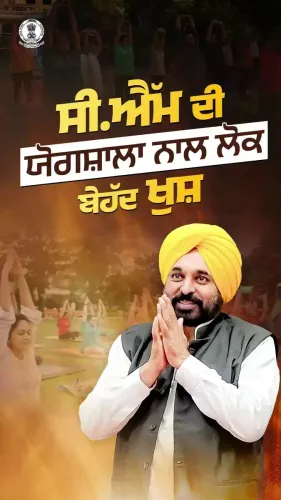
The Chief Minister's Office of Punjab said thousands of residents across the state are practising yoga under 'CM di Yogshala', a wellness programme launched by the Bhagwant Mann-led government. The office said participants are feeling physically and mentally fitter, ahead of International Yoga Day on 21 June.
Key Takeaways
The Chief Minister's Office of Punjab said thousands are participating in 'CM di Yogshala' statewide.
The programme is run by the Bhagwant Mann-led Punjab government as a public wellness initiative.
The post said yoga has boosted residents' interest in physical and mental fitness.
The initiative aligns with India's push for yoga since the UN declared 21 June as International Yoga Day in 2014.
The scheme fits the AAP government's broader health and welfare agenda in Punjab since March 2022.
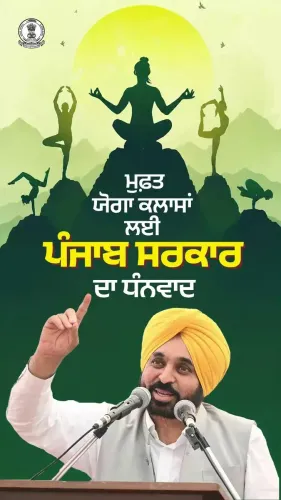
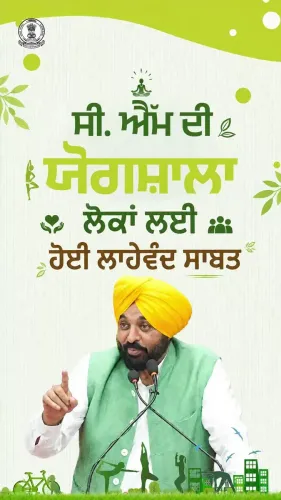
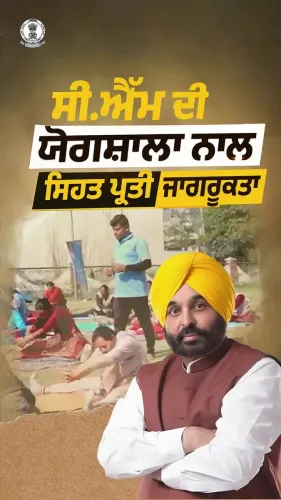
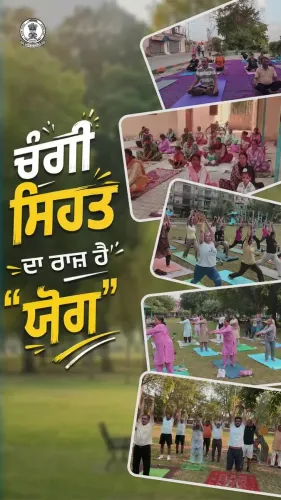
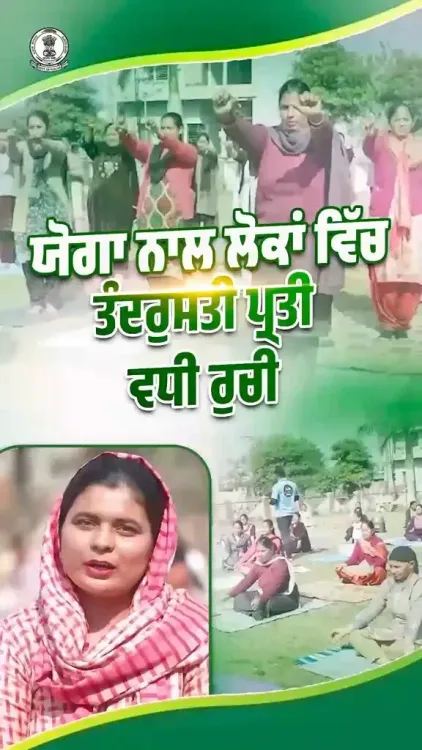
The Chief Minister's Office of Punjab on 4 June 2026 said thousands of residents across the state are participating in 'CM di Yogshala', a public yoga programme launched by the Bhagwant Mann-led government to promote physical and mental wellness. In a post on X, the office said the initiative is helping citizens move toward healthier lifestyles, with growing interest in fitness routines.
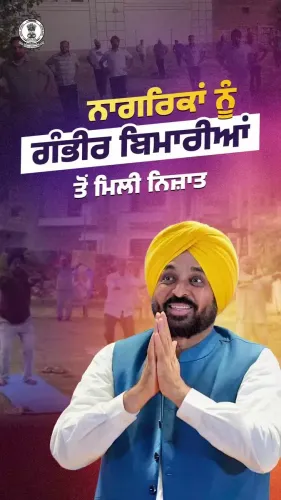
The post, written in Punjabi, stated that under the programme led by Chief Minister Bhagwant Mann, 'thousands of citizens across the state are moving toward a healthy life by practising yoga.' It added that yoga has 'increased people's interest in well-being' and that participants are feeling 'physically and mentally more fit.' The message carried the hashtags #CMOPunjab and #ਮੁੱਖ_ਮੰਤਰੀ_ਦਫ਼ਤਰ_ਪੰਜਾਬ (Chief Minister's Office Punjab).
Context
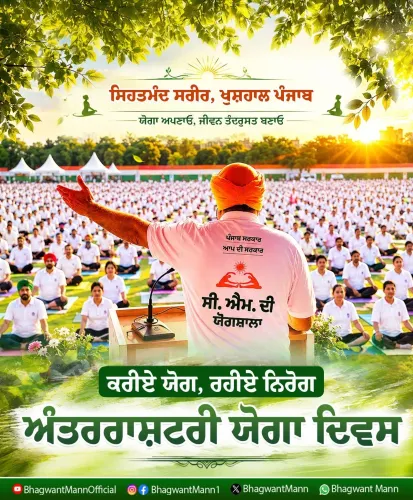
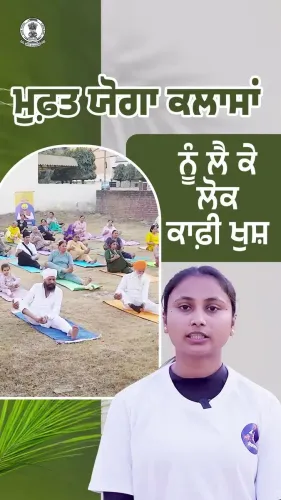
'CM di Yogshala', which translates to 'the Chief Minister's Yoga School', is a flagship wellness programme of the Punjab government. It is built around free, neighbourhood-level yoga classes conducted by trained instructors in parks, community halls and open public spaces across the state, with residents able to request a class in their locality.
The programme falls within the broader health and welfare agenda of the Aam Aadmi Party government, which assumed office in Punjab in March 2022 under Chief Minister Bhagwant Mann. The administration has positioned preventive health alongside its mohalla clinic model and public schooling initiatives.
Policy backdrop
State-sponsored yoga drives have become a familiar feature of Indian public-health policy since the United Nations General Assembly declared 21 June as the International Day of Yoga in 2014, following a proposal from India. Since then, central and state governments have used the discipline as a low-cost preventive-health tool.
The emphasis on physical and mental fitness gained renewed weight after the COVID-19 pandemic, when lifestyle disease management and mental-health support entered mainstream policy conversation. Punjab's programme continues this pattern, aligning a state welfare scheme with a widely recognised wellness practice.
Stakeholders and impact
The primary beneficiaries are Punjab's residents, particularly urban and semi-urban populations with access to community spaces where classes are held. The model also creates engagement for certified yoga instructors recruited by the state, building a small public-sector wellness workforce.
For the government, the programme doubles as a visible, citizen-facing welfare touchpoint, one that reinforces the administration's claim of focusing on day-to-day quality of life. The post does not specify current participation numbers, the geographic spread of active classes, or any new expansion plans.
What's next
Attention will turn to the run-up to International Yoga Day on 21 June, when state governments typically host large public yoga events and release participation data. Punjab is expected to use the occasion to showcase 'CM di Yogshala' through district-level gatherings.
Sustained traction will depend on consistent class schedules, instructor availability and uptake in rural belts, where access to organised wellness programmes has historically been thinner. If the model holds, it could become a template the AAP administration cites in arguing that small-scale, neighbourhood welfare delivery can shape long-term public-health outcomes in the state.
Point of View
Citizen-facing welfare programmes in steady public view between marquee policy announcements. 'CM di Yogshala' fits the AAP playbook of branding everyday services, much as mohalla clinics and free utilities have been positioned in Delhi and Punjab. Timing the messaging weeks before International Yoga Day suggests an attempt to claim early ownership of the wellness narrative. The broader test, however, lies in whether attendance and infrastructure scale beyond urban hubs into rural Punjab.
NationPress
19 Sept 2026
Frequently Asked Questions
What is CM di Yogshala in Punjab?
'CM di Yogshala' is a Punjab government programme that offers free yoga classes to residents in neighbourhood parks and community spaces, conducted by trained instructors. It was launched under the Bhagwant Mann-led administration to promote physical and mental fitness.
Who launched the CM di Yogshala scheme?
The scheme was launched by the Punjab government led by Chief Minister Bhagwant Mann of the Aam Aadmi Party, which has been in office in the state since March 2022.
How can residents join CM di Yogshala classes?
Residents can request a class in their locality, after which the state arranges a trained instructor to conduct sessions in nearby public spaces such as parks or community halls. The classes are free of cost.
When is International Yoga Day observed?
International Yoga Day is observed every year on 21 June. It was declared by the United Nations General Assembly in 2014 following a proposal from India.
What did the CMO Punjab say about the yoga programme?
The Chief Minister's Office of Punjab said thousands of citizens across the state are practising yoga under 'CM di Yogshala' and that participants are feeling physically and mentally fitter, with greater interest in overall wellness.