SAREX-2026: Coast Guard drills mass sea rescue off Paradip with Navy, IAF
Synopsis
India's 12th national maritime rescue drill brought together the Coast Guard, Navy, IAF and 32 observers from 30 countries off Paradip — simulating a passenger aircraft ditching into a container ship with 228 lives at stake. The exercise is the most internationally watched SAREX edition yet, signalling India's ambition as the Indo-Pacific's go-to SAR partner.
Key Takeaways
The 12th SAREX was conducted by the Indian Coast Guard off Paradip, Odisha on 8 October 2026 under the NMSARB .
32 observers from 30 countries participated, the broadest international representation in recent editions.
Assets included 15 Coast Guard ships , 3 Dornier aircraft , 3 Advanced Light Helicopters , IAF C-130J and Mi-17 aircraft, and 2 Indian Navy ships .
The simulated scenario involved a passenger aircraft carrying 228 persons ditching near Paradip Port and striking container vessel MV Zumba .
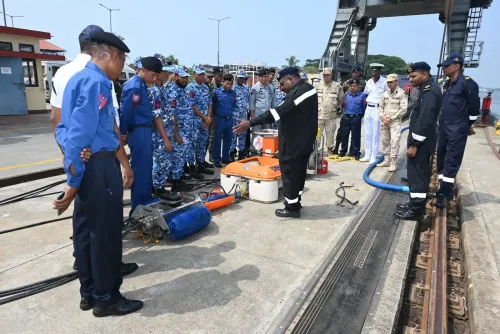
The exercise featured a live demonstration of Remotely Operated Vehicle (ROV) capability, highlighting the role of emerging technology in SAR.
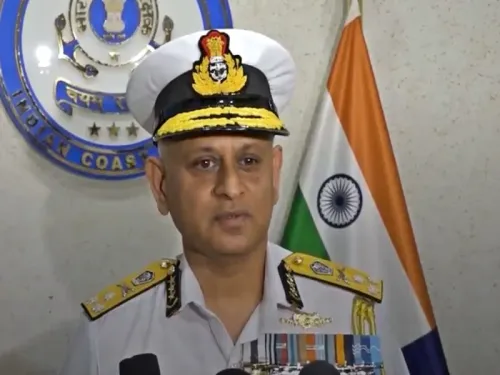
The drill was reviewed by ICG Director General Paramesh Sivamani .
The Indian Coast Guard (ICG) on 8 October 2026 led the 12th National Maritime Search and Rescue Exercise (SAREX-2026) off Paradip, Odisha, bringing together defence, civil, and state agencies to stress-test coordinated mass rescue capabilities at sea. The exercise was conducted under the aegis of the National Maritime Search and Rescue Board (NMSARB) and reviewed by ICG Director General Paramesh Sivamani.
Scale and Participating Agencies
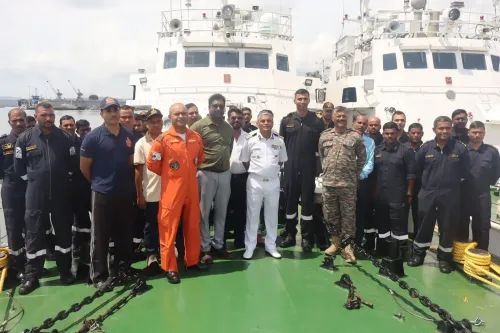
The drill drew participation from the Indian Navy, Indian Air Force (IAF), Shipping Corporation of India, Directorate General of Shipping, Fisheries, Customs, Marine Police, Paradip Port Authority, and the Odisha state administration. Notably, 32 observers from 30 countries witnessed the exercise — a marker of India's growing standing as a regional maritime search and rescue (SAR) partner.
Their presence, according to officials, facilitated an exchange of best practices and enhanced global interoperability in maritime emergency response.
Assets Deployed
The exercise deployed a substantial multi-platform fleet: 15 Coast Guard ships, three Dornier aircraft, three Advanced Light Helicopters, one Chetak helicopter, IAF C-130J and Mi-17 aircraft, and two Indian Navy ships, supported by civil resources, state assets, and shore-based units. The breadth of assets reflects the exercise's theme — 'Leveraging Technology to Strengthen SAR Preparedness and Maritime Safety'.
The Simulated Scenario
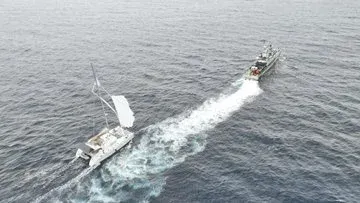
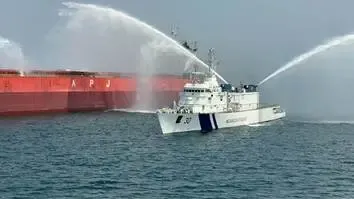
The sea drill centred on a simulated concurrent aeronautical and maritime distress emergency. In the scenario, a passenger aircraft carrying 228 persons ditched at sea near Paradip Port; the fuselage then struck the container vessel MV Zumba, triggering structural damage and a shipboard fire.
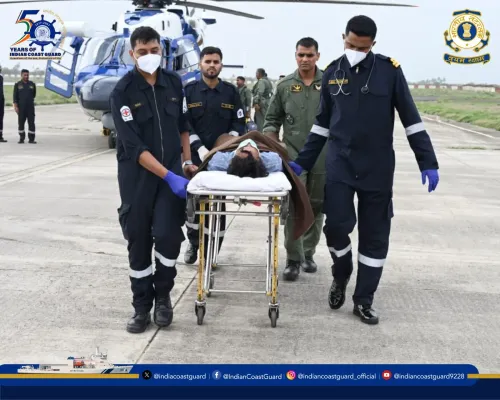
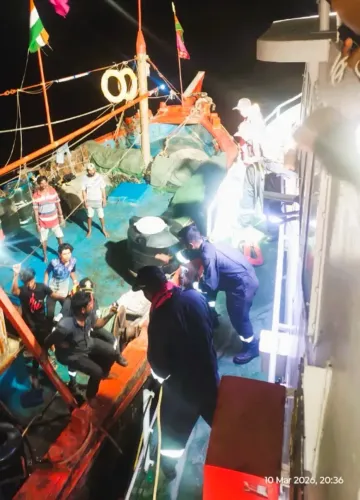
Response procedures activated included the Incident Command Post, firefighting operations, helicopter evacuations, deployment of life rafts and air-droppable life rafts, Jason Cradle and Gemini recovery, rescue basket operations, and scramble net procedures. A demonstration of Remotely Operated Vehicle (ROV) capability was also incorporated, underlining the exercise's emphasis on emerging technology in SAR missions.
Why SAREX-2026 Matters
India's coastline stretches over 7,500 kilometres, and its Search and Rescue Region (SRR) covers millions of square nautical miles in the Bay of Bengal and the Arabian Sea — one of the busiest maritime corridors in Asia. Annual SAREX drills are designed to close coordination gaps between agencies that rarely operate together in peacetime. This comes amid growing international focus on Indo-Pacific maritime security and India's stated ambition to serve as a 'first responder' in the region's waters.
The participation of observers from 30 countries — the broadest international representation in recent SAREX editions — signals that India is actively marketing its SAR framework as a model for regional collaboration.
What Happens Next
Lessons from SAREX-2026 will feed into updated NMSARB protocols and interoperability guidelines shared with participating nations. The ICG is expected to publish an after-action report that will inform the planning cycle for the 13th SAREX. Continued integration of ROV and drone technologies is likely to feature prominently in future editions as unmanned systems take on a larger role in maritime emergency response.
Point of View
India is quietly positioning the ICG as the institutional backbone of Indo-Pacific SAR diplomacy. The ROV demonstration is a deliberate signal that India's SAR doctrine is modernising, not just rehearsing. What the exercise does not yet answer is whether inter-agency coordination gaps identified in past editions have been structurally fixed or merely smoothed over for the cameras. The real test of SAREX's value will come in an unscripted emergency, where Incident Command Post authority and Navy-Coast Guard primacy disputes have historically caused delays.
NationPress
8 Oct 2026
Frequently Asked Questions
Which agencies participated in SAREX-2026?
Participants included the Indian Coast Guard, Indian Navy, Indian Air Force, Shipping Corporation of India, Directorate General of Shipping, Fisheries, Customs, Marine Police, Paradip Port Authority, and the Odisha state administration. Additionally, 32 observers from 30 countries attended the exercise.
What scenario was simulated during the drill?
The drill simulated a passenger aircraft carrying 228 persons ditching at sea near Paradip Port, with the fuselage striking container vessel MV Zumba, causing structural damage and fire. Responders activated the Incident Command Post, conducted helicopter evacuations, firefighting, life raft deployments, and demonstrated ROV capability.
Why did 30 countries send observers to SAREX-2026?
The international observers participated to exchange best practices and enhance global interoperability in maritime SAR. Their presence reaffirms India's role as a key maritime search and rescue partner in the Indo-Pacific region, which has been a strategic priority for Indian maritime policy.
What assets were deployed in SAREX-2026?
The exercise deployed 15 Coast Guard ships, three Dornier aircraft, three Advanced Light Helicopters, one Chetak helicopter, IAF C-130J and Mi-17 aircraft, and two Indian Navy ships, along with civil, state, and shore-based support units.