Cockroach Janta Party: Satire, AAP links, and India's political vacuum
Synopsis
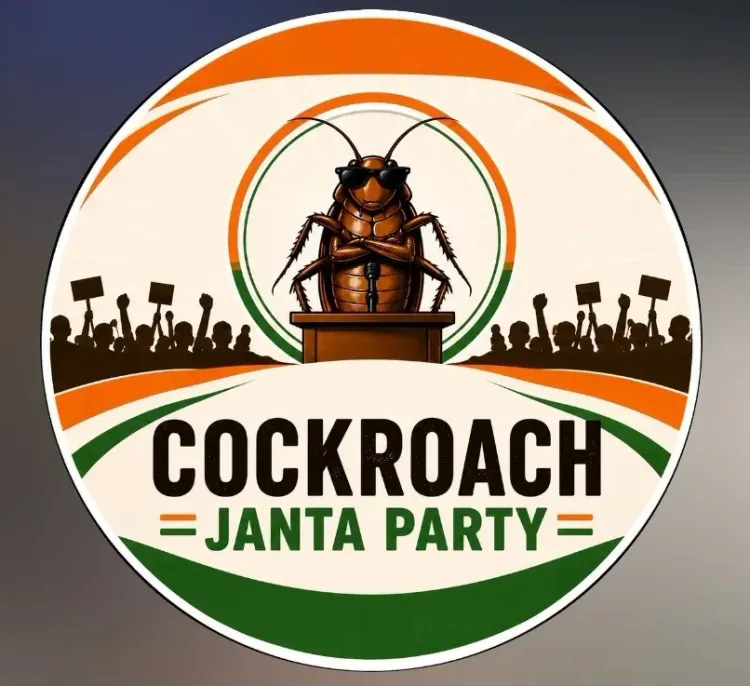
A satirical mock party built around a cockroach, launched by a Maharashtra student studying abroad, has gone viral — but its timing, the founder's documented AAP ties, and its alignment with Kejriwal's judicial battles and NEET protests have raised hard questions about whether this is organic satire or a coordinated digital operation.
Key Takeaways
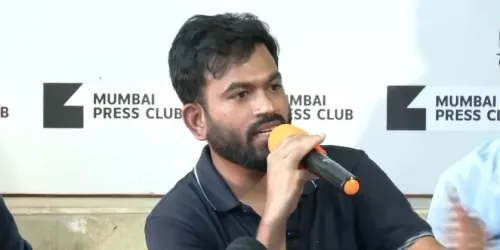
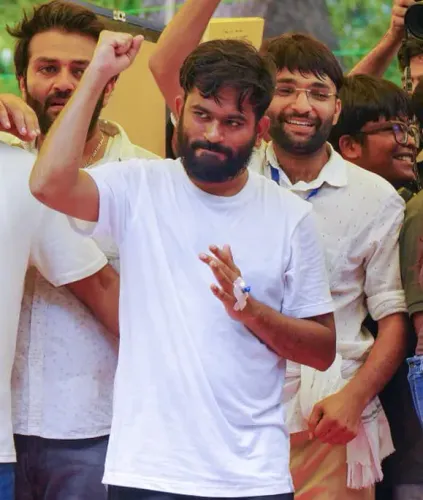
The Cockroach Janta Party (CJP) was launched by Abhijeet Dipke , a student from Chhatrapati Sambhajinagar, Maharashtra , currently studying abroad.
Dipke reportedly had ties to the Aam Aadmi Party (AAP) between 2020 and 2023 , including work on its social media team during the 2020 Delhi Assembly election .
The CJP's launch followed contempt proceedings initiated against Kejriwal , Sisodia , Sanjay Singh , and others by Delhi High Court judge Justice Swarana Kanta Sharma .
Dipke's first campaign demanded the resignation of Union Education Minister Dharmendra Pradhan over the NEET paper leak , days after Kejriwal's own public appeal to students on 12 May .
Comparisons are being drawn between the CJP and the India Against Corruption movement that preceded the formation of AAP.
Several Opposition parties have begun speaking in favour of the CJP, according to reports, raising questions about coordinated amplification.
A satirical political outfit called the Cockroach Janta Party (CJP), launched by Abhijeet Dipke, a student from Maharashtra's Chhatrapati Sambhajinagar district currently studying abroad, has gone viral across social media platforms in May 2025, drawing both curiosity and pointed questions about its true origins. What began as an apparent act of political satire has snowballed into a digital phenomenon — and, critics argue, something potentially more calculated.
The Rise of the CJP
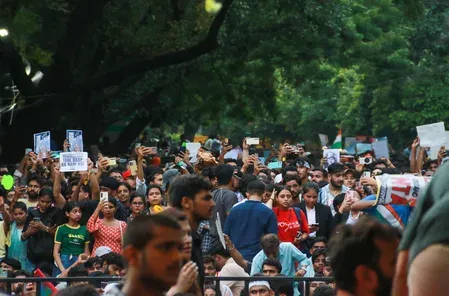
India has a long tradition of political satire — from newspaper cartoons and 'mushairas' to stand-up comedy and viral online content. In that context, the CJP's emergence is not, on its face, unusual. Dipke channelled what he described as satirical creativity into a mock political movement built around the cockroach as its central symbol. The online response, however, far exceeded what a lone student acting independently might typically generate, prompting scrutiny of who or what may be amplifying the effort.
Notably, Dipke's past association with the Aam Aadmi Party (AAP) is now part of the public record. Reports indicate he was linked to the party between 2020 and 2023 and volunteered with its social media team, reportedly participating in digital campaigning during the 2020 Delhi Assembly election, which the Arvind Kejriwal-led AAP won. Old social media posts in which Dipke expressed admiration for Manish Sisodia and reaffirmed his commitment to the party have since resurfaced, as has a photograph of the two together.
The AAP Connection and Timing
The CJP's launch came amid a turbulent period for AAP's leadership. In April 2025, Kejriwal appeared before Delhi High Court judge Justice Swarana Kanta Sharma in connection with the excise policy case, where he argued for her recusal. Clips of the courtroom exchange spread rapidly online. On 27 April, Kejriwal wrote to Justice Sharma stating he would neither appear before her personally nor through legal counsel, invoking Mahatma Gandhi's path of 'satyagraha'. Sisodia adopted a similar stance, and both leaders subsequently visited Raj Ghat.
A coordinated social media campaign accompanied these developments, portraying Kejriwal and AAP as victims in the judicial process. Justice Sharma eventually recused herself from the matter, while also initiating contempt proceedings against Kejriwal, Sisodia, Sanjay Singh, Saurabh Bharadwaj, and others over alleged attempts to undermine the court's integrity online.
The CJP's public launch followed shortly after remarks were attributed to Chief Justice of India Surya Kant involving the words 'parasites' and 'cockroaches' during court proceedings on 15 May — though clarification later emerged that those comments had been misinterpreted. The proximity in timing has drawn significant attention.
NEET and the Student Mobilisation Angle
Dipke's first public campaign involved an online petition demanding the resignation of Union Education Minister Dharmendra Pradhan over the NEET paper leak controversy. He also released a video message urging students and young people to mobilise around the issue. These videos appeared days after Kejriwal publicly appealed to students on 12 May to protest over the same controversy — a sequence that critics argue is difficult to dismiss as coincidental.
Observers have drawn comparisons between the CJP and the India Against Corruption (IAC) movement launched by Anna Hazare, which Kejriwal later leveraged to form the AAP. Whether that parallel is fully warranted remains open to debate, but the structural resemblance — a grassroots-styled digital movement with apparent links to an established political actor — is being widely discussed.
Broader Questions About Digital Political Narratives
The episode raises questions that extend beyond the CJP itself. How easily can online political narratives be manufactured and amplified? How susceptible are younger audiences, particularly Gen Z users, to highly packaged political messaging originating from outside the country? Similar patterns of digitally driven political disruption have been observed in Nepal, Bangladesh, and Sri Lanka in recent years.
Several Opposition parties in India have begun speaking in favour of the CJP, openly or indirectly, according to reports — a development that analysts find noteworthy given the movement's opaque origins. The CJP has also attracted attention in sections of the international media.
Political satire has an established and legitimate place in democratic discourse. But when public frustration begins coalescing around symbols associated with decay, it arguably points to a deeper vacuum in the opposition ecosystem — one that, critics contend, has been partly self-created through sustained adversarial politics rather than constructive alternatives. How the CJP's story develops from here may say as much about that vacuum as it does about the movement itself.
Point of View
The precise timing relative to Kejriwal's judicial battles, and the NEET campaign sequencing are individually explainable; together, they form a pattern that deserves scrutiny rather than dismissal. What is equally telling is the Opposition's reflexive embrace of the movement without interrogating its provenance — a reminder that parties willing to weaponise any available symbol against the BJP risk amplifying narratives they do not fully understand or control. The cockroach is a potent political metaphor, but the more consequential question is who is holding the megaphone.
NationPress
9 Oct 2026
Frequently Asked Questions
What is the Cockroach Janta Party (CJP)?
The Cockroach Janta Party is a satirical mock political outfit launched by Abhijeet Dipke, a student from Maharashtra's Chhatrapati Sambhajinagar district who is currently studying abroad. It went viral on social media in May 2025, drawing both widespread attention and questions about its political backing.
What is Abhijeet Dipke's connection to the Aam Aadmi Party?
Reports indicate Dipke was associated with AAP between 2020 and 2023 and volunteered with its social media team, reportedly participating in digital campaigning during the 2020 Delhi Assembly election. Old social media posts expressing admiration for Manish Sisodia and a photograph of the two together have also resurfaced.
Why is the timing of the CJP's launch considered significant?
The CJP launched shortly after remarks attributed to Chief Justice of India Surya Kant involving the words 'parasites' and 'cockroaches' were misinterpreted during court proceedings on 15 May, and amid AAP's intensifying confrontation with the Delhi High Court over the excise policy case. Critics argue the sequence of events is unlikely to be coincidental.
How does the CJP compare to the India Against Corruption movement?
Observers have drawn structural parallels between the CJP and the India Against Corruption movement led by Anna Hazare, which Arvind Kejriwal later used as a launchpad for forming the AAP. Both involve grassroots-styled digital mobilisation with apparent links to established political actors, though whether the comparison is fully justified remains contested.
What broader concerns does the CJP episode raise?
The episode raises questions about how easily political narratives can be manufactured and amplified online, and how vulnerable younger audiences are to packaged political messaging from outside the country. Similar patterns of digitally driven political disruption have been observed in Nepal, Bangladesh, and Sri Lanka in recent years.