Coimbatore Corporation's ₹824 crore underground drainage plan for north, east zones
Synopsis
Coimbatore's civic body has drawn up an ₹824 crore underground drainage plan covering three fast-growing localities, with projections stretching to 2060 — a rare long-horizon infrastructure bet for a tier-2 city. With 411 km of pipelines, 33,637 household connections, and a new treatment plant at Ondipudur, the project's scale signals how rapidly Kalapatti, Vilankurichi, and Saravanampatti are urbanising.
Key Takeaways
CCMC has submitted a DPR for an ₹824 crore underground drainage network covering Kalapatti , Vilankurichi , and parts of Saravanampatti .
The scheme involves laying 411 km of sewer pipelines, constructing 15,777 manholes , and providing 33,637 household connections .
A new sewage treatment plant at Ondipudur will have a capacity of 17.66 million litres per day , with treated water discharged into the Noyyal River .
Population in the service area is projected to grow from 1,30,264 in 2030 to 2,24,999 by 2060 .
Funding is proposed through the State Incentive Grant under Central Finance Commission funds; approval from the Directorate of Municipal Administration is pending.
Residents of wards 4–10, 21, 22, and 23 are expected to benefit once the network is commissioned.
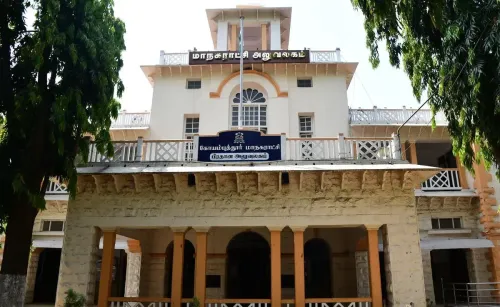
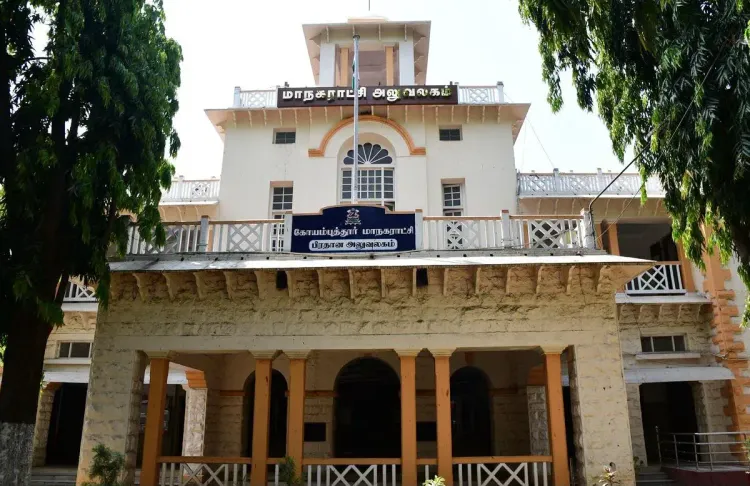
The Coimbatore City Municipal Corporation (CCMC) has prepared a Detailed Project Report (DPR) for a new underground drainage network covering Kalapatti, Vilankurichi, and parts of Saravanampatti, at an estimated cost of ₹824 crore. The proposal has been submitted to the Directorate of Municipal Administration for approval, with the corporation currently finalising cost estimates and completing preliminary groundwork.
Areas Covered and Current Gaps
The proposed network targets wards in the north and east zones of Coimbatore that fall outside existing underground drainage schemes. At present, the Tamil Nadu Water Supply and Drainage Board is carrying out drainage works in Saravanampatti, Thudiyalur, Kavundampalayam, Vadavalli, Veerakeralam, and Vellakinar. The new scheme is designed to fill the remaining gaps in sanitation infrastructure across the city's expanding residential and commercial corridors.
Population and Sewage Projections
The project has been planned on the basis of long-term population and sewage-generation estimates. The population in the proposed service area is expected to reach 1,30,264 by 2030, rise to 1,72,132 by 2045, and touch 2,24,999 by 2060. Correspondingly, daily sewage generation is projected at 13.37 million litres in 2030, 17.66 million litres in 2045, and 23.09 million litres by 2060. Officials said the sewer network has been designed in accordance with the terrain to ensure systematic collection and transportation of wastewater.
Infrastructure and Treatment Capacity
The scheme involves laying approximately 411 km of sewer pipelines and constructing 15,777 manholes. Around 33,637 household sewer connections are planned. The plan provides for 10 sewage pumping stations and five sewage lifting stations. Sewage collected through the network will be transported to a proposed treatment plant at Ondipudur, which will have a treatment capacity of 17.66 million litres per day. Treated wastewater is proposed to be discharged into the nearby Noyyal River. Once commissioned, the network will benefit residents of wards 4, 5, 6, 7, 8, 9, 10, 21, 22, and 23.
What the Commissioner Said
CCMC Commissioner Katta Ravi Teja confirmed that the completed DPR has been forwarded to the Directorate of Municipal Administration. He said the scheme would cover most areas currently excluded from existing underground drainage projects in the north and east zones.
Funding and Next Steps
The corporation plans to seek financial assistance through the State Incentive Grant component of Central Finance Commission funds. Officials maintain the project is essential for meeting future sanitation requirements as Kalapatti, Vilankurichi, and Saravanampatti continue to witness substantial residential and commercial expansion. Approval from the Directorate of Municipal Administration remains the critical next milestone before work can begin.
Point of View
But the real question is timeline: urban infrastructure DPRs in Tamil Nadu have a mixed record of moving from approval to ground-breaking without multi-year delays. The decision to discharge treated wastewater into the Noyyal River — already under environmental stress — will need close regulatory scrutiny. Funding through the State Incentive Grant component of Central Finance Commission funds is not guaranteed, and any shortfall could stall a project whose population projections run all the way to 2060.
NationPress
13 Aug 2026
Frequently Asked Questions
What is the CCMC underground drainage project in Coimbatore?
It is a proposed ₹824 crore underground sewer network covering Kalapatti, Vilankurichi, and parts of Saravanampatti in Coimbatore. The Detailed Project Report has been submitted to the Directorate of Municipal Administration for approval.
Which areas will benefit from the new drainage network?
Residents of wards 4, 5, 6, 7, 8, 9, 10, 21, 22, and 23 in Coimbatore's north and east zones are expected to benefit. These localities currently fall outside existing underground drainage schemes.
How large is the proposed infrastructure?
The scheme involves approximately 411 km of sewer pipelines, 15,777 manholes, 10 sewage pumping stations, five sewage lifting stations, and around 33,637 household connections. A new treatment plant at Ondipudur will handle 17.66 million litres per day.
How will the project be funded?
The Coimbatore City Municipal Corporation plans to seek financial assistance through the State Incentive Grant component of Central Finance Commission funds. Final approval from the Directorate of Municipal Administration is still awaited.
Why is this project being planned now?
Kalapatti, Vilankurichi, and Saravanampatti are witnessing rapid residential and commercial growth, and the existing drainage infrastructure does not cover these areas. Population in the service zone is projected to nearly double from 1,30,264 in 2030 to 2,24,999 by 2060, making long-term sewage capacity planning necessary.