Is the Cold Wave in Kashmir Going to Last?
Click to start listening
Synopsis
As Kashmir experiences a cold wave with temperatures dipping significantly, experts are concerned about the potential lack of snowfall this winter. This could impact water levels and lead to drought in the coming summer. Residents are anxious for a change in weather patterns as health concerns rise amidst the dry conditions.
Key Takeaways
- Minimum temperatures have risen above freezing in Kashmir.
- Maximum temperatures continue to decline.
- Concerns over water levels due to prolonged dry conditions.
- Chillai Kalan approaching, critical for snowfall.
- Health issues rising linked to dry air.
Srinagar, Dec 14 (NationPress) - Thanks to an extended period of cloud cover throughout the night, the minimum temperature in the Kashmir Valley saw a slight increase on Sunday, surpassing the freezing mark, while the maximum temperature continued to decline.
According to officials from the Meteorological (MeT) department, the cloud cover led to a rise in minimum temperatures across the Valley, but maximum temperatures fell even further.
In Srinagar, the minimum temperature recorded was 2 degrees Celsius, while Gulmarg and Pahalgam registered minimums of 1.4 and 2.4 degrees respectively. Yesterday, Srinagar's maximum temperature was 7.7 degrees, with Gulmarg and Pahalgam at 7.2 and 9 degrees respectively, as reported by the MeT department.
Jammu city recorded a minimum temperature of 11.4 degrees, while Katra had 11.2, Batote 7.9, Banihal 5.5, and Bhaderwah 4.7 degrees according to MeT officials.
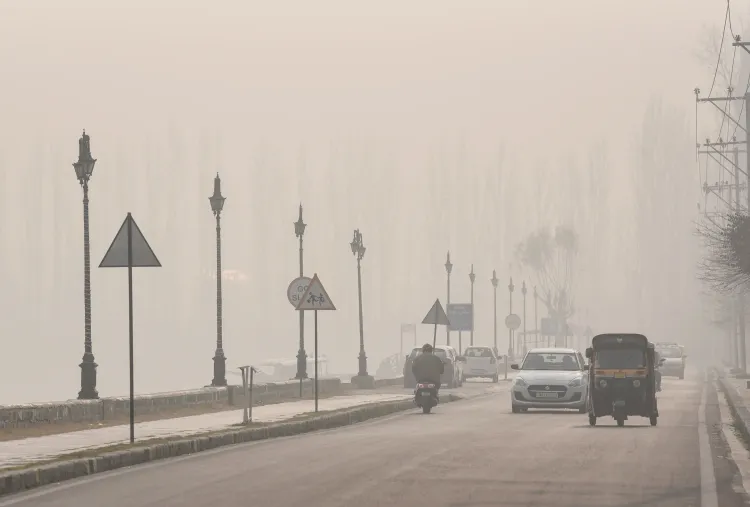
Despite the presence of cloud cover and fog across Srinagar and the Valley, the likelihood of snowfall in the plains remains low. However, light snowfall may occur in the higher elevations in the coming days.
The MeT forecast indicates no significant weather changes over the next ten days, leading to concerns that the month may pass without substantial snowfall in Jammu and Kashmir.
An ongoing dry spell lasting over two months has resulted in diminished water levels in rivers, streams, lakes, springs, and wells across Kashmir.
The Jhelum River, which flows from south to north through the Valley, is nearing an alarming low.
The traditional 40-day period of intense winter known as ‘Chillai Kalan’ will commence on December 21 and conclude on January 30.
Typically, heavy snowfall during Chillai Kalan replenishes the water reservoirs in the mountains, essential for sustaining various water bodies throughout the summer.
A lack of snow during Chillai Kalan could signal drought conditions in the summer ahead. This dire situation has led the people of Kashmir to fervently pray for ample snowfall during the winter months. Additionally, the dry winter air has resulted in a surge of respiratory ailments in J&K, with many individuals experiencing flu-like symptoms and persistent coughs.
Point of View
It is imperative to emphasize the importance of monitoring weather patterns, particularly in regions like Jammu and Kashmir, where winter conditions significantly affect water supply and public health. The need for comprehensive reporting on these developments cannot be overstated.
NationPress
14/12/2025
Frequently Asked Questions
What is the current temperature in Kashmir?
As of December 14, the temperatures in Kashmir Valley show a minimum of 2 degrees Celsius in Srinagar, while Gulmarg and Pahalgam recorded 1.4 and 2.4 degrees, respectively.
Will there be snowfall in Kashmir soon?
The forecast indicates low chances of snowfall in the plains, but there may be isolated light snowfall in higher elevations in the coming days.
What is Chillai Kalan?
Chillai Kalan is a traditional 40-day period of intense winter in Kashmir, starting on December 21 and ending on January 30, usually characterized by heavy snowfall.
How has the dry spell affected water levels?
The ongoing dry spell has significantly reduced water levels in rivers, streams, and other water bodies across Kashmir.
What health issues are arising from the current weather?
The dry winter conditions have led to an increase in respiratory ailments, with many residents suffering from flu and dry cough.