Is Mumbai Integral to Maharashtra's Future Growth?
Synopsis
As Maharashtra gears up for the municipal elections, CM Devendra Fadnavis firmly declares that Mumbai will always remain a part of the state. He outlines ambitious plans to make Maharashtra a trillion-dollar economy by 2030 and emphasizes collaboration for growth. Discover the government's commitment to infrastructure, investments, and renewable energy initiatives that promise a brighter future for the state.
Key Takeaways
Mumbai is declared an inseparable part of Maharashtra .
Aiming for a trillion-dollar economy by 2030.
Commitment to crop loan waivers for farmers.
Focus on renewable energy and infrastructure.
Expansion of the metro network in Mumbai.
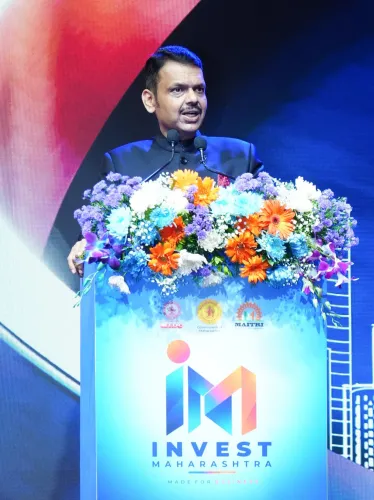
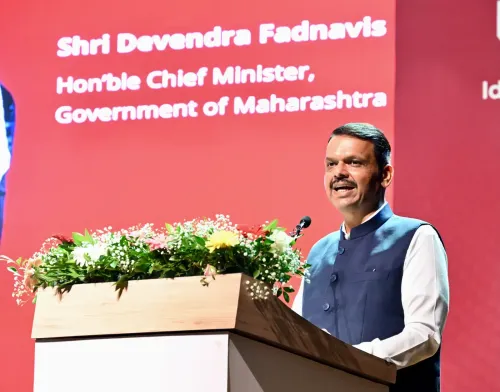
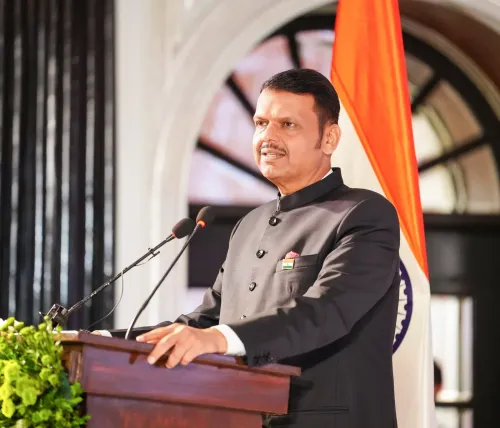
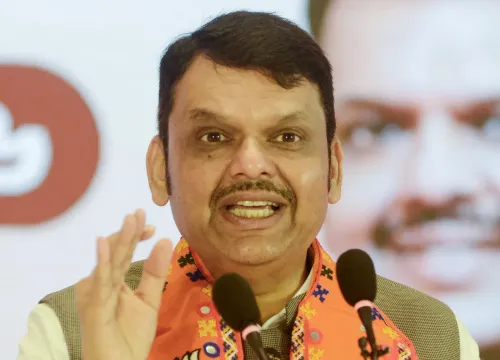
Nagpur, Dec 14 (NationPress) In the lead-up to the Brihanmumbai Municipal Corporation elections, Maharashtra's Chief Minister Devendra Fadnavis emphasized that Mumbai will always remain a core part of Maharashtra. He asserted that the city has been, is, and will continue to be inseparable from the state “as long as the sun and moon exist.”
While not directly referencing Shiv Sena (UBT) and MNS, he accused opposition parties of attempting to create division regarding Mumbai's status within Maharashtra, particularly during election seasons when such rhetoric tends to surface, which he deemed unfounded.
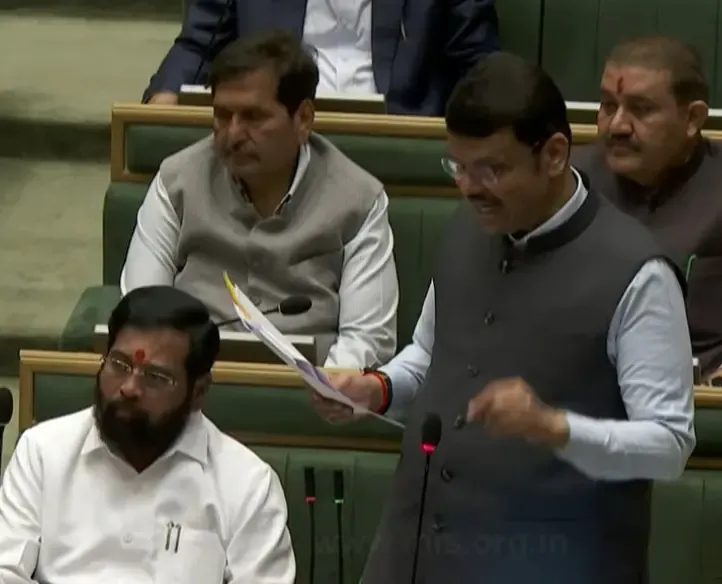
“Maharashtra will not decelerate but will advance at full velocity, guided by the principles of Chhatrapati Shivaji Maharaj and the Constitution drafted by Dr. Babasaheb Ambedkar. By 2030, Maharashtra aims to become the first trillion-dollar economy, and it will achieve its goal of a Viksit Maharashtra by 2047,” he remarked in response to a recent motion within the state Assembly.
He urged the opposition to join hands with the government for the unhindered growth of Maharashtra.
CM Fadnavis categorically dismissed claims from the opposition that Maharashtra was on the brink of bankruptcy, stating that the state remains within all essential economic parameters, including public debt, revenue, and fiscal deficits.
“Maharashtra’s public debt stands at 18.87 percent, which is below the RBI's limit of 25 percent of the gross state domestic product as per the Fiscal Responsibility Budgetary Management Act (FRBM). The fiscal deficit is at 2.76 percent, below the 3 percent threshold,” he highlighted, adding that despite budgetary constraints, the economy is stable as the government adheres to the principles outlined in the FRBM Act.
CM Fadnavis stated that Maharashtra continues to lead in attracting Foreign Direct Investment and has signed Memorandums of Understanding for 1 lakh MW through pumped storage hydro projects, along with pursuing an ambitious goal of adding 16,000 MW in solar power for agriculture by 2030.
He indicated that by 2030, 52 percent of the state's power will come from renewable sources. Additionally, a range of irrigation initiatives, including interlinking river projects like Nalganga Vainganga, will help mitigate drought issues.
“Maharashtra accounts for 31 percent of total FDI. The Marathwada region, particularly Sambhajinagar, is evolving into an electric vehicle hub, while Gadchiroli is becoming a new industrial hotspot. Efforts are being made to develop it as a gateway to South India with an airport project,” he announced.
The Chief Minister revealed that the state has secured investment Memorandums of Understanding worth Rs 17.57 lakh crore during the Davos summit for the period from 2022 to 2025, with 75 percent implementation expected by 2024-25, and 90 percent in 2022-23 and 2023-24. Moreover, investments worth Rs 13.75 lakh crore are anticipated under the Package Scheme of Incentives, benefiting Vidarbha and Marathwada.
In terms of energy, Maharashtra's contractual capacity is projected to reach 47,000 MW by 2030, eventually increasing to 82,000 MW. CM Fadnavis noted that the average power purchase cost has dropped to Rs 3 per unit, especially following the government's efforts to enhance solar power generation capacity, compared to Rs 6 per unit from state-run MahaGenco.
“The power tariff is set to decline by 2 percent annually over the next five years, contrasting with an average increase of 9 percent in the previous two decades,” he stated.
CM Fadnavis reiterated the government's commitment to fulfill its promise of crop loan waivers, with implementation scheduled for July 1 next year.
“The government is dedicated to offering crop loan waivers, and a high-level committee has been assigned to provide recommendations. The loan waiver will be one of the options to alleviate farmers' debts. Even though previous waivers were executed in 2017 and 2020, there is a renewed demand from farmers for similar assistance,” he remarked.
Despite opposition from various groups, the Chief Minister confirmed that the government will proceed with the Rs 86,000 crore Nagpur-Goa-Shaktipeeth Expressway, labeling it a transformative project for Maharashtra.
“The government has adjusted the alignment of the Shaktipeeth Expressway from Solapur to the Sangli region in response to concerns raised by farmers and stakeholders. This proposed Expressway will significantly benefit Marathwada and accelerate regional development.
Moreover, he mentioned that the government is also working on the Mumbai-Kalyan-Latur-Hyderabad Jan Kalyan Marg. All these initiatives, along with the Samruddhi Marg and the Delhi-Mumbai Industrial Corridor, will facilitate industrial growth,” he announced.
Regarding Mumbai, the current metro network of 91 km is set to expand to 132 km within the next two years, with 50 km of metro work nearing completion.
Point of View
CM Fadnavis's assertions reflect a robust commitment to Maharashtra's growth trajectory and its integral connection to Mumbai. While political tensions may arise, the focus remains on collaborative progress and economic stability, with the state's ambitious targets poised to shape its future significantly.
NationPress
2 Oct 2026
Frequently Asked Questions
What is the significance of Mumbai for Maharashtra?
Mumbai is the economic powerhouse of Maharashtra, contributing significantly to its GDP and cultural identity. CM Fadnavis emphasizes that it remains an inseparable part of the state.
What are Maharashtra's economic growth targets?
Maharashtra aims to become a trillion-dollar economy by 2030 and achieve a Viksit Maharashtra by 2047, focusing on sustainable growth and development.
How is the government addressing farmers' loan waivers?
The government is committed to implementing crop loan waivers by July 1 next year, with a high-level committee tasked with making recommendations for farmers' debt relief.
What infrastructure projects are underway in Maharashtra?
Several projects, including the Nagpur-Goa-Shaktipeeth Expressway and expansions to the metro network, are in progress to boost connectivity and regional development.
What initiatives are being taken for renewable energy in Maharashtra?
Maharashtra plans to derive 52% of its power from renewable sources by 2030 and has ambitious solar capacity addition goals for agriculture.