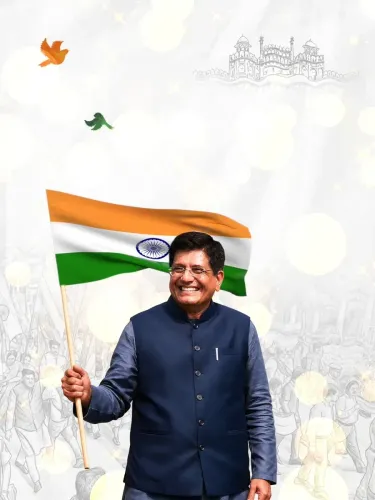
Commerce Minister Piyush Goyal greets nation on Constitution Day
Synopsis
Union Commerce and Industry Minister Piyush Goyal marked Constitution Day by saying India's founding charter pairs rights with opportunity and freedom with responsibility. He called it a guide to duties as well as a guardian of rights, crediting the 1949 framers' foundation as the nation's strength.
Key Takeaways
Union Commerce and Industry Minister Piyush Goyal issued Constitution Day greetings on 26 November 2026 from New Delhi.
He said the Constitution gives every Indian rights with opportunity, freedom with responsibility, and an equal platform to realise dreams.
He described the charter as a guardian of rights and a guide to duties and democratic values.
India adopted the Constitution on 26 November 1949; the Government of India designated the date as Constitution Day in 2015.
He said the framers' foundation of unity, integrity, justice, equality and democracy remains the nation's strength.
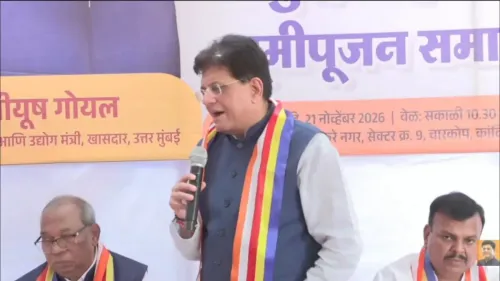
Every Indian is promised rights with opportunity and freedom with responsibility. That pairing sat at the centre of Constitution Day remarks by Union Commerce and Industry Minister Piyush Goyal on 26 November 2026, as he greeted the country from New Delhi on the anniversary of the Republic's founding charter.
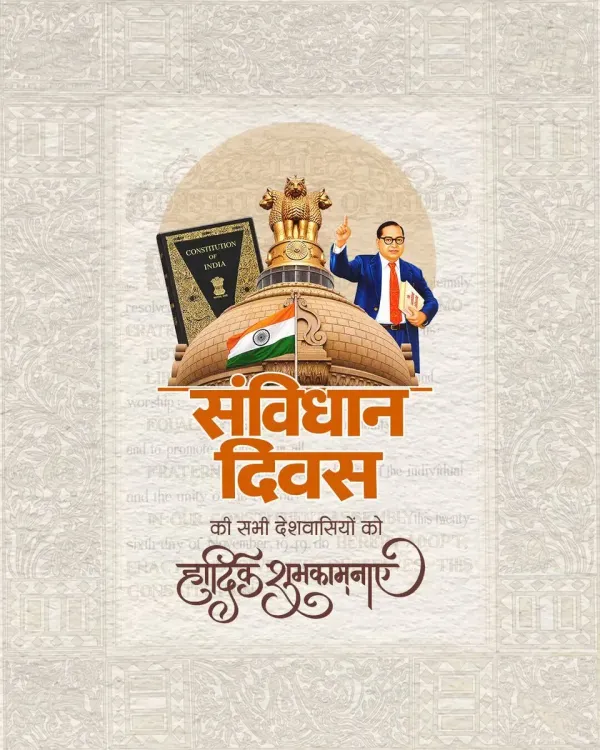
Writing in Hindi, Goyal said: 'The Constitution gives every Indian rights along with opportunity, freedom along with responsibility, and an equal platform to realise dreams.' He added that it is not only the guardian of rights but also a guide to duties towards the nation and to democratic values. The senior BJP leader and Leader of the House in the Rajya Sabha closed with heartfelt संविधान दिवस (Constitution Day) greetings to all citizens.
How 26 November became Samvidhan Diwas
India's Constituent Assembly adopted the Constitution on 26 November 1949. The text came into force on 26 January 1950, which the country marks as Republic Day. In 2015 the Government of India declared 26 November as Constitution Day, or Samvidhan Diwas, to spread awareness of constitutional values and of the fundamental duties the charter also sets out.
The date is now a fixture of the official calendar. Ministers, schools and public institutions return each year to the same twin themes: the rights the document guarantees, and the civic obligations it asks in return.
The 1949 foundation Goyal called India's strength
Goyal credited the Constitution's makers with laying a strong foundation for India's unity, integrity, justice, equality and democratic system — and said that foundation is the nation's strength today. The post carried no new scheme, number or legislative pledge. It restated a familiar official lineage: the 1949 text as both a shield of rights and a syllabus of duty.
Attention will now turn to whether the winter session and education-ministry literacy programmes pick up the same rights-and-duties frame. The Republic still treats that November 1949 bargain as living instruction, not museum parchment.
Point of View
Dating from the 2015 designation of Constitution Day, to treat the charter as a civic curriculum and not only a bill of rights. The pairing of rights with duties is a consistent theme in the present government's commemorative messaging. There is no new policy in the post; the political signal is continuity — unity, integrity and democratic values as the living inheritance of 1949. Watch whether winter-session debate and school literacy drives echo the same frame.
NationPress
26 Nov 2026
Frequently Asked Questions
When is Constitution Day in India?
Constitution Day is observed every year on 26 November, the date the Constituent Assembly adopted the Constitution in 1949.
Why did the government start celebrating Constitution Day?
In 2015 the Government of India declared 26 November as Constitution Day to promote awareness of constitutional values and fundamental duties. The document itself came into force later, on 26 January 1950, which is Republic Day.
What did Piyush Goyal say on Constitution Day?
He said the Constitution gives every Indian rights along with opportunity and freedom along with responsibility, and is a guide to duties as well as a guardian of rights. He also extended heartfelt greetings to all citizens.
Who is Piyush Goyal?
Piyush Goyal is the Union Commerce and Industry Minister, a senior BJP leader, and Leader of the House in the Rajya Sabha.
What is Samvidhan Diwas?
Samvidhan Diwas is the Hindi name for Constitution Day, marked on 26 November to commemorate the adoption of the Constitution in 1949.