Education Minister Pradhan honours 26/11 victims and martyrs
Synopsis
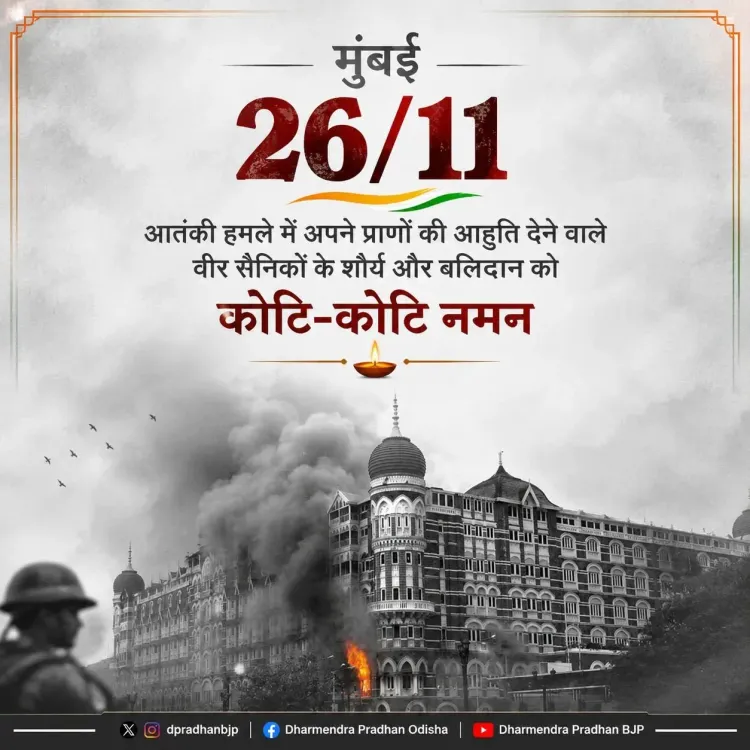
Union Education Minister Dharmendra Pradhan offered a heartfelt tribute to civilians and security personnel killed in the 26/11 Mumbai terror attacks, calling terrorism humanity's greatest enemy and saying India's fight would continue with zero tolerance.
Key Takeaways
Union Education Minister Dharmendra Pradhan paid tribute on Thursday to civilians killed in the Mumbai 26/11 attacks and to security personnel who made the supreme sacrifice.
He said terrorism is humanity's biggest enemy and that India's fight would continue under a Zero Tolerance policy.
The 26 November 2008 attacks in Mumbai were carried out by Lashkar-e-Taiba militants and killed 166 people.
After 26/11, India suspended the composite dialogue with Pakistan and adopted a zero-tolerance line on terrorism that successive governments have restated.
The post announced no new counter-terror measure; it restated an existing national security stance.
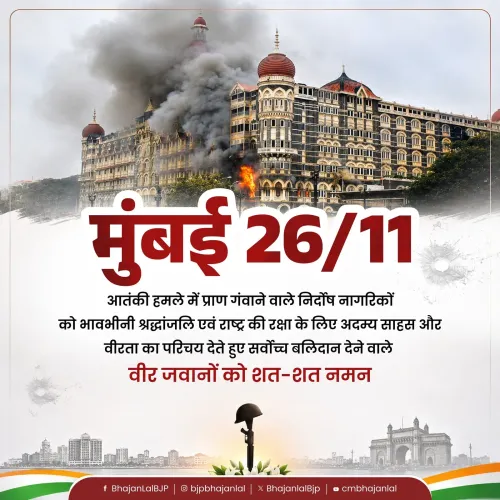
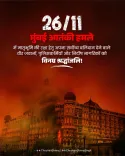
On the anniversary of the siege that tore through India's financial capital, Union Education Minister Dharmendra Pradhan paid a heartfelt tribute to the innocent civilians killed in the Mumbai 26/11 terrorist attacks and offered a hundred salutations to the security personnel who made the supreme sacrifice. In a post on X on Thursday, he named terrorism humanity's greatest enemy and said India's fight against it would continue under a policy of zero tolerance.
The minister said he was offering a bhavbheeni shraddhanjali (heartfelt tribute) to the innocent citizens who lost their lives and shat-shat naman (a hundred salutations) to the brave jawans who laid down their lives for the country's security. He added that terrorism is humanity's biggest enemy and that India's battle against it will go on with a Zero Tolerance policy. The post carried the hashtag #MumbaiAttacks.
The 2008 siege that killed 166
On the night of 26 November 2008, coordinated teams of Lashkar-e-Taiba militants struck hotels, a railway terminus, a hospital and other sites across Mumbai. The assault stretched into the following days and left 166 people dead, among them Indian civilians, foreign guests, police officers and commandos. Families of those victims, and the security forces who ran toward the gunfire, remain the human core of every 26/11 remembrance.
Pradhan's salute was aimed at both those circles: the unarmed dead, and the personnel who paid with their lives to stop the attackers.
Zero tolerance after the composite dialogue froze
In the weeks after 26/11, India suspended the composite dialogue process with Pakistan and adopted a policy of zero tolerance on terrorism. That stance has been restated by successive governments as a core element of national security, especially on cross-border terrorism linked to the Mumbai attacks. Pradhan, a senior BJP leader and former Union Petroleum Minister now holding the Education portfolio, added his voice to that annual restatement. He announced no new measure. The message was continuity.
A fight that outlasts one November night
Annual commemorations by senior leaders have become the public drumbeat of that policy, a reminder to families still waiting on justice and to the security establishment still tracking pending extradition requests and counter-terror files. The wording of tributes does not change the docket. The docket is what still matters.
On another 26 November, the names of the dead still set the terms of India's security doctrine. Pradhan's naman was a reminder that zero tolerance is meant to outlast any single anniversary.
Point of View
A way for the political leadership to reaffirm zero tolerance without tabling a new legislative or diplomatic step. Pradhan's post sits in that pattern: a salute to civilians and jawans, a naming of terrorism as humanity's enemy, and a pledge that the fight continues. After 2008, New Delhi suspended the composite dialogue with Pakistan and locked zero tolerance into the core of national security doctrine under successive governments. The unfinished file of extradition requests and pending counter-terror measures is what these commemorations quietly keep in public view.
NationPress
26 Nov 2026
Frequently Asked Questions
What did Dharmendra Pradhan say on the 26/11 anniversary?
He paid a heartfelt tribute to innocent civilians killed in the Mumbai 26/11 attacks and offered salutations to security personnel who made the supreme sacrifice, saying terrorism is humanity's biggest enemy and India's fight will continue with zero tolerance.
When did the Mumbai 26/11 terror attacks take place?
The coordinated terrorist attacks began on 26 November 2008 in Mumbai and continued into the following days.
How many people were killed in the 26/11 Mumbai attacks?
The attacks killed 166 people, including civilians, foreign guests and security personnel.
What is India's zero-tolerance policy on terrorism after 26/11?
After the 26/11 attacks, India suspended the composite dialogue process with Pakistan and adopted a policy of zero tolerance on terrorism, a stance successive governments have restated as core national security doctrine.
Who carried out the 26/11 Mumbai attacks?
The attacks were carried out by Lashkar-e-Taiba militants in a coordinated assault across several sites in Mumbai.