Yogi Adityanath accuses Congress of undermining constitutional bodies for political gain
Synopsis
Uttar Pradesh CM Yogi Adityanath used a Lucknow press conference to deliver one of his sharpest recent broadsides against Congress and allied parties, accusing them of a systematic pattern of attacking constitutional bodies — from the CAG to the ECI to EVMs — whenever electoral outcomes go against them. His defence of the SIR electoral roll revision, backed by a Supreme Court citation, signals that the BJP intends to fight this controversy on legal and historical ground.
Key Takeaways
UP CM Yogi Adityanath on 27 September 2026 accused Congress and opposition parties of undermining constitutional institutions for political gain.
Adityanath defended the Special Intensive Revision (SIR) of electoral rolls, noting similar exercises were held in 1952, 1957, 1961, 1965, 1966, and 2003 .
He said the Supreme Court has upheld the Election Commission’s action on Form 6 , and all three Election Commissioners have publicly clarified the process.
The chief minister invoked the Emergency of 1975 , the Rafale CAG row , and the EVM debate to allege a Congress pattern of attacking institutions after electoral defeats.
He also criticised Congress for questioning the armed forces during the Balakot airstrike and Operation Sindoor .
Congress , Samajwadi Party , and RJD were specifically named for the “uproar” over the SIR process.
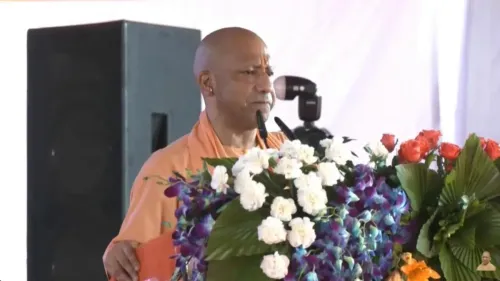
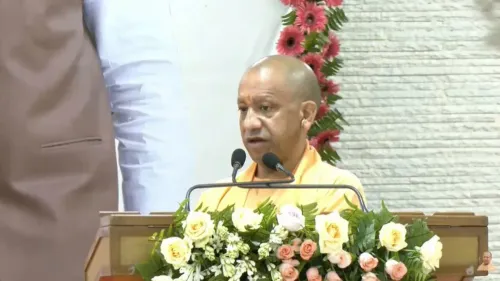
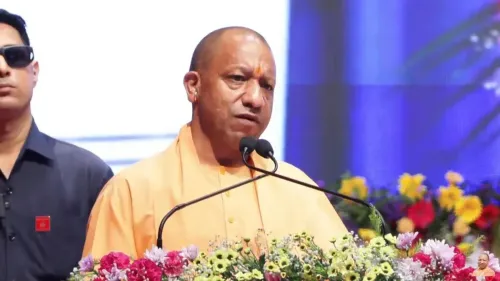
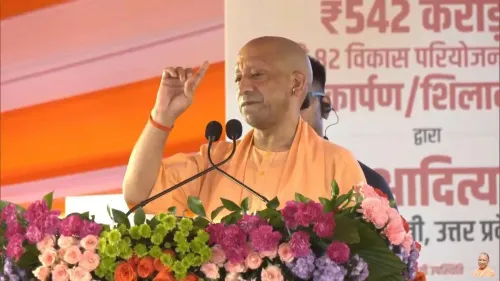
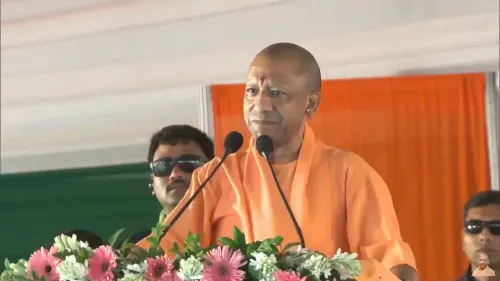
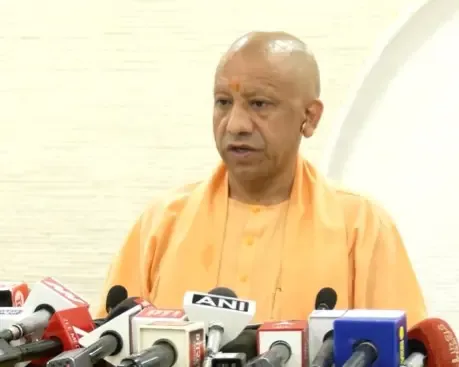
Uttar Pradesh Chief Minister Yogi Adityanath on Sunday, 27 September 2026, launched a sweeping attack on the Indian National Congress and allied opposition parties, accusing them of systematically eroding constitutional institutions and democratic values to serve narrow political interests. Speaking at a press conference in Lucknow, Adityanath also mounted a strong defence of the Special Intensive Revision (SIR) of electoral rolls, dismissing opposition objections as misinformation.
Yogi's Core Charge Against the Opposition
“The Congress and opposition parties have consistently been part of efforts to undermine India’s constitutional institutions and weaken democratic values for political interests,” Adityanath said. He described statements by the “country’s main opposition party and other UPA-associated parties” as “irresponsible” and said they “damage democratic values.” The chief minister singled out Congress, Samajwadi Party (SP), and Rashtriya Janata Dal (RJD) for what he called an unjustified “uproar” over the SIR process.
Adityanath also invoked the Emergency of 25 June 1975, calling it Congress’s “sin” of undermining the Constitution, and accused Congress-led governments of repeatedly dismissing elected state governments through “unconstitutional means.” He further alleged that the party had questioned the valour of the armed forces during the Balakot airstrike and cast doubt on Indian soldiers during Operation Sindoor.
Defence of the Electoral Roll Revision
The chief minister argued that the Special Intensive Revision of electoral rolls is not a new or partisan exercise, noting that similar revisions were conducted in 1952, 1957, 1961, 1965, 1966, and 2003. He said the Election Commission of India (ECI) had already addressed public concerns, with all three Election Commissioners appearing before the press to clarify the process.
“All three Election Commissioners came before the press and clarified the situation. Regarding SIR, directions had already been issued that all eligible voters who were left out would be given an opportunity to fill the required form. The Supreme Court has also upheld the Election Commission’s action regarding Form 6,” Adityanath stated.
Targeting the Opposition’s Record on Institutions
Adityanath cited a series of past controversies to argue that the opposition has a pattern of attacking institutions after electoral setbacks. He referred to questions raised over the Comptroller and Auditor General (CAG) following its 2019 observations on the Rafale issue, and accused Congress of labelling Electronic Voting Machines (EVMs) a “black box” despite having won governments at the Centre and in several states through the same machines.
“Putting the Election Commission and Chief Election Commissioners in the dock, questioning every constitutional institution and attempting to tarnish India’s image globally is extremely unfortunate,” he said. “Congress and its allies should control their irresponsible actions. There should be no place for violence, vandalism or misinformation in a democracy.”
Opposition’s Pushback and the Broader Context
The opposition parties have not relented. Critics argue that the SIR exercise could disenfranchise vulnerable voters if not implemented with adequate safeguards, and that their scrutiny of constitutional bodies reflects legitimate democratic oversight rather than institutional sabotage. This comes amid a broader, ongoing political battle over the credibility of India’s electoral machinery, a dispute that has intensified since the 2024 general elections.
Adityanath’s remarks also carry significance in the run-up to key state election cycles. As the ruling Bharatiya Janata Party (BJP) seeks to consolidate its standing in Uttar Pradesh and beyond, the framing of opposition parties as anti-constitutional actors is likely to remain a central campaign theme. Whether the SIR controversy evolves into a wider electoral dispute will depend in large part on the Supreme Court’s continued engagement with the matter.
Point of View
The Balakot controversy, and EVM complaints, he is building a meta-narrative: that the opposition’s critique of institutions is reflexive and self-serving. What mainstream coverage underweights is the legitimate concern on the other side — that SIR, if poorly administered, could result in genuine voter exclusion, and that democratic oversight of the ECI is not inherently anti-constitutional. The BJP’s framing of all institutional scrutiny as sabotage is itself a political choice, one that forecloses accountability. The Supreme Court’s continued watch over Form 6 is the one check that makes this a live legal question, not merely a rhetorical one.
NationPress
27 Sept 2026
Frequently Asked Questions
What did UP CM Yogi Adityanath say about Congress at his Lucknow press conference?
Yogi Adityanath accused Congress and allied opposition parties of consistently working to undermine India’s constitutional institutions — including the Election Commission, CAG, and judiciary — to serve political interests. He called their statements on the SIR electoral roll revision ‘irresponsible’ and said they damage democratic values.
What is the Special Intensive Revision (SIR) of electoral rolls?
The Special Intensive Revision (SIR) is a periodic exercise conducted by the Election Commission of India to update and clean the electoral rolls. Adityanath noted that similar revisions were carried out in 1952, 1957, 1961, 1965, 1966, and 2003, and that eligible voters missed in the process would be given a chance to submit the required form.
Why is the SIR controversial?
Opposition parties including Congress, Samajwadi Party, and RJD have raised concerns that the SIR exercise could disenfranchise eligible voters if not implemented carefully. The Election Commission and the Supreme Court have both weighed in, with the Supreme Court upholding the ECI’s action on Form 6, which allows left-out voters to re-register.
What historical examples did Yogi Adityanath cite against Congress?
Adityanath cited the imposition of the Emergency on 25 June 1975, the CAG’s 2019 Rafale observations and subsequent criticism of the auditor, the labelling of EVMs as a ‘black box,’ and remarks that questioned the armed forces during the Balakot airstrike and Operation Sindoor.
What is the BJP’s broader political argument over constitutional institutions?
The BJP, through Adityanath, argues that opposition parties selectively attack constitutional bodies — the ECI, CAG, and courts — only when electoral or institutional outcomes go against them, and that this pattern amounts to undermining democracy. The opposition counters that scrutinising these institutions is a legitimate democratic exercise.