Rajnath Singh: Congress destabilising democracy to regain power
Synopsis
Rajnath Singh told a Kalaburagi gathering that Congress is destabilising democracy to claw back power. He invoked the Emergency, a Hyderabad event, PFI case withdrawals, and the Bommai dismissal, and said Indians would never forgive ‘Vote Chor, Gaddi Chor’ slogans.
Key Takeaways
Defence Minister Rajnath Singh on 25 November in Kalaburagi accused the Congress of destabilising democracy to regain power.
He spoke at the BJP’s Save Democracy, Eradicate Anarchy campaign and said he had not come for a political rally.
Singh alleged Congress is running misinformation against the Election Commission and criticised ‘Vote Chor, Gaddi Chor’ slogans.
He said when Narendra Modi first became Prime Minister, the CEC had been appointed by a Congress-led government.
He alleged PFI cases were withdrawn in 2019 under the Karnataka Congress regime and that Congress dismissed elected governments 50 times, citing S.R.
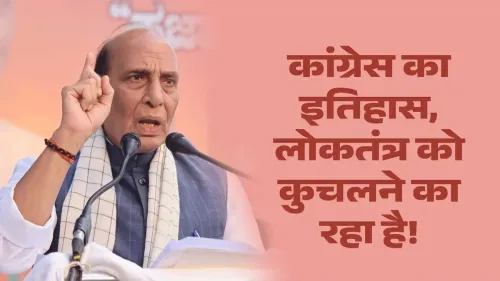
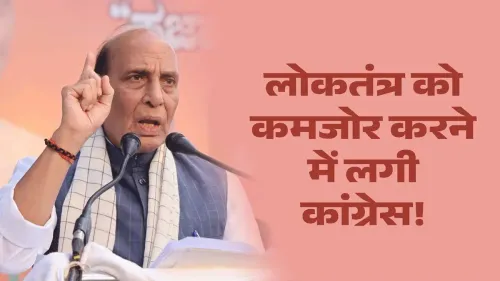
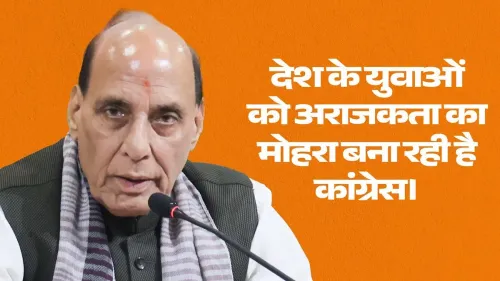
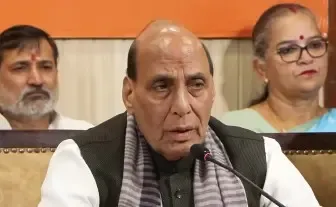
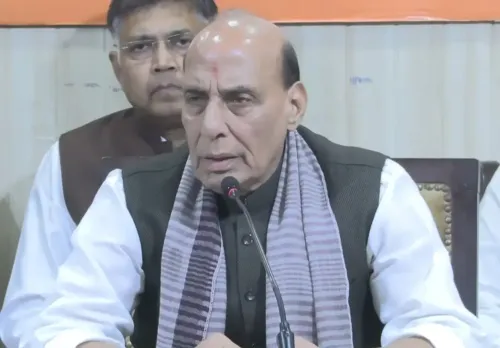
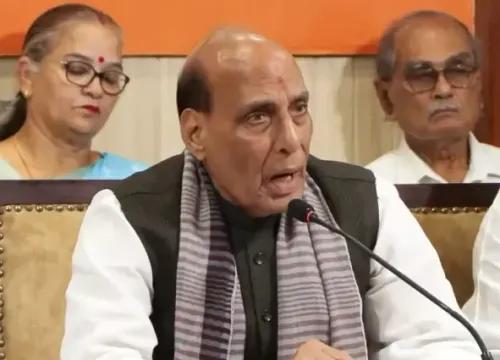
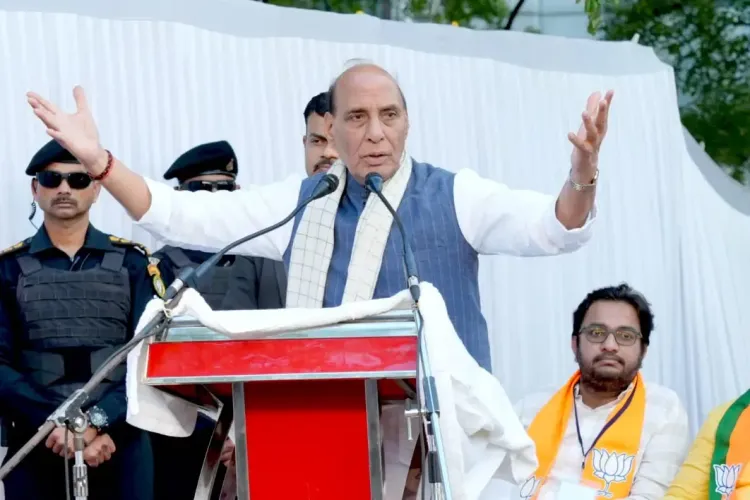
Defence Minister Rajnath Singh on Wednesday accused the Congress of destabilising democracy and spreading political anarchy, alleging the party was trying to regain power by attacking constitutional bodies and circulating what he called baseless charges. Addressing a gathering in Kalaburagi, Karnataka, on 25 November as part of the Bharatiya Janata Party’s (BJP) Save Democracy, Eradicate Anarchy campaign, he said he had not come for a political rally but to reaffirm a commitment to safeguarding the Constitution.
Opening his remarks in Kannada, Singh said, “Kannada is a language I love immensely.” He argued that the Constitution had been adopted after Independence to protect democracy and keep democratic values intact. The Congress, which he said had ruled India for nearly 60 years, was now, in his telling, engaged in creating an atmosphere of anarchy.
What Singh alleged about anarchy and institutions
Singh recalled the Emergency imposed during former Prime Minister Indira Gandhi’s tenure, saying she had strangled democracy in the country. He accused the present-day Congress of questioning constitutional institutions and running a campaign of misinformation against the Election Commission.
“The strength of Indian democracy is not understood by Rahul Gandhi. The Congress is eager to come to power by creating anarchy in the country, but this will never be possible. Congress leaders must understand this,” he said.
He also criticised the use of slogans such as ‘Vote Chor, Gaddi Chor’, saying Indians would never forgive the Congress for such remarks. This comes amid a sharper BJP counter to Opposition claims on electoral integrity, with Singh recasting those claims as an assault on the democratic order itself rather than as legitimate political contestation.
Rahul Gandhi, Hyderabad event and the Election Commission
Referring to a programme organised by the Congress in Hyderabad, Singh alleged that a person from Italy had made remarks about Indian democracy and that Congress leaders, including Rahul Gandhi, had applauded them. He accused the party of allowing an insult to the country at an event it had itself organised.
Questioning Gandhi’s remarks on the Chief Election Commissioner (CEC), Singh said Prime Minister Narendra Modi would not have become Prime Minister without the Election Commission. Notably, he pointed out that when Modi first became Prime Minister, the CEC had been appointed by the Congress-led government.
Highlighting India’s standing internationally, Singh said the country had earned considerable respect across the world and that the international community listened attentively to what India had to say. He said the Congress had been rejected by voters in most states across the country and asserted that the BJP had the strength to protect democracy against any threat.
Karnataka government, PFI cases and past dismissals
Targeting the Congress government in Karnataka, Singh alleged that cases against the Popular Front of India (PFI) were withdrawn in 2019 during the Congress regime, accusing the party of pursuing appeasement politics.
He further alleged that the Congress had dismissed elected governments on 50 occasions in the past and cited the dismissal of the S.R. Bommai government in Karnataka as an example of what he described as the party’s disregard for democratic principles. The Bommai episode remains one of the most cited confrontations over Centre–state power in Karnataka’s political memory.
Singh accused the Congress of attempting to destroy democracy and weaken constitutional institutions. He also alleged that during Indira Gandhi’s tenure, political leaders had been appointed as Supreme Court judges.
Why the Kalaburagi speech matters
The address was framed not as a routine party meeting but as a campaign to protect democracy. By pairing the Emergency, the Bommai dismissal, PFI case withdrawals, criticism of the Election Commission, and the Hyderabad event in a single speech, Singh sought to argue that the Congress’s path back to power runs through institutional disruption.
Singh asserted that the BJP had the strength to protect democracy against any threat, presenting the Kalaburagi outreach as a defence of constitutional order rather than a conventional campaign stop.
Point of View
Even as he notes that a Congress-era CEC oversaw Modi’s first mandate. If institutions are to be insulated from politics, that standard has to cut both ways, not only when the Opposition is asking the questions.
NationPress
25 Nov 2026
Frequently Asked Questions
What did Rajnath Singh say about the Congress in Kalaburagi?
Defence Minister Rajnath Singh accused the Congress of destabilising democracy and spreading political anarchy to regain power. Speaking on 25 November in Kalaburagi during the BJP’s Save Democracy, Eradicate Anarchy campaign, he alleged the party was attacking constitutional bodies and circulating baseless charges.
What did Rajnath Singh say about Rahul Gandhi and the Election Commission?
Singh said the strength of Indian democracy is not understood by Rahul Gandhi and alleged Congress is trying to come to power by creating anarchy. He questioned Gandhi’s remarks on the Chief Election Commissioner and noted that when Narendra Modi first became Prime Minister, the CEC had been appointed by the Congress-led government.
Why did Rajnath Singh mention the Emergency and S.R. Bommai?
Singh recalled the Emergency under Indira Gandhi, saying she had strangled democracy, and alleged Congress had dismissed elected governments on 50 occasions. He cited the dismissal of the S.R. Bommai government in Karnataka as an example of what he called the party’s disregard for democratic principles.
What allegations did Singh make against the Karnataka Congress government?
Singh alleged that cases against the Popular Front of India (PFI) were withdrawn in 2019 during the Congress regime in Karnataka. He accused the party of pursuing appeasement politics and of attempting to weaken constitutional institutions.
What is the Save Democracy, Eradicate Anarchy campaign?
It is a BJP campaign at which Rajnath Singh spoke in Kalaburagi, saying he had come not for a political rally but to protect democracy and reaffirm a commitment to the Constitution. He used the platform to accuse Congress of creating anarchy and of insulting the country at a Hyderabad event.