Is Congress Facing Challenges in Tamil Nadu Ahead of Elections?
Synopsis
As Tamil Nadu eyes Assembly elections, tensions rise between the DMK and Congress. With demands for more seats and power-sharing, the internal strife could redefine alliances. Will Congress regain its footing or face further decline?
Key Takeaways
Congress demands a greater share of seats in Tamil Nadu elections.
Tensions with the DMK highlight ongoing political struggles.
Historical reliance on alliances has weakened Congress's position.
Internal discord may impact Congress's electoral strategy.
Recent developments underline the complexity of regional politics.
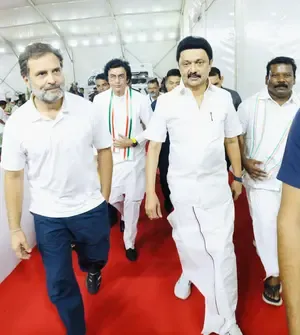
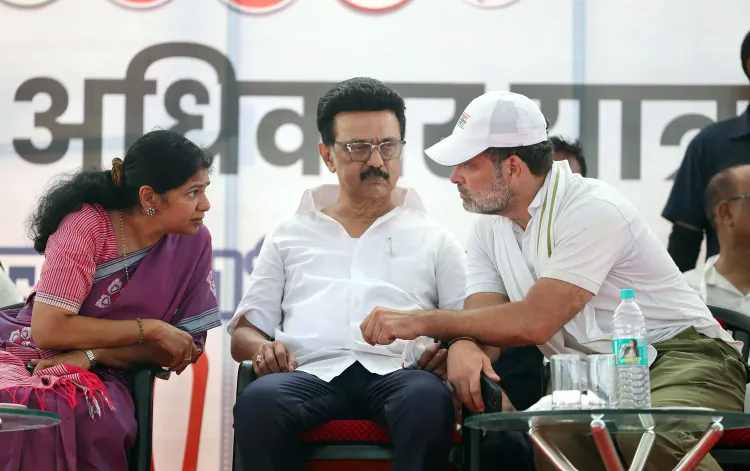
New Delhi, Feb 20 (NationPress) As Tamil Nadu prepares for its upcoming Assembly elections, tensions are rising between the ruling DMK and its main ally, the Congress. Regional leaders within Congress are pressing for a larger share of seats and a power-sharing agreement in the state government.
Historically, the Congress has found itself sidelined in Tamil Nadu’s political landscape. Now, a faction within the party is asserting its desire for a stake in governance. The contention revolves around Congress' insistence on a formal role in the state administration, including requests for Cabinet positions, while the DMK maintains its stance against coalition governance.
Reports indicate that Congress may be considering alliances with actor Vijay's new party, TVK, which reflects discontent with the DMK's prevailing influence, potentially aggravating tensions between the two.
The conflict escalated as some Congress leaders publicly advocated for a share in executive power, emphasizing that an electoral partnership should lead to governance involvement.
There have even been resolutions passed by regional Congress units demanding up to 30% representation in local governance structures.
This demand has reportedly upset the DMK, which argues that “power-sharing does not suit Tamil Nadu.”
Is this yet another sign of the fracturing Opposition unity due to Congress' attempts to regain regional significance, or is it indicative of internal discord within the venerable party?
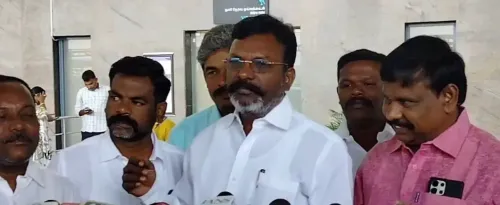
According to AICC in charge for Tamil Nadu, Girish Chodankar, the party leadership is aware of the situation and will make the necessary decisions regarding leaders like MP Manickam Tagore, who have voiced criticisms of the DMK.
The previous indecision from the Congress central leadership over organizational matters has significantly impacted the party's fortunes in various states.
Historically, following the emergence of C.N. Annadurai and the consolidation of Dravidian politics in the 1960s, the Congress transitioned from being the leading political force in the former Madras Presidency to becoming reliant on alliances.
Part of the decline in Congress' influence in Tamil Nadu can be traced back to its stance on the imposition of Hindi during the era of the Madras Presidency, which adversely affected its political standing in the state, facilitating the rise of Dravidian politics.
Since protests erupted against the Hindi imposition in the 1960s, Congress has refrained from advocating Hindi in Tamil Nadu, seeking to align with regional sentiments to maintain its alliance with Dravidian parties.
The Congress has thus fluctuated between reviving its independent appeal and forming pragmatic alliances.
The personalization of regional politics under leaders such as M.G. Ramachandran, J. Jayalalithaa, and M. Karunanidhi has further hindered Congress' resurgence.
The party has alternated between partnerships with the DMK and the AIADMK, securing ministerial roles and central support while rarely achieving a significant independent vote share.
During this period, Congress leveraged its national relevance to maintain political utility for regional allies, even as its state organization dwindled.
This trend has solidified Congress as a tactical ally rather than a mass movement in Tamil Nadu.
Meanwhile, electoral defeats at the state level and the decline of traditional vote banks in other regions have exacerbated Congress' organizational downturn.
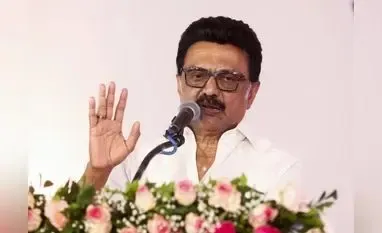
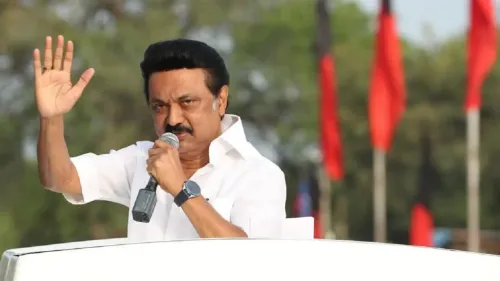
With the DMK back in power under M.K. Stalin, Congress has been a vital ally in the ruling coalition yet continues to confront renewed disputes over power-sharing and ministerial representation.
The latest developments underscore the public discord within Congress and between the state unit and the DMK regarding the extent of Congress' role in a government that Stalin insists will not function as a coalition.
Point of View
The ongoing friction between Congress and the DMK highlights significant challenges in regional politics. As parties navigate the complexities of power-sharing and governance, the implications for electoral success and party unity are profound. The situation warrants close observation as it unfolds.
NationPress
15 Sept 2026
Frequently Asked Questions
What tensions are arising in Tamil Nadu politics?
Tensions are escalating between the ruling DMK and its ally Congress as Congress leaders demand more seats and a power-sharing arrangement.
What is Congress seeking in Tamil Nadu?
Congress is seeking a formal role in the state government, including Cabinet positions and a larger share of local governance.
How has Congress's historical position affected its current standing?
Historically, Congress has shifted from dominance to reliance on alliances, impacting its political relevance in Tamil Nadu.
What internal issues is Congress facing?
Congress is grappling with internal discord and leadership indecision, which has previously hindered its effectiveness in state politics.
What recent developments highlight Congress's challenges?
Recent demands for greater power-sharing and public disputes among Congress leaders indicate ongoing challenges in maintaining alliances.