Congress: Are Regional Satraps Dominating the Grand Old Party?
Synopsis
Karnataka CM Siddaramaiah is determined to serve his full term amid ongoing tensions with Deputy CM D. K. Shivakumar, raising questions about regional power struggles within the Congress party. The party faces similar challenges in multiple states, highlighting the struggle for unity and leadership amidst factionalism.
Key Takeaways
Siddaramaiah emphasizes the need for stability in Karnataka.
Factionalism is a persistent issue in Congress's state units.
Reorganization in Madhya Pradesh has led to protests and resignations.
Political ground in Punjab is shifting away from Congress.
Upcoming elections pose a significant challenge for the party.
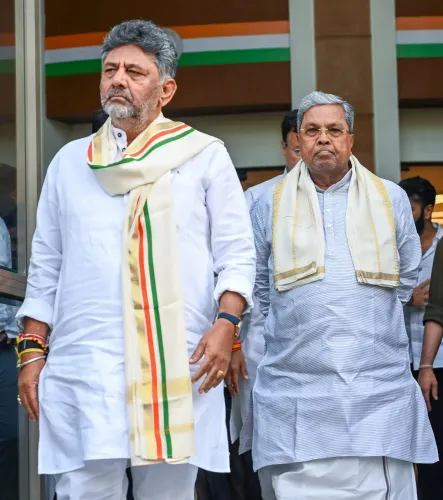
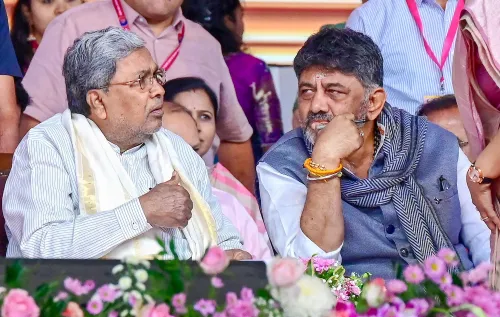
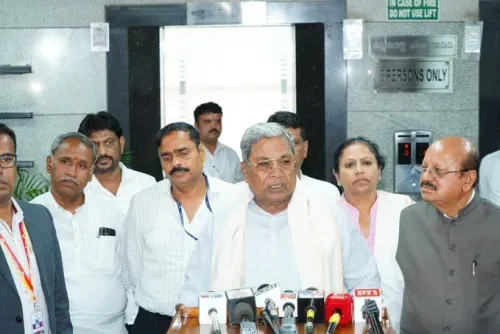
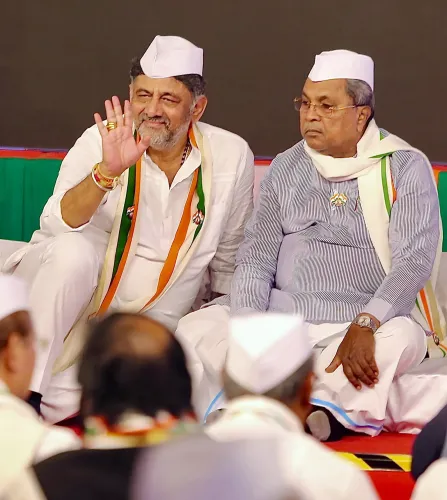
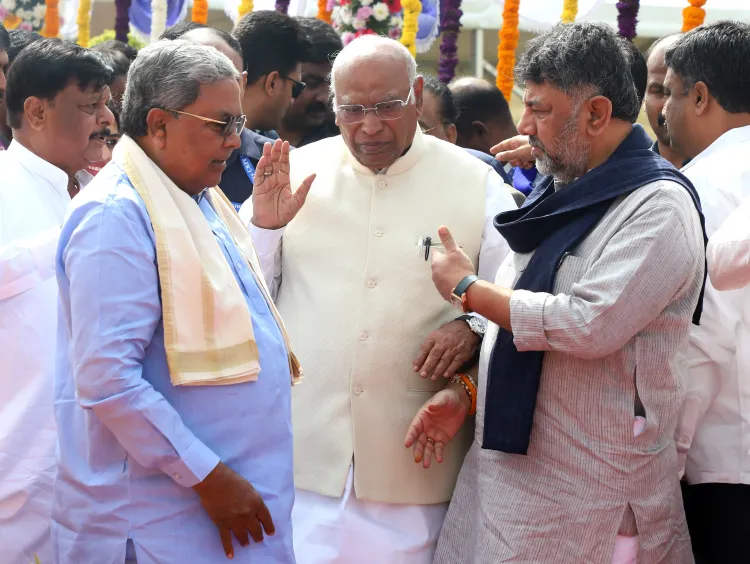
New Delhi, Dec 16 (NationPress) Karnataka Chief Minister Siddaramaiah has stated on Tuesday that, despite the ongoing power struggle with Deputy Chief Minister and Congress state chief D. K. Shivakumar, he plans to stay in office for the entire five-year term.
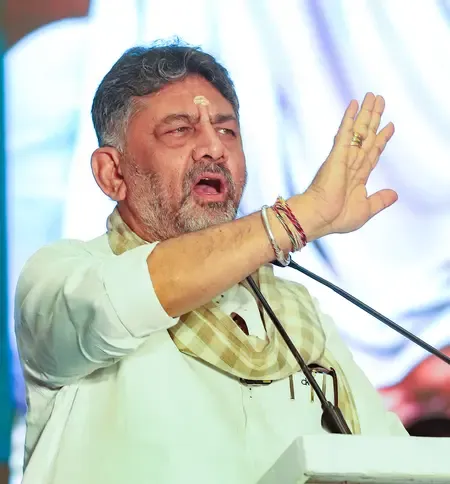
Shivakumar has expressed dissatisfaction over Siddaramaiah's disregard for a supposed 2.5-year arrangement, which was likely meant to facilitate his temporary rise to the Chief Minister position.
This situation is not an isolated case; the Congress party has a history of regional leaders acting according to their preferences, often overlooking directives from the central command. Furthermore, it is not the first occurrence where the High Command appears powerless against such influential figures.
Attempts by Shivakumar to reach out to party leader Rahul Gandhi have met with silence, aside from a reportedly curt “wait” response.
The scenario resembles the prolonged rivalry between Ashok Gehlot and Rajesh Pilot in Rajasthan, which has led to significant intra-party conflicts, ultimately causing the party's exit from power in the last state election.
In Jaipur, the struggle for dominance resurfaced around cabinet reshuffles and organizational control, despite occasional public reconciliations. Rumors circulated, later confirmed by media reports, regarding Pilot's potential departure from the party.
However, the Congress' electoral losses seemed to have averted that crisis, if not for the party's central leadership.
In Madhya Pradesh, previous conflicts and reconciliations among leaders like Digvijaya Singh and Kamal Nath have been noted.
Speculation about Nath's potential shift to the BJP persisted until the previous year.
In August, an organizational restructuring by Congress in Madhya Pradesh, which replaced numerous district presidents, led to protests and resignations. This highlighted the rifts between state veterans and the new appointees associated with former leadership.
The appointments came approximately two and a half months after Rahul Gandhi initiated Congress’ Sangathan Srijan Abhiyan in Bhopal, aimed at revitalizing the party following its poor performance in the 2023 Vidhan Sabha and anticipating the 2024 Lok Sabha elections.
In Punjab, Congress seems to be losing political ground after securing seven out of thirteen seats in last year's Lok Sabha elections. Followers of Navjot Sidhu and state unit president Amrinder Singh Raja Warring are entangled in a struggle for political territory.
Recently, former MLA Navjot Kaur Sidhu alleged that the Chief Minister's position was up for grabs for Rs. 500 crores, leading to her suspension from Congress's primary membership.
Factionalism between the Warring and Sidhu factions has resulted in public disputes, complicating the party’s prospects for the upcoming 2027 Assembly elections.
In Maharashtra, after facing electoral setbacks, Congress appointed a new state president, which has sparked new internal discussions regarding strategy and alliances.
In neighboring Gujarat, leadership changes have been tumultuous since Shaktisinh Gohil resigned as state unit chief. Although Amit Chavda has taken over, the transition involved struggles for influence amidst unclear public messaging and active lobbying with the High Command.
In Uttar Pradesh, the party confronts organizational weaknesses and disputes over whether to participate in local elections independently or form alliances, leading to strategic reshuffles.
Similar contradictions are evident in West Bengal, where local leaders often oppose the central leadership's occasional outreach to the Trinamool Congress, choosing instead to ally with the Left, which is a direct opponent in Kerala.
In Kerala, recent local body poll results and the emergence of new leaders have intensified the search for leadership, with national figures and caste dynamics heavily influencing the contest.
It remains to be seen how these dynamics will unfold as we approach the Assembly elections in both West Bengal and Kerala.
Point of View
The ongoing struggles within the Congress party illustrate a significant challenge to its cohesiveness and leadership. As various factions vie for control, it becomes imperative for the central leadership to address these internal conflicts to maintain relevance in the political landscape. The party must navigate these tensions strategically to ensure a robust presence in upcoming elections, fostering unity while acknowledging regional aspirations.
NationPress
20 Sept 2026
Frequently Asked Questions
What is the current political situation in Karnataka regarding Congress?
Karnataka Chief Minister Siddaramaiah is asserting his intention to serve his full term amid a power tussle with Deputy Chief Minister D. K. Shivakumar.
How does factionalism affect Congress in various states?
Factionalism within Congress has resulted in internal disputes, complicating its political strategy and unity across states like Madhya Pradesh, Punjab, and Maharashtra.
What challenges does Congress face before the upcoming elections?
Congress is facing significant challenges related to internal leadership conflicts, diminishing political support, and strategic decisions regarding alliances in local elections.