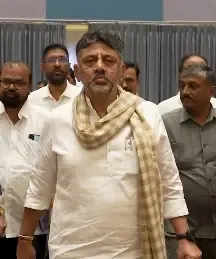
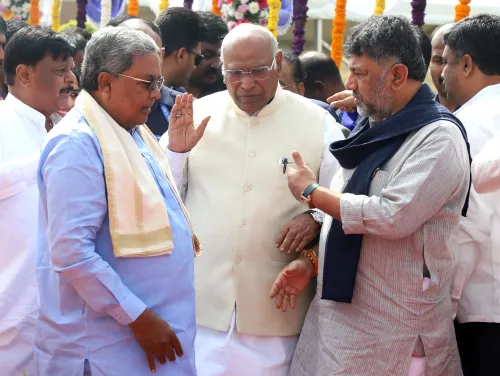
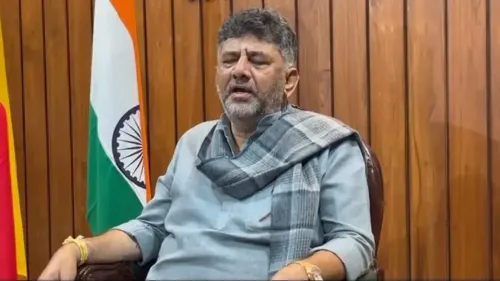
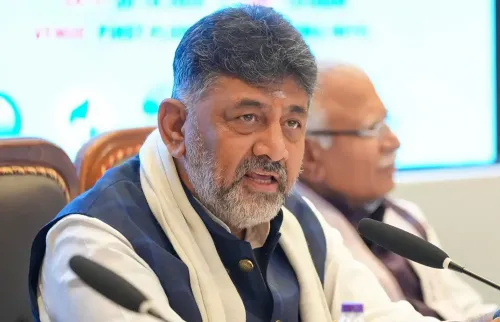
Will Shivakumar's Davos trip affect his CM ambitions?
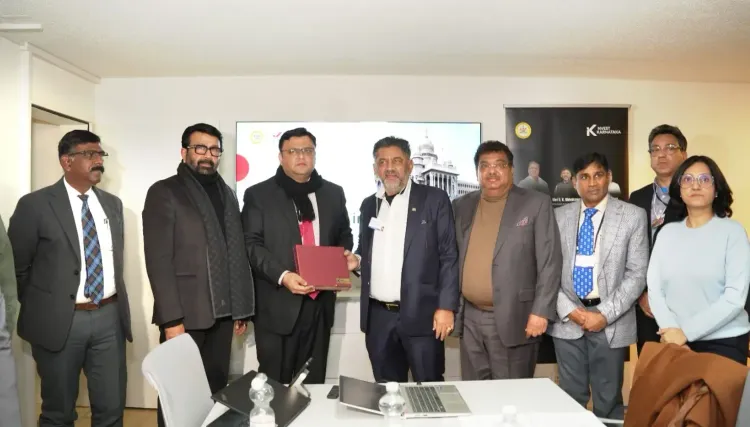
Synopsis
The ongoing rivalry in Karnataka Congress is heating up as D.K. Shivakumar attends the World Economic Forum in Davos. This article delves into the leadership struggles within the party, the potential consequences for upcoming elections, and the implications of the unresolved power dynamics.
Key Takeaways
Leadership struggle within Karnataka Congress threatens party unity.
Upcoming elections may be impacted by unresolved factionalism.
Shivakumar's Davos trip raises questions about his ambitions.
Central leadership's indecision could empower opposition parties.
Historical parallels with Rajasthan highlight risks of internal conflict.
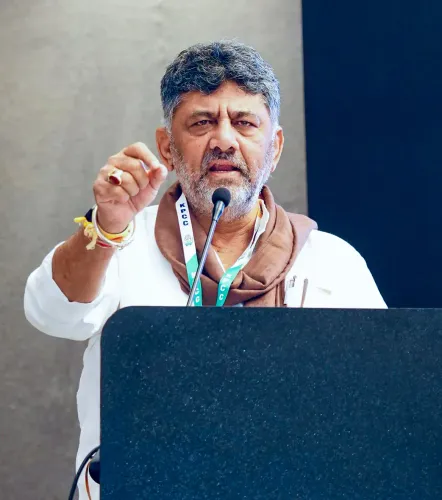
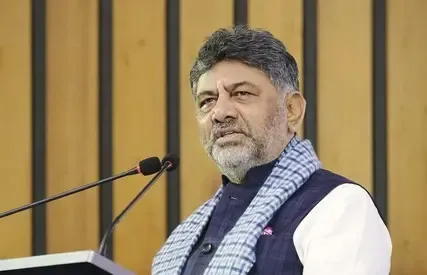
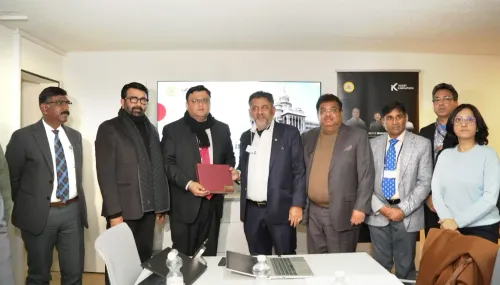
New Delhi, Jan 23 (NationPress) If anyone believed that convincing Karnataka Congress leader D.K. Shivakumar to attend the World Economic Forum in the frigid conditions of Davos would put a halt to his aspirations for the Chief Minister role, they were mistaken. This move merely bought some time.
Now, any hopes that the party's central leadership will instantly resolve the situation upon his return may also be overly optimistic.
The Congress party in Karnataka is embroiled in a significant leadership conflict between Chief Minister Siddaramaiah and Deputy CM Shivakumar, a situation that has escalated and threatens governance and credibility in light of upcoming state elections.
High-stakes elections are anticipated shortly in West Bengal, Assam, and the two southern states neighboring Karnataka – Tamil Nadu and Kerala, along with the union territory of Puducherry.
This current crisis is rooted in a longstanding expectation of power-sharing – frequently reported as a 2.5-year rotation deal following Congress's victory in 2023 – which has resurfaced, with Shivakumar's faction advocating for a change while Siddaramaiah insists on completing his term.
Shivakumar initially canceled and later rescheduled his trip to Davos amidst meetings in Delhi with central leadership, sparking speculation about his ambitions and the indecision of the High Command. This scenario mirrors the previous issues in Rajasthan, where the uncertainty of the Delhi leadership in addressing a power struggle between former Chief Minister Ashok Gehlot and his deputy Sachin Pilot severely impacted Congress at the polls.
Both Gehlot and Siddaramaiah are senior leaders, with the former historically enjoying broader MLA support than his deputy, similar to Siddaramaiah's current standing in Karnataka. Both leaders have substantial followings and a proven record of navigating electoral and political challenges, causing New Delhi to tread cautiously to avoid upsetting them.
In contrast, Shivakumar, at 63, is younger than Gehlot and Siddaramaiah, and may feel a sense of urgency due to having less time to achieve his goal of holding the regional power position that many aspire to. Both younger leaders have persistently sought the attention of Rahul Gandhi, but in at least one instance, the Gandhi scion seemed preoccupied with other matters rather than addressing internal party chaos.
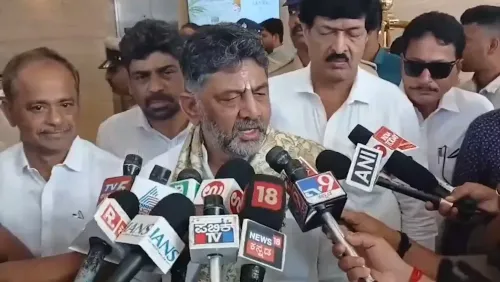
Karnataka's ongoing factionalism has resulted in numerous text exchanges, missed calls, and a series of travels between Bengaluru and New Delhi, alongside several bilateral and multilateral meetings – even one on an airport tarmac – yet no resolution is in sight. This unresolved struggle jeopardizes not only Congress's stability in Karnataka but also its prospects in the forthcoming Assembly elections, leading to a decline in trust in party leadership.
The delay from the High Command in resolving this issue is exacerbating factionalism, risking administrative paralysis and voter dissatisfaction ahead of the elections. Both leaders from Karnataka have indicated a willingness to abide by the central leadership's decision, yet the latter seems to be stalling.
Meanwhile, this indecisiveness could enable opposition parties to capitalize on the situation at any moment, despite the ruling party holding 136 seats, with support from four additional MLAs in the state's total Assembly strength of 224.
While Congress President Mallikarjun Kharge has positioned himself as a mediator, he has emphasized that it will be with the consent and involvement of the Gandhis. Some reports suggest that a potential reason for the delay may involve the future of his son, Priyank Kharge, who is currently serving as a minister in Karnataka.
Point of View
The political landscape in Karnataka reveals deep-rooted factionalism within the Congress party, which poses a serious threat to its stability and electoral prospects. It's crucial for the central leadership to address these internal conflicts decisively to prevent further erosion of support and credibility ahead of the upcoming elections.
NationPress
9 Oct 2026
Frequently Asked Questions
What are the main issues facing Karnataka Congress?
The Karnataka Congress is grappling with a leadership tussle between D.K. Shivakumar and Siddaramaiah, raising concerns over governance and election readiness.
What impact could the leadership crisis have on upcoming elections?
The unresolved power struggle risks Congress's stability and may lead to voter disillusionment, potentially benefiting opposition parties.
How is D.K. Shivakumar's Davos trip related to his political ambitions?
Shivakumar's participation in Davos is perceived as a strategic move amidst a leadership crisis, with questions about whether it will bolster or hinder his Chief Ministerial aspirations.
What role does the central leadership play in this crisis?
The central leadership's indecision in resolving the leadership conflict is exacerbating factionalism and jeopardizing the party's electoral prospects.
Who are the key figures in the Karnataka political landscape?
Key figures include D.K. Shivakumar, Siddaramaiah, Ashok Gehlot, and Congress President Mallikarjun Kharge.