Why Are Congress Members in Sawai Madhopur on a Day-Long Fast Against the G RAM G Act?
Synopsis
The Congress party intensifies its campaign against the G-RAM-G Act in Sawai Madhopur, organizing a day-long fast to protect MGNREGA. This protest reflects a nationwide movement aimed at safeguarding rural employment rights. Discover how Congress seeks to mobilize grassroots support in the fight for MGNREGA's restoration.
Key Takeaways
Congress intensifies opposition against the G-RAM-G Act.
Day-long fast organized in Sawai Madhopur as a symbolic protest.
Key leaders participated to demonstrate solidarity.
The campaign aims to safeguard MGNREGA provisions.
Rural employment rights are a central theme in upcoming political discourse.
Sawai Madhopur (Rajasthan), Jan 11 (NationPress) The Indian National Congress has ramped up its nationwide efforts against the contentious Viksit Bharat – Guarantee for Rozgar and Ajeevika Mission (Gramin) Act, referred to as the G-RAM-G Act, which the party claims threatens to undermine and effectively supplant the Mahatma Gandhi National Rural Employment Guarantee Act (MGNREGA).
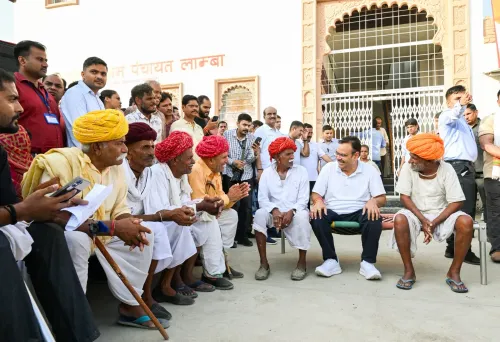
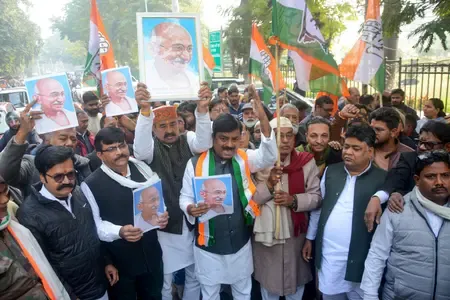
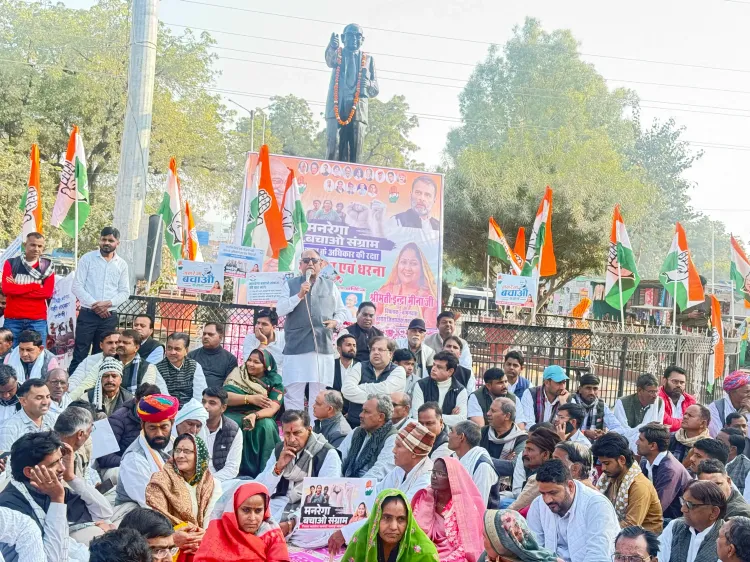
In a bid to sustain its movement to "Save MGNREGA", the District Congress Committee in Sawai Madhopur organized a symbolic one-day fasting demonstration at the local Ambedkar Chouraha (Circle). This fasting initiative saw enthusiastic participation from prominent Congress leaders and party workers, all gathering to show support for rural families reliant on MGNREGA for their livelihood.
Notable attendees included Ramkesh Meena, Deputy Leader of the Opposition in the Rajasthan Legislative Assembly and MLA from Gangapur, alongside Indra Meena, MLA from Boli and District Congress President. Numerous other local party members and supporters joined the fast, reflecting the party's dedication to grassroots activism on this critical issue.
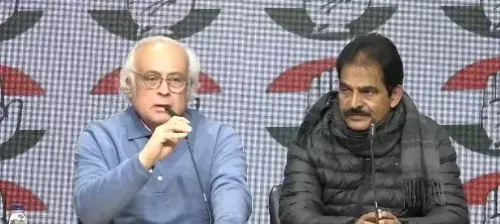
The Sawai Madhopur protest is one of many similar actions occurring nationwide as Congress initiates its 45-day "MGNREGA Bachao Sangram" campaign. Through district-level fasting, gram sabha resolutions, public assemblies, and planned large-scale rallies, the party seeks to exert continuous pressure on the government.
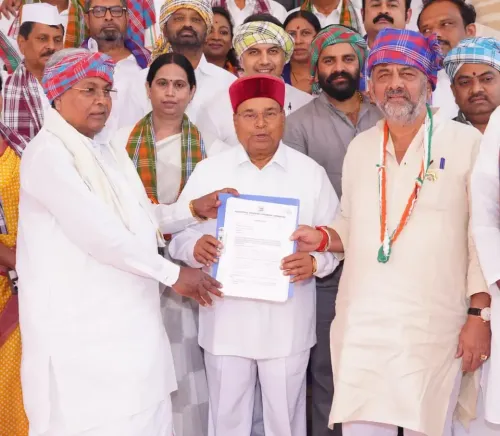
Senior leaders have pledged to intensify their protests until the original MGNREGA provisions are fully reinstated and the G-RAM-G Act is revoked.
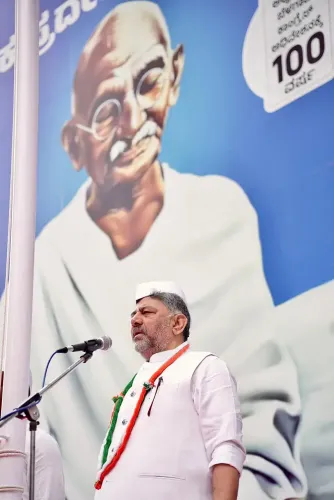
Congress has consistently argued that the G-RAM-G Act is a calculated effort by the central government to dilute the rights-based guarantees integral to MGNREGA, a flagship initiative named after Mahatma Gandhi, designed to ensure 100 days of wage employment in rural regions.
The party contends that this new framework diminishes wage payment timelines, reduces guaranteed workdays, lowers central funding, and transforms MGNREGA from a legal entitlement into a discretionary scheme, thus jeopardizing the income stability of millions of impoverished families. This concerted effort reflects Congress's strategy to spotlight rural distress and position the protection of MGNREGA as a pivotal national political concern in the months ahead.
The determination shown in Sawai Madhopur highlights the party's resolve to safeguard what it deems as one of the most significant achievements in India's battle against rural poverty.
Frequently Asked Questions
What is the G-RAM-G Act?
The G-RAM-G Act, or Viksit Bharat – Guarantee for Rozgar and Ajeevika Mission (Gramin) Act, is a legislative initiative that Congress claims undermines the Mahatma Gandhi National Rural Employment Guarantee Act (MGNREGA).
Why is Congress opposing the G-RAM-G Act?
Congress believes that the G-RAM-G Act dilutes essential rights and entitlements provided by MGNREGA, affecting the livelihoods of rural families.
What actions is Congress taking against the G-RAM-G Act?
The party has launched a 45-day campaign called 'MGNREGA Bachao Sangram,' which includes protests, fasts, and public meetings to rally support for the restoration of MGNREGA.
Who are some prominent leaders involved in the protest?
Key figures include Ramkesh Meena, Deputy Leader of the Opposition, and Indra Meena, District Congress President, among others.
What are the implications of this protest?
The protests aim to raise awareness about rural employment issues and may influence public opinion and government policy regarding rural welfare programs.