Congress Flags Dual ECI Notices to Kharge, Demands More Time
Synopsis
Congress has challenged two ECI show-cause notices sent to president Mallikarjun Kharge — both carrying the same reference number but signed by different officials and with conflicting complainant details. The party demands a week's extension, flags BJP violations ignored by ECI, and accuses the Commission of acting with 'ulterior motives.'
Key Takeaways
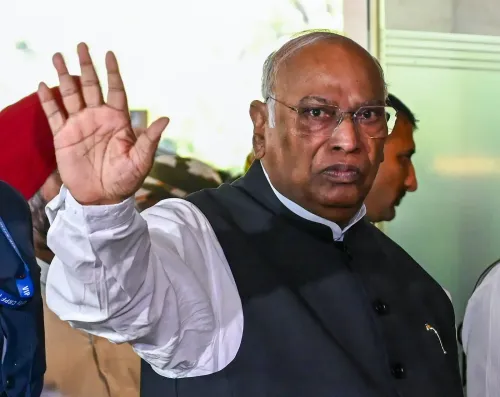
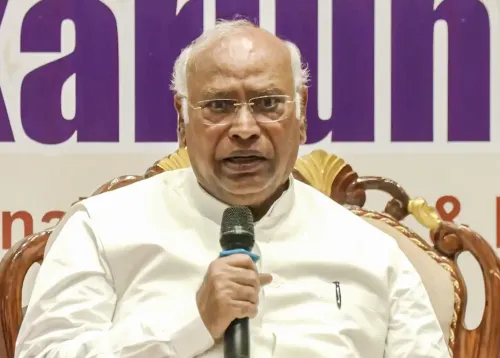
Congress wrote to the ECI on April 23, 2026 , challenging show-cause notices issued to party president Mallikarjun Kharge .
The party received two notices with the same reference number (F.
437/TN-LA/2026/SS-I) , dated April 22, 2026 , signed by two different officials .
One notice named TMC's Derek O'Brien as complainant; the version uploaded on the ECI website omitted his name entirely.
Congress objected to the 24-hour response deadline and demanded a one-week extension plus a formal hearing.
The party counter-cited alleged MCC violations by PM Modi and Home Minister Amit Shah under Section 123 of the Representation of the People Act, 1951 .
Kharge had previously clarified his remarks were directed at central agencies — ED, IT, and CBI — and not at PM Modi personally.
New Delhi, April 23: The Indian National Congress on Thursday, April 23, formally wrote to the Election Commission of India (ECI) challenging the issuance of show-cause notices to party president Mallikarjun Kharge, pointing out serious procedural irregularities including duplicate notice numbers, conflicting signatories, and an unreasonably short 24-hour deadline to respond during an active election campaign period.
The Dual-Notice Controversy
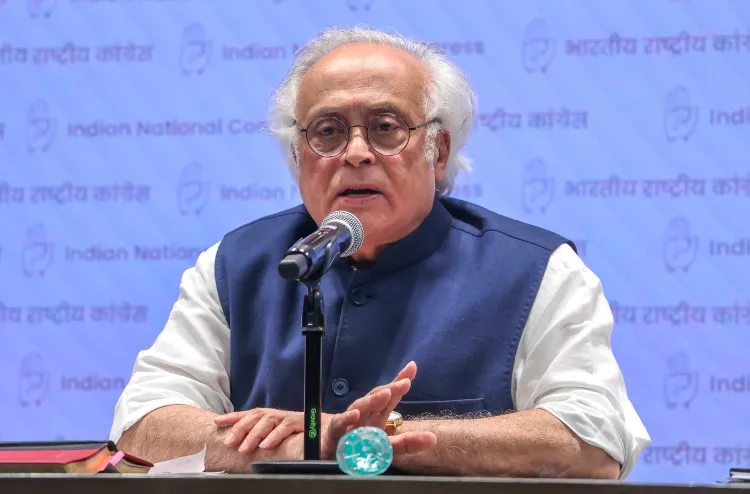
The Congress, through a "summary response" filed by AICC General Secretary (Communications) Jairam Ramesh, flagged a striking anomaly: the party received two separate notices carrying the identical reference number F. No. 437/TN-LA/2026/SS-I (MCC Complaint), both dated April 22, 2026, but signed by two different officials of the Commission.
Making matters more confusing, one notice explicitly named Trinamool Congress leader Derek O'Brien as the complainant, citing his complaint dated April 21, 2026. However, a second version of the same notice — uploaded on the ECI's official website — conspicuously omitted O'Brien's name as the complainant.
"If one of the notices was withdrawn, there is no mention of it in either of the notices," the Congress letter stated, adding that the process reflected a "casual and routine manner" of acting on complaints from ruling parties without independent scrutiny.
Congress Demands Extension and Formal Hearing
The party strongly objected to the 24-hour response window, calling it wholly inadequate given the hectic schedule of an ongoing election campaign. Congress requested one full week to prepare a detailed legal reply and sought a formal hearing before a senior delegation of party leaders.
The letter accused the Commission of "non-application of mind" in issuing the notices and warned that the approach was contrary to the principles of natural justice. It also urged the ECI to review its past records to ensure consistent handling of complaints across all political parties.
Congress Turns the Tables: Citing BJP and PM Violations
In a significant counter-offensive, the Congress cited two instances it claimed constituted Model Code of Conduct (MCC) violations by the ruling establishment that had allegedly gone unaddressed by the Commission.
First, the party referenced remarks made by Prime Minister Narendra Modi following the failure of the government to pass the 131st Constitutional Amendment, alleging that the speech targeted the Congress at a time when multiple states were heading to elections.
Second, it cited a statement attributed to Home Minister Amit Shah, shared on the BJP's official social media platforms, which Congress described as a "quid pro quo" — an alleged promise of financial benefits in exchange for votes. The party argued both instances fall under undue influence and bribery as defined under Section 123 of the Representation of the People Act, 1951.
"We also need hardly remind you of the numerous instances we have filed complaints against the PM and the HM, and NO ACTION was taken by you in the past," the letter pointedly noted.
Kharge's Clarification and Congress's Defence
On the substance of the remarks that triggered the notice, the Congress said Kharge had already issued a public clarification stating his comments were taken out of context. According to the party, the reference was specifically to the conduct of central agencies — the Enforcement Directorate (ED), Income Tax Department (IT), and the Central Bureau of Investigation (CBI) — and was not a personal attack on Prime Minister Modi.
The party accused the ECI of proceeding with the notice while deliberately ignoring this clarification, which was already in the public domain. "It almost seems that an attempt is being made to deliberately overlook the clear and unequivocal explanation... so as to find some way to take action against the Congress president. Unfortunately, it smacks of ulterior motives," the letter alleged.
Broader Implications: Opposition vs. Election Commission
This episode is part of a deepening pattern of friction between the opposition and the Election Commission of India during election seasons. Opposition parties, including the Congress, have repeatedly accused the ECI of applying asymmetric scrutiny — acting swiftly on complaints against opposition leaders while sitting on complaints against ruling party figures.
Notably, the involvement of Trinamool Congress's Derek O'Brien as the original complainant adds a layer of political complexity, given that the TMC and Congress are both part of the broader INDIA alliance opposing the BJP — raising questions about intra-alliance dynamics ahead of critical state polls.
The procedural irregularities flagged by Congress — two notices with the same number, signed by different officials, with inconsistent complainant details — could also raise questions about the ECI's internal administrative processes, potentially becoming a flashpoint in ongoing debates about the Commission's institutional credibility.
As elections continue across multiple states, all eyes will be on whether the ECI grants the extension sought by Congress, and how it reconciles the dual-notice anomaly — a decision that could set a significant procedural precedent for how the Commission handles MCC complaints going forward.
Point of View
The question isn't just about Congress getting more time to respond; it's about whether the ECI's internal processes can withstand judicial scrutiny. The opposition's counter-complaint strategy — citing PM Modi's post-amendment speech and Amit Shah's alleged quid-pro-quo statement — is tactically sharp, forcing the Commission to either act symmetrically or face accusations of selective enforcement. In an election season where institutional trust is already under strain, the ECI cannot afford to look like it is managing outcomes rather than monitoring them.
NationPress
14 Oct 2026
Frequently Asked Questions
Why did Congress object to the ECI notices sent to Mallikarjun Kharge?
Congress objected because it received two notices with the same reference number dated April 22, 2026, signed by different officials and containing inconsistent complainant details. The party also called the 24-hour deadline to respond wholly inadequate during an active election campaign.
What was the discrepancy in the two ECI notices sent to Kharge?
One notice named TMC leader Derek O'Brien as the complainant, while a second version uploaded on the ECI website omitted his name entirely. Both notices shared the same file number — F. No. 437/TN-LA/2026/SS-I — but were signed by different Commission officials.
What did Congress allege about BJP and PM Modi's MCC violations?
Congress cited PM Modi's remarks after the failure of the 131st Constitutional Amendment and a statement by Home Minister Amit Shah shared on BJP's social media as alleged MCC violations involving undue influence and bribery under Section 123 of the Representation of the People Act, 1951. The party accused ECI of ignoring these complaints while acting against the opposition.
What clarification did Kharge give about his controversial remarks?
Kharge clarified that his comments were taken out of context and referred to the conduct of central agencies like the ED, IT Department, and CBI — not a personal attack on Prime Minister Modi. Congress argued this clarification was already public before the ECI issued its notice.
What has Congress demanded from the Election Commission in response?
Congress has demanded a one-week extension to file a detailed legal reply and requested a formal hearing with a senior delegation of party leaders. It also urged the ECI to review its past complaint records to ensure consistent and fair treatment across all political parties.