Congress challenges Tata Power nuclear project NOC in MP's Rewa amid Gram Sabha objections
Synopsis
Congress has put the Madhya Pradesh government on the defensive over a nuclear project NOC in Rewa that was reportedly issued just 20 days after the local Gram Sabha unanimously refused consent — raising serious questions about tribal rights, due process, and the state's commitment to community consultation under PESA.
Key Takeaways
Congress leader Umang Singhar on 26 October 2025 challenged the NOC granted for drilling at Tata Power's proposed nuclear site in Rewa, Madhya Pradesh .
The Gram Sabha reportedly refused consent on 3 September ; an NOC was nonetheless issued on 23 September , allegedly citing a consent letter dated 4 September .
Sarpanch Komal Sanjay Singh approached the Divisional Commissioner and District Collector on 8 October seeking an inquiry into the consent letter's authenticity.
The proposed project involves two 220-MW nuclear power units; residents — including tribal families and farmers — are protesting over safety, water, and livelihood concerns.
Congress has demanded disclosure of environmental impact, seismic risk, and water availability assessments, plus emergency preparedness plans.
Tribal woman Vimla Kol died during the agitation; the BJP government in Madhya Pradesh has not issued a formal response to the allegations.
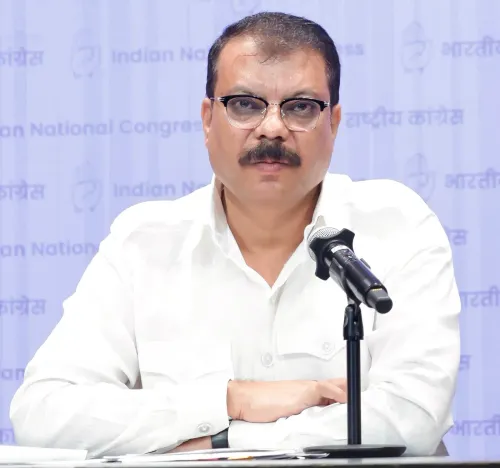
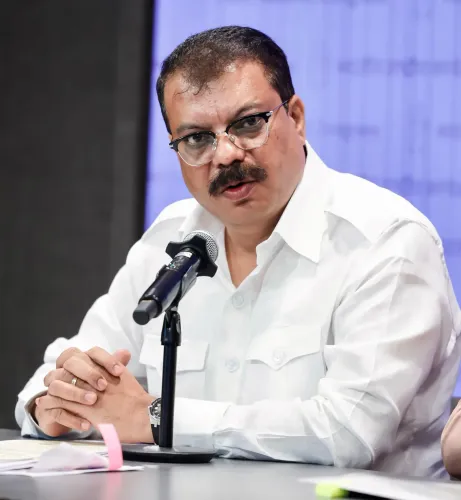
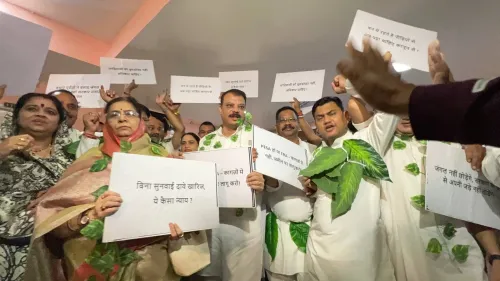
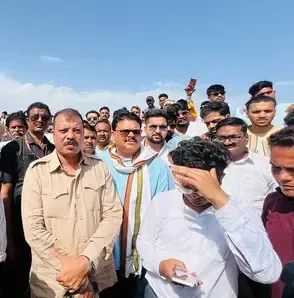
Congress leader and Leader of Opposition Umang Singhar on Monday, 26 October 2025, questioned the clearance granted for preliminary drilling at Tata Power's proposed nuclear power project site in Rewa district, Madhya Pradesh, alleging the No Objection Certificate was issued despite the local village assembly's explicit refusal to grant consent. Singhar raised the matter at a press conference in Bhopal, a day after visiting the proposed site in the Rojhauhi-Sarai Kala area and meeting tribal residents and villagers protesting the proposal.
The Disputed NOC
According to Singhar, the Gram Sabha unanimously refused consent for drilling on 3 September, and the Gram Panchayat formally communicated this decision to the District Collector via a letter dated 5 September. Despite this, an NOC was reportedly issued on 23 September, allegedly citing a separate consent letter dated 4 September — a letter whose authenticity has been disputed.
'When the Gram Sabha had clearly refused to give consent, on what basis was the No Objection Certificate issued? The government must explain the circumstances and make the relevant documents public,' Singhar said.
Sarpanch Komal Sanjay Singh subsequently approached the Divisional Commissioner and the District Collector on 8 October, seeking an inquiry into the authenticity of the alleged consent letter and the cancellation of the NOC.
Community Opposition and Concerns
The proposed project involves two 220-MW nuclear power units. Local residents — including tribal families, small farmers, and agricultural labourers — have sustained protests against the proposal, citing concerns over public safety, water availability, agricultural livelihoods, and potential environmental damage.
Singhar demanded that the government clarify whether a comprehensive environmental impact assessment, seismic risk studies, and water availability assessments had been completed before the NOC was granted. He also sought details of emergency preparedness plans, the precise location of proposed reactors, and the number of villages and families that may fall within applicable safety zones.
Tribal Rights and Safety Questions
The opposition leader also referred to the death of tribal woman Vimla Kol during the agitation, calling for protesters' grievances to be formally addressed. 'The government must explain how the safety of nearby residents will be ensured and how the interests of tribal families and farmers will be protected,' he said.
Singhar took a direct swipe at the Chief Minister Mohan Yadav-led Madhya Pradesh government, drawing a pointed contrast: 'Where people die after drinking contaminated water and innocent children lose their lives due to poisonous cough syrup, how can the government guarantee the safety of a nuclear power plant?'
Broader Context
The controversy surfaces at a sensitive intersection of India's nuclear energy ambitions and tribal land rights. India has been accelerating its nuclear capacity expansion, but community consent — especially in tribal areas governed by the Panchayats (Extension to Scheduled Areas) Act (PESA) — is a legally mandated prerequisite for such projects. Critics argue that bypassing Gram Sabha decisions in scheduled areas undermines both due process and constitutional protections for tribal communities. The Bharatiya Janata Party (BJP) government in Madhya Pradesh has not yet issued a formal response to the allegations.
Protests at the site are reportedly continuing, with residents demanding transparency from the state government on the disputed consent process and the project's long-term implications for their communities.
Point of View
PESA makes Gram Sabha consent mandatory, not advisory. If the NOC was indeed granted against an on-record refusal, the procedural breach is serious regardless of one's view on nuclear power. The BJP government's silence so far only amplifies the opacity. This story also illustrates a wider pattern: India's infrastructure pipeline increasingly collides with tribal consent rights, and the institutional mechanisms meant to adjudicate that conflict — District Collectors, Divisional Commissioners — are under pressure from both directions. How Madhya Pradesh responds will set a visible precedent.
NationPress
26 Oct 2026
Frequently Asked Questions
Why is Congress objecting to the Tata Power nuclear project NOC in Rewa?
Congress alleges that the NOC for preliminary drilling was issued on 23 September despite the local Gram Sabha unanimously refusing consent on 3 September. The party argues this violates the legal requirement for community consent, particularly under PESA rules applicable to tribal areas.
What is the Tata Power nuclear project in Rewa?
It is a proposed nuclear power facility in the Rojhauhi-Sarai Kala area of Rewa district, Madhya Pradesh, involving two 220-MW nuclear power units. The project is at a preliminary drilling stage and has attracted sustained protests from local tribal families, farmers, and agricultural labourers.
Who is Umang Singhar and what has he demanded?
Umang Singhar is the Leader of Opposition in the Madhya Pradesh Assembly and a Congress leader. He has demanded that the government explain the basis for the NOC, release the relevant documents publicly, and confirm whether environmental impact, seismic risk, and water availability assessments have been completed.
What action has the village Sarpanch taken?
Sarpanch Komal Sanjay Singh approached the Divisional Commissioner and District Collector on 8 October, seeking an inquiry into the authenticity of the alleged consent letter dated 4 September and the cancellation of the NOC issued on 23 September.
What are the concerns of local residents about the project?
Residents — including tribal families, small farmers, and agricultural labourers — are protesting over concerns about public safety, water availability, agricultural livelihoods, and potential environmental impact. They are also seeking clarity on how many villages would fall within the project's safety zones.