Will Congress Convince SC to Eliminate Retrospective Green Approvals and Strengthen NGT?
Synopsis
In light of the Supreme Court’s recent ruling on the Aravallis, Congress leader Jairam Ramesh urges action against retrospective environmental approvals and advocates for the restoration of the NGT’s powers. The call for judicial intervention highlights pressing environmental concerns that demand immediate attention.
Key Takeaways
Supreme Court's intervention is seen as crucial for environmental governance.
Retrospective environmental approvals are challenged for undermining legal principles.
The NGT's powers have been diluted over time, prompting calls for restoration.
A new expert committee may be formed to evaluate the Aravalli range definition.
Environmental concerns require immediate and decisive action from the judiciary.
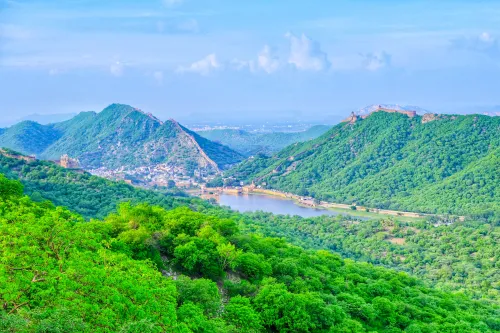
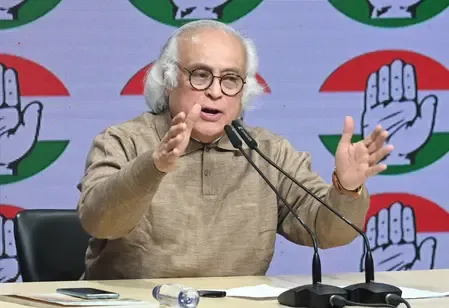
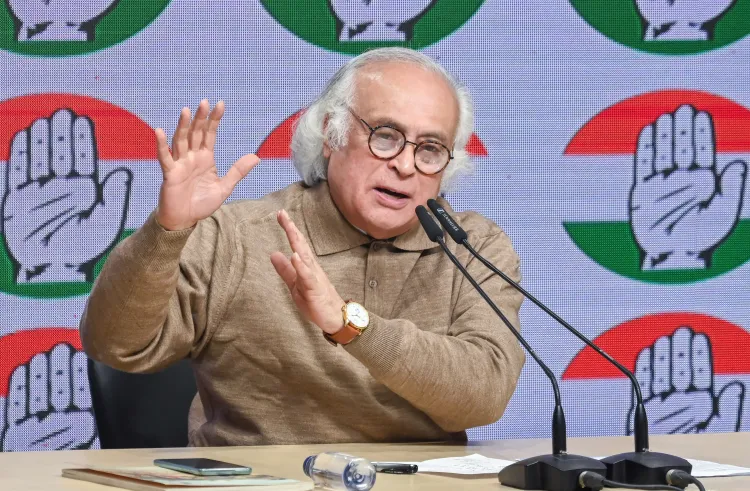
New Delhi, Dec 30 (NationPress) Following the Supreme Court’s directive concerning the Aravallis, Congress leader Jairam Ramesh emphasized the necessity for the court to also terminate retrospective environmental approvals, discard the proposal to alter the Sarisa tiger reserve boundaries, and restore the National Green Tribunal (NGT) to operate without bias.
The former Union Environment Minister lauded the Prime Minister Narendra Modi government for acknowledging the apex court’s remarks and decision to reassess the definition of the Aravalli range.
In a post on social media platform X, Ramesh stated, “The Supreme Court’s recent order — revisiting its verdict from November 20, 2025, which the Modi Government had readily accepted — was both essential and gratifying.”
He outlined three pressing issues demanding the Supreme Court’s immediate attention and intervention.
“Now, three additional critical tasks await the Honourable Supreme Court regarding environmental matters that should also be addressed suo moto like the Aravalli case,” he remarked, advocating for the cessation of retrospective environmental approvals, reconsideration of the Sarisa tiger reserve boundaries, and revitalizing the NGT as a robust environmental tribunal.
Ramesh asserted, “On August 6, 2025, the Supreme Court had suspended the Rajasthan and Indian Government’s proposal to modify the Sariska Tiger Reserve boundaries to facilitate the opening of approximately 57 closed mines. This proposal must be categorically rejected.”
He continued, “On November 18, 2025, the Supreme Court opened the door for a review of its prior decision from May 16, 2025, which prohibited retrospective environmental approvals.”
“Such approvals contradict the fundamental principles of jurisprudence and undermine governance. The review was unnecessary. Retrospective approvals should be outright banned. Laws and regulations are often intentionally bypassed under the assumption that decision-making can be managed post-implementation,” Ramesh asserted.
In a critical note about the perceived erosion of the NGT’s powers over time, Ramesh remarked, “The NGT was established in October 2010 by a Parliamentary Act, following comprehensive consultations with the Supreme Court and its robust backing. Its authority has been significantly weakened over the last decade. The Supreme Court’s intervention is crucial to ensure that the NGT operates according to the law without prejudice.”
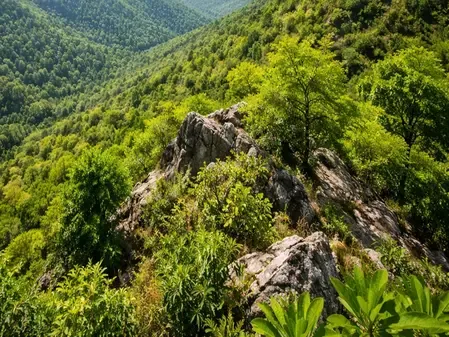
On Monday, the Supreme Court's three-judge panel, led by CJI Surya Kant, decided to pause its own order concerning the 100-metre height definition of the Aravallis, which faced opposition from activists and political parties including Congress.
The bench is considering forming a new, high-level expert committee to thoroughly evaluate the recommendations from all prior panels regarding the Aravalli range definition.
This proposed committee will investigate whether regulated mining can be allowed in the 500-metre gaps between hills and, if so, what structural parameters would be necessary to maintain ecological integrity.
Point of View
It is imperative to recognize the Congress party's call for judicial action in environmental governance. The Supreme Court's role is crucial in maintaining ecological integrity, and Jairam Ramesh's advocacy highlights the ongoing challenges in environmental legislation. The nation must focus on sustainable development while safeguarding our natural resources.
NationPress
18 Sept 2026
Frequently Asked Questions
What is the main concern raised by Jairam Ramesh?
Jairam Ramesh has called for the Supreme Court to stop retrospective environmental approvals and reject the redrawing of the Sarisa tiger reserve boundaries.
Why is the NGT important?
The National Green Tribunal is essential for adjudicating environmental matters and ensuring compliance with environmental laws.
What did the Supreme Court decide regarding the Aravallis?
The Supreme Court decided to stay its own order on the 100-metre height definition of the Aravallis after opposition from various groups.