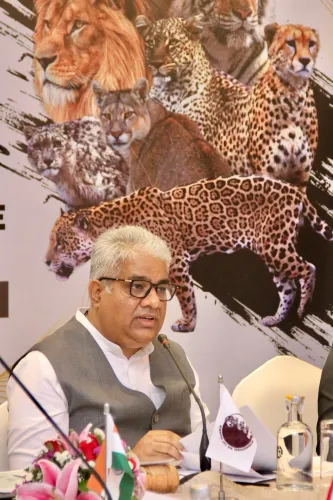
COP31: India flags big cat conservation as climate mitigation tool at Antalya

Synopsis
At COP31 in Antalya, India made the case that saving big cats is climate policy — not just wildlife sentiment. With 58 tiger reserves covering 85,000 sq. km and over 600 rivers flowing through them, Environment Minister Bhupender Yadav argued these landscapes are carbon vaults. It is a strategic reframe: biodiversity as a bankable climate asset, with India positioning itself as the global template.
Key Takeaways
Union Minister Bhupender Yadav addressed the 'Big Cats: Drivers of Climate Change Mitigation' side event at COP31 in Antalya, Turkey on 17 November 2026 .
The event was jointly organised by India's MoEFCC and the International Big Cat Alliance (IBCA) , with participants from Nepal, Venezuela, Cambodia and Sri Lanka .
India's 58 tiger reserves span approximately 85,000 sq. km and support watershed services for over 600 rivers .
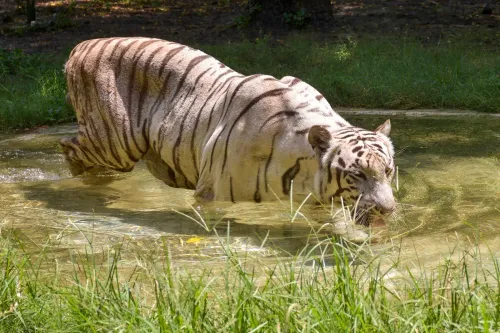
India's wild tiger population reached 3,682 in 2022 , representing more than 70% of the global wild tiger population.
Project Tiger generates roughly six million man-days of livelihood annually, linking conservation to green employment.
The IBCA , envisioned by PM Modi , was highlighted as a multilateral platform for sharing India's conservation models with range countries worldwide.
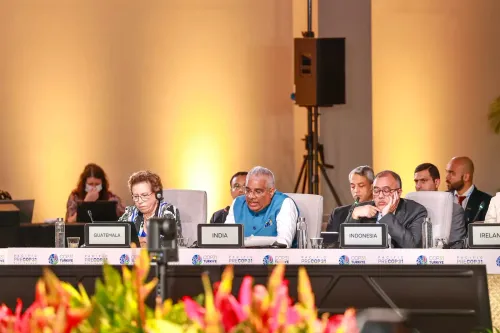
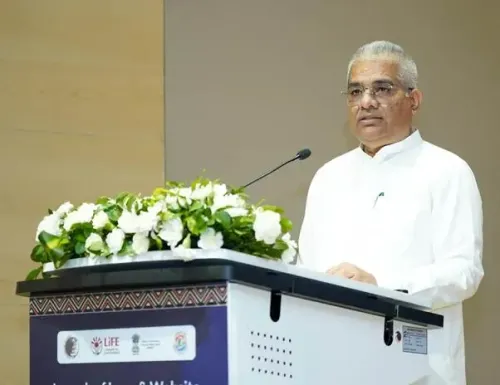
Union Minister for Environment, Forest and Climate Change Bhupender Yadav on 17 November 2026 underscored the critical role of big cat conservation in advancing climate change mitigation and strengthening ecosystem resilience at a High-Level Ministerial Side Event titled 'Big Cats: Drivers of Climate Change Mitigation' at the United Nations Climate Change Conference (COP31) in Antalya, Turkey. The event was jointly organised by India's Ministry of Environment, Forest and Climate Change (MoEFCC) and the International Big Cat Alliance (IBCA).
Who Was in the Room
The gathering brought together ministers and country representatives from big cat range countries, including Nepal, Venezuela, Cambodia, and Sri Lanka, alongside delegates from international bodies such as the Ramsar Convention and the United Nations Convention to Combat Desertification (UNCCD). S.P. Yadav, Director General of the IBCA, presented a status report on big cats across range countries. Participants also acknowledged India's conservation efforts, particularly the reintroduction of the cheetah, carried out under the leadership of Prime Minister Narendra Modi.
The Core Argument: Big Cats as Carbon Guardians
Minister Yadav articulated a pointed case: while big cats do not directly sequester carbon, their conservation protects forests, grasslands, wetlands, and mountain ecosystems that store vast quantities of carbon and prevent emissions from habitat degradation. As umbrella species, big cats mobilise the protection of entire ecosystems — benefiting thousands of other species and the communities that depend on these landscapes.
He stressed that wildlife conservation must be treated as an integral part of nature-based climate action, complementing emission-reduction efforts while simultaneously delivering biodiversity, ecosystem, and livelihood benefits. The discussions specifically covered how conserving the world's seven major big cat species and their habitats can safeguard carbon-rich ecosystems, enhance climate resilience, and advance global climate objectives.
India's Tiger Conservation Record
Minister Yadav cited India's tiger conservation journey as a proven model of nature-based climate action. The country's 58 tiger reserves, spanning approximately 85,000 sq. km, protect extensive forest ecosystems and their carbon stocks. These landscapes provide vital ecosystem services — carbon sequestration, water purification, soil conservation, and groundwater recharge. Notably, over 600 rivers originate or flow through these habitats, underscoring their role as critical watersheds.
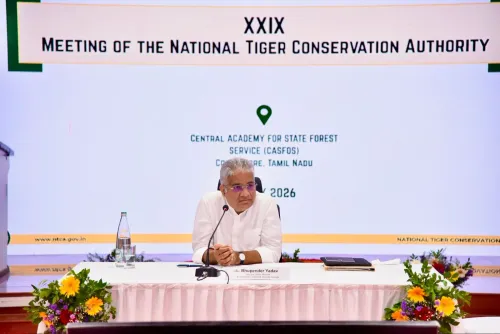
India's tiger population stood at 3,682 in 2022, accounting for more than 70% of the world's wild tigers — a turnaround attributed to Project Tiger, backed by the Wildlife (Protection) Act, 1972, and governed by the statutory National Tiger Conservation Authority (NTCA). The minister noted that Project Tiger generates livelihood opportunities of approximately six million man-days annually, making conservation a driver of green employment.
IBCA's Global Role
Minister Yadav highlighted the IBCA — an India-led initiative envisioned by Prime Minister Modi — as a platform for sharing successful conservation models, facilitating knowledge exchange, and building capacity for the recovery of all seven big cat species globally. He said India's experience demonstrates how political commitment, strong institutions, sustained investment, and community participation can transform wildlife conservation into an instrument of ecological security, climate resilience, and sustainable development.
What Comes Next
The ministerial dialogue at COP31 is expected to shape commitments from range countries on integrating big cat habitat protection into their national climate plans. India's push to position biodiversity conservation as a formal pillar of climate action represents a broader diplomatic strategy to advance nature-based solutions within the UN climate framework — a space where India is increasingly asserting leadership.
Point of View
Shifting India's narrative from polluter-catching-up to ecological creditor. The IBCA, however, remains a relatively young institution, and its ability to translate ministerial enthusiasm into binding range-country commitments is still unproven. The bigger question is whether this biodiversity-as-climate-action framing will find its way into the formal COP31 text, or remain a compelling side-event story. With nature-based solutions still contested in UN climate negotiations, India's diplomatic capital will be tested in the plenary rooms, not just the conference halls.
NationPress
17 Nov 2026
Frequently Asked Questions
What did India say about big cat conservation at COP31?
India's Environment Minister Bhupender Yadav argued at COP31 in Antalya on 17 November 2026 that conserving big cats and their habitats — forests, grasslands, wetlands — protects carbon-rich ecosystems, prevents emissions from habitat loss, and strengthens climate resilience. He presented India's tiger reserves as a working model of nature-based climate action.
What is the International Big Cat Alliance (IBCA)?
The IBCA is an India-led multilateral body envisioned by Prime Minister Narendra Modi to advance the conservation of all seven major big cat species globally. It serves as a platform for knowledge exchange, capacity building, and international cooperation among big cat range countries.
How many tigers does India have, and why does it matter globally?
India recorded a wild tiger population of 3,682 in 2022, which represents more than 70% of the world's wild tigers. The country's 58 tiger reserves, spanning about 85,000 sq. km, also serve as critical watersheds for over 600 rivers, making their protection significant for both biodiversity and water security.
Which countries participated in the big cat side event at COP31?
The event drew ministers and country representatives from big cat range nations including Nepal, Venezuela, Cambodia, and Sri Lanka, as well as delegates from international bodies such as the Ramsar Convention and the UNCCD. It was jointly organised by India's MoEFCC and the IBCA.
How does Project Tiger contribute to livelihoods?
According to Minister Yadav, Project Tiger generates approximately six million man-days of livelihood opportunities annually, making big cat conservation a driver of green employment and community livelihood security in and around tiger reserve landscapes.