Sabarimala gold case: CPI(M) suspends Padmakumar, avoids harsher action

Synopsis
The CPI(M) chose suspension over expulsion for its former Travancore Devaswom Board chief in the Sabarimala gold case — reportedly because Padmakumar warned he would 'reveal many things' if pushed harder. It is a rare moment where a disciplinary process appears shaped as much by what an accused might say as by what he allegedly did.
Key Takeaways
CPI(M) suspended former Travancore Devaswom Board president A.
Padmakumar on 15 June over the Sabarimala gold theft case .
The party stopped short of harsher measures despite pressure from within the Pathanamthitta District Secretariat .
Padmakumar had been arrested and later obtained bail; he reportedly warned he would make disclosures if severe action was taken.
Former Finance Minister Thomas Isaac announced the outcome after chairing the day-long District Committee meeting.
The case involves allegations of mismanagement of temple assets under the Travancore Devaswom Board , which administers the Sabarimala temple .
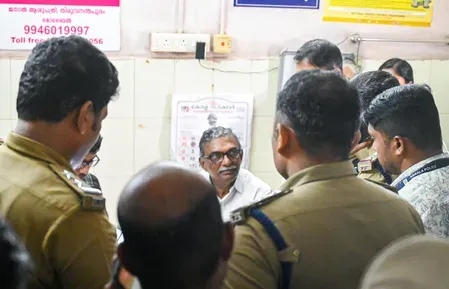
The Communist Party of India (Marxist) on Monday, 15 June decided to suspend A. Padmakumar, former president of the Travancore Devaswom Board (TDB), as its disciplinary response to his alleged involvement in the Sabarimala gold theft case — stopping well short of the stronger action demanded by sections within the party. The decision was taken at a day-long meeting of the Pathanamthitta District Committee.
What the Party Decided
The outcome — suspension rather than expulsion or any harsher measure — was announced by Thomas Isaac, former Finance Minister and Central Committee member, who chaired the day-long deliberations. Padmakumar, who had been arrested in connection with the case and subsequently obtained bail, remains under party suspension pending further developments.
The Pressure Behind the Decision
According to sources, the party's internal deliberations were complicated by reported warnings from Padmakumar himself. He allegedly signalled to close associates that he would 'reveal many things' if subjected to severe disciplinary proceedings — a factor that reportedly weighed on the discussions. He is also said to have hinted at writing an autobiography, raising speculation about potential disclosures linked to the controversy.
The Pathanamthitta District Secretariat witnessed intense debate, with several leaders arguing that the gravity of the allegations demanded strict action. The Secretariat's recommendations were placed before the District Committee, which ultimately opted for the more cautious path.
The Sabarimala Gold Controversy
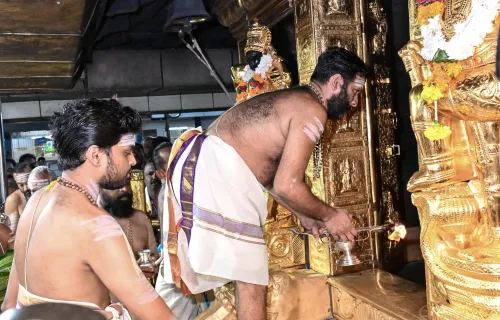
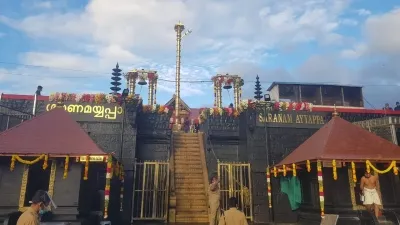
The Sabarimala gold case centres on allegations of mismanagement and theft involving temple assets under the Travancore Devaswom Board, the statutory body that administers the Sabarimala temple and hundreds of other Hindu shrines in Kerala. Padmakumar served as TDB president during the period under scrutiny and has been a focal point of the investigation. The controversy has drawn allegations and counter-allegations across political lines, making it one of the more politically sensitive temple-administration disputes in the state in recent years.
Reading the Party's Move
Within CPI(M) circles, the decision is being interpreted as a deliberate balancing act — acknowledging the seriousness of the charges while avoiding an escalation that could trigger damaging internal disclosures. Notably, this is not the first time a Kerala political party has faced the dilemma of disciplining a senior figure whose cooperation — or silence — carries strategic value. The party leadership has indicated it will continue to monitor developments as investigations proceed.
Point of View
' it raises an uncomfortable question: who, exactly, is being protected? The Sabarimala temple administration has long been a politically loaded portfolio in Kerala — TDB appointments have historically tracked ruling-party interests — and that context makes the party's caution here worth scrutinising. A suspension that leaves the door open for reinstatement is also a signal to others watching how the party handles accountability under pressure.
NationPress
15 Sept 2026
Frequently Asked Questions
What is the Sabarimala gold theft case?
The Sabarimala gold case involves allegations of theft and mismanagement of gold and other temple assets under the Travancore Devaswom Board, the statutory body that administers the Sabarimala temple in Kerala. A. Padmakumar, who served as TDB president, was arrested in connection with the case and later obtained bail.
What action did CPI(M) take against Padmakumar?
The CPI(M) decided to suspend Padmakumar from the party, stopping short of expulsion or other harsher disciplinary measures. The decision was announced on 15 June by former Finance Minister Thomas Isaac after a day-long Pathanamthitta District Committee meeting.
Why did CPI(M) avoid stronger action against Padmakumar?
According to sources, Padmakumar reportedly warned that he would 'reveal many things' if subjected to severe disciplinary proceedings. He also allegedly hinted at writing an autobiography. These reported threats are said to have influenced the party's decision to limit action to suspension.
Who is A. Padmakumar?
A. Padmakumar is a former legislator and former president of the Travancore Devaswom Board, a CPI(M)-affiliated figure who served during the period under scrutiny in the Sabarimala gold controversy. He was arrested in connection with the case and later secured bail.
What happens next in the case?
The CPI(M) leadership has indicated it will continue monitoring developments as investigations and internal discussions progress. Padmakumar remains under party suspension, and any further disciplinary steps will depend on how the broader legal and political situation unfolds.