Experts Defend India's Diplomatic Stance Amid Khamenei's Death Criticism
Synopsis
India’s response to Khamenei’s assassination has ignited political controversy, with Sonia Gandhi accusing the government of silence. Experts counter, asserting that India’s diplomatic decisions are rooted in national interests, not mere reactions. This article delves into the complexities of India's foreign policy in the context of Middle Eastern conflicts.
Key Takeaways
Sonia Gandhi's criticism of India’s silence regarding Khamenei's death is contested by experts.
India’s diplomatic stance is driven by national interests , not external pressures.
The Modi government has prioritized caution in foreign affairs.
Historical comparisons highlight Congress's fluctuating stances on global issues.
Continued tensions in West Asia could affect India's economy significantly.
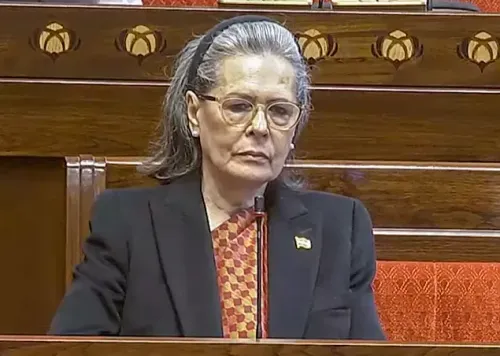
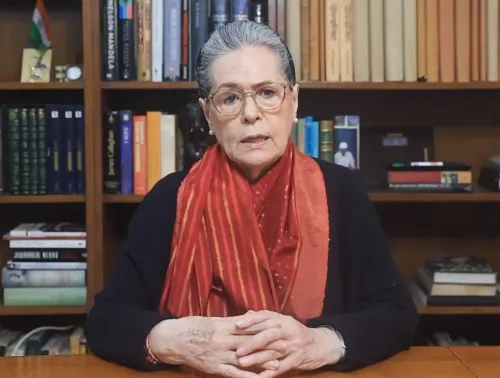
New Delhi, March 3 (NationPress) The sharp criticism from Congress Parliamentary Party leader Sonia Gandhi regarding India’s perceived "silence" following the assassination of Iranian Supreme Leader Ayatollah Ali Khamenei is unfounded, as asserted by various political experts this Tuesday.
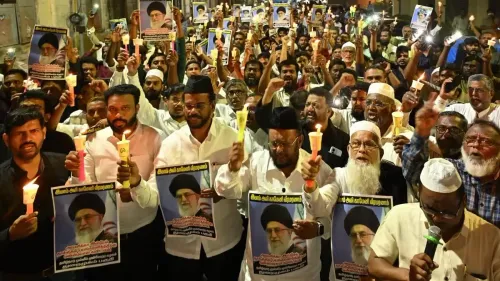
Amid a severe conflict in West Asia, ignited by US-Israeli military actions that led to Khamenei's death, Indian opposition parties are scrutinizing the nation’s diplomatic stance and involvement in Middle Eastern affairs.
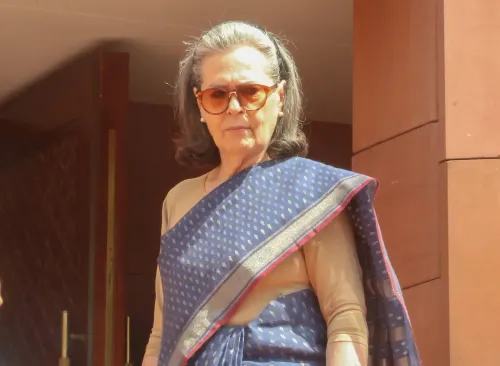
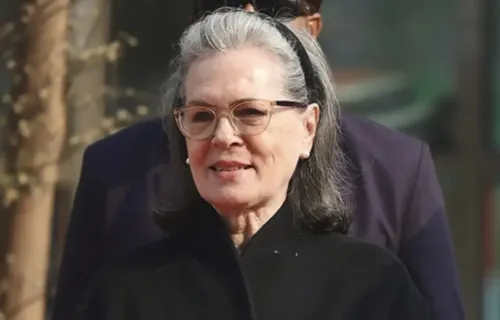
The Congress and the INDIA bloc have openly criticized the government's position, especially concerning Iran. Sonia Gandhi has condemned the perceived inaction by India concerning Khamenei's death. In response, the BJP highlighted previous instances where the Congress-led government distanced itself from dictatorial regimes like that of Khamenei and Gaddafi (Libya) and aligned more closely with US-led initiatives.
The ongoing conflict in West Asia is expected to have cascading effects on global economies, particularly affecting nations like India that rely heavily on Iranian energy. However, analysts argue that India's diplomatic approach is primarily based on its "national interests", rather than external influences.
Numerous analysts and political observers contend that Prime Minister Narendra Modi's administration has exercised "utmost caution" in prioritizing national interests.
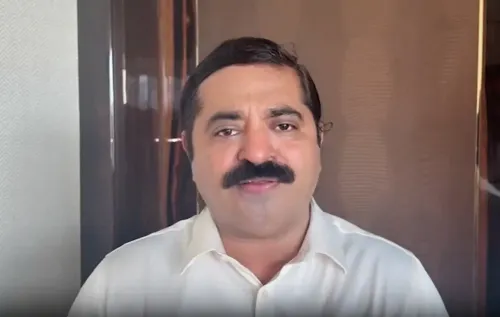
Others have stated that "India has strategically chosen when and how to communicate, based on its assessment of national interests, regional stability, and citizen safety. This is not silence; it is astute statecraft."
Earlier, Sonia Gandhi accused the government of bias, noting that the Prime Minister condemned Iran’s retaliatory actions against the UAE but refrained from addressing the circumstances surrounding Khamenei's assassination.
Experts also pointed out various instances where past Congress-led governments maintained neutrality or aligned with global powers, distancing themselves from oppressive regimes, including those led by Saddam Hussein in Iraq and Gaddafi in Libya.
During the tenure of the Congress-led UPA, India voted against Iran at the International Atomic Energy Agency in 2005, 2006, and 2009, aligning with Western powers during the negotiations regarding the India–US Civil Nuclear Agreement, seemingly sidelining what is now deemed a civilizational relationship.
In 2011, when Libyan leader Muammar Gaddafi was killed during an uprising, the Congress-led UPA neither expressed formal condolences nor issued strong condemnations.
One analyst questioned, "When Gaddafi was killed while fleeing from a NATO airstrike, the UPA government remained silent. Given the strong ties India had with Libya at that time, was the UPA incorrect then, or is the Modi government incorrect now?"
The BJP has countered these criticisms by reminding the Congress Party to refrain from "lecturing on moral responsibility", emphasizing that selective memory should not form the basis for selective outrage.
Furthermore, Khamenei's regime has a history of meddling in India’s internal issues, which helps explain New Delhi's diplomatic stance and weakens the opposition's moral arguments.
Over the years, Khamenei has commented on India’s domestic matters, attempting to sway public opinion against India and marginalize it internationally. He has intensified propaganda surrounding the Delhi riots, branding them a one-sided massacre while neglecting the violence against Hindus, and has drawn inflammatory comparisons between India and Gaza.
In 2017, he urged the Muslim world to support what he referred to as the “oppressed Muslims of Kashmir.” He has also commented on Article 370 and the CAA. Despite these persistent provocations, India has chosen a path of diplomatic restraint.
Even after the devastating 2008 Mumbai attacks, India's disappointment with Tehran’s response was palpable. Reports indicated that certain segments of Iranian media displayed sympathy towards Pakistan, and an Iranian official refrained from explicitly acknowledging the terrorists' Pakistani origins, instead portraying Pakistan as a terrorism victim.
Meanwhile, as conflicts escalate in West Asia, Prime Minister Modi has been in touch with leaders from Israel and Gulf nations, expressing solidarity and advocating for an end to violence through dialogue.
Overall, amidst political disputes, what remains clear is that India's foreign policy is directed by national interests, a continuity observed both during previous administrations and the current one. Consequently, the rhetoric surrounding the country's diplomatic stance regarding Iran appears to be more political theatrics than substantive critique.
Point of View
The focus should be on understanding India's diplomatic strategies rather than political disagreements. The government's actions reflect a carefully considered approach to maintain regional stability and safeguard national interests, which should be acknowledged amid political rhetoric.
NationPress
19 Sept 2026
Frequently Asked Questions
Why did Sonia Gandhi criticize the Indian government?
Sonia Gandhi criticized the government for its perceived silence on the assassination of Iranian Supreme Leader Khamenei, suggesting a lack of moral responsibility.
How have experts responded to Gandhi's criticism?
Experts argue that India's diplomatic stance is based on national interests and that the government's silence is a strategic choice rather than an oversight.
What historical examples do critics use against the Congress Party?
Critics highlight instances where the Congress-led government maintained neutrality with dictatorial regimes, aligning with Western powers during key negotiations.
What implications does Khamenei's death have for India?
The ongoing conflict in West Asia, sparked by Khamenei's assassination, could significantly impact India's energy security and economic stability due to its dependency on Iranian oil.
How has India's foreign policy been characterized?
India's foreign policy, as noted by experts, is guided by national interests, focusing on regional stability and diplomatic engagement rather than reactionary statements.