Crude oil prices rise 1% as US strikes Iranian targets near Strait of Hormuz
Synopsis
The US military's self-defence strikes on Iranian radar and air defence sites near the Strait of Hormuz — the artery for roughly a fifth of global oil trade — sent Brent crude to $93.26 and triggered a broad risk-off selloff across Asian markets. With Iran denying responsibility for the Apache helicopter downing that sparked the strikes, and Tehran threatening to re-engage if Israel escalates in Lebanon, the geopolitical premium in oil prices is far from over.
Key Takeaways
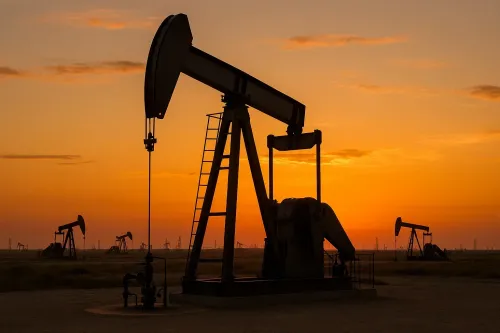
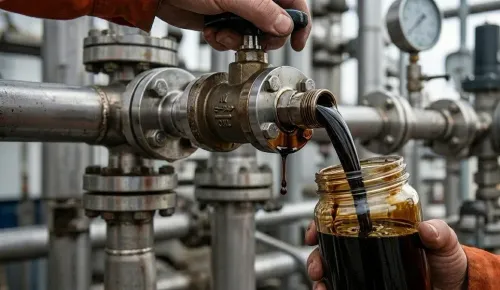
Brent crude rose ~1% to $93.26 per barrel on 10 June ; WTI gained 0.97% to around $90 per barrel .
The US Central Command said strikes targeted Iranian air defence, ground control, and surveillance radar sites near the Strait of Hormuz .
The operation was described as a response to the reported downing of a US Army Apache helicopter ; Iran denied involvement and called the crash accidental.
US crude oil inventories reportedly fell for an eighth consecutive week , adding supply-side pressure to prices.
South Korea's KOSPI plunged nearly 4% ; Nikkei and Hang Seng each fell more than 1% on risk-off sentiment.
Indian benchmark indices bucked the trend, gaining up to 0.5% in early trade despite the global selloff.
Global crude oil prices climbed by up to 1 per cent on Wednesday, 10 June, after the United States launched military strikes against Iranian air defence and surveillance radar sites near the Strait of Hormuz, stoking fears of a major disruption to energy supplies from one of the world's most critical maritime chokepoints. The move marked a sharp escalation in US-Iran tensions at a moment when markets had been pricing in a gradual de-escalation across West Asia.
Oil Price Movement
International benchmark Brent crude rose approximately 1 per cent to trade at $93.26 per barrel, while US West Texas Intermediate (WTI) crude gained 0.97 per cent to hover around $90 per barrel. The gains were underpinned by a combination of geopolitical risk premium and tightening supply fundamentals — US crude oil inventories reportedly fell for an eighth consecutive week, according to available data.
What Triggered the Strikes
According to the US Central Command, the operation was characterised as self-defence strikes carried out in response to the reported downing of a US Army Apache helicopter in the region. The targeted sites included Iranian air defence installations, ground control facilities, and surveillance radar positions near the strategically vital Strait of Hormuz. Iran, however, denied any responsibility for the helicopter incident, stating that the crash was accidental.
Broader Geopolitical Risk
This comes amid an already fragile regional security environment. Tehran has reportedly threatened to reopen hostilities should Israel persist in its military operations against Hezbollah in Lebanon — a warning that adds another layer of risk to energy supply routes through the Strait of Hormuz, through which an estimated 20 per cent of global oil trade passes. Notably, this is the latest in a series of confrontations that have periodically rattled energy markets over the past several years.
Global Market Fallout
Investor sentiment turned broadly risk-off in the wake of the strikes. Asian markets traded largely in the red, with Japan's Nikkei and Hong Kong's Hang Seng each falling more than 1 per cent, while South Korea's KOSPI plunged nearly 4 per cent. On Wall Street, the Nasdaq Composite declined 0.97 per cent and the S&P 500 slipped 0.26 per cent on Tuesday. Global equities faced selling pressure as traders reassessed risk exposure.
India's Markets Buck the Trend
In contrast, domestic equity markets in India traded higher during the morning session on Wednesday, with benchmark indices gaining up to 0.5 per cent in early trade — a divergence that analysts attributed to local buying interest. However, sustained crude price elevation poses an indirect risk to India, which imports over 85 per cent of its oil needs, as higher energy costs can widen the current account deficit and stoke domestic inflation.
With diplomatic channels between Washington and Tehran showing no immediate signs of reopening, energy traders are likely to keep a geopolitical risk premium baked into crude prices in the near term.
Point of View
Combined with its Lebanon-linked threat, suggests Tehran is keeping multiple pressure levers open. The eighth consecutive draw in US crude inventories means the supply buffer is thin precisely when geopolitical risk is rising — a combination that could push Brent well past $95 if the situation deteriorates. India, as a price-taker importing over 85% of its oil, has the most to lose from a sustained premium.
NationPress
26 Sept 2026
Frequently Asked Questions
Why did crude oil prices rise on 10 June 2025?
Crude oil prices rose by up to 1% on 10 June after the US military launched strikes on Iranian air defence and radar sites near the Strait of Hormuz, raising fears of disruptions to a waterway through which a significant share of global oil trade flows. Brent crude reached $93.26 per barrel and WTI traded around $90 per barrel.
What did the US Central Command say about the strikes?
The US Central Command described the operation as self-defence strikes carried out in response to the reported downing of a US Army Apache helicopter near the Strait of Hormuz. The targeted sites included Iranian air defence installations, ground control facilities, and surveillance radar positions.
How did Iran respond to the US strikes?
Iran denied any responsibility for the Apache helicopter incident, stating that the crash was accidental. Tehran has not formally acknowledged the strikes on its military sites as of the latest available reports.
How did global markets react to the US-Iran escalation?
Global markets turned risk-off, with South Korea's KOSPI plunging nearly 4%, and Japan's Nikkei and Hong Kong's Hang Seng each falling more than 1%. On Wall Street, the Nasdaq fell 0.97% and the S&P 500 slipped 0.26% on Tuesday. Indian markets were an exception, gaining up to 0.5% in early Wednesday trade.
Why does the Strait of Hormuz matter for oil prices?
The Strait of Hormuz is one of the world's most critical energy chokepoints, with an estimated 20% of global oil trade passing through it. Any military activity or blockade threat in the region immediately raises the risk of supply disruption, which is reflected in higher crude prices globally.