CSKHPKV study: Direct-seeded SAVA-134 cuts methane by 90% in Himachal rice fields
Synopsis
A Himachal Pradesh agricultural university has found that a single direct-seeded rice variety — SAVA-134 FullPage — can slash methane emissions from paddy fields by nearly 90 per cent compared with conventional transplanted systems, while also improving water productivity and unlocking carbon credit potential. For a crop grown on 164 million hectares globally, that is a climate signal too large to ignore.
Key Takeaways
CSKHPKV and Savannah Seeds released multi-year study results on 14 September 2026 from two rice-growing regions of Himachal Pradesh .
Direct-seeded SAVA-134 FullPage reduced methane emissions by nearly 90 per cent compared with conventional transplanted rice.
The variety delivered the highest water productivity and the greatest potential for carbon credit generation among all treatments evaluated.
Rice is grown on more than 164 million hectares globally; Asia produces roughly 90 per cent of world output, mostly through emission-intensive transplanted systems.
The research was led by Dr Dhanbir Singh , Assistant Soil Chemist, CSKHPKV, with Dr Vinod Sharma , Director of Research, endorsing its public-private model.
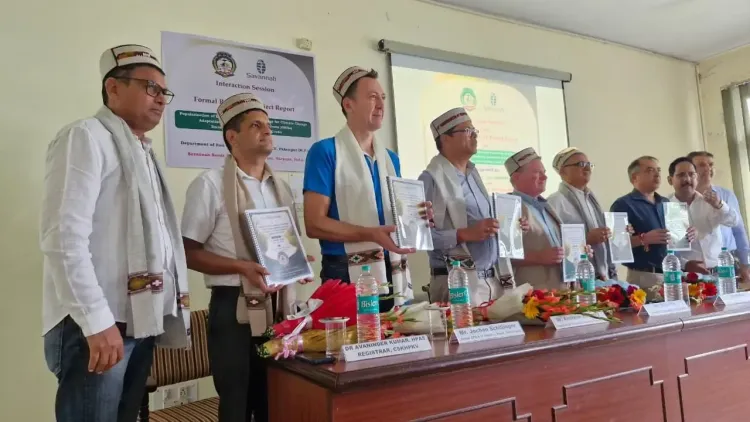
Chaudhary Sarwan Kumar Himachal Pradesh Krishi Vishvavidyalaya (CSKHPKV) and agricultural firm Savannah Seeds on Monday, 14 September 2026, released findings from a multi-year study demonstrating that the direct-seeded rice variety SAVA-134 FullPage can cut methane emissions by nearly 90 per cent compared with conventional transplanted rice systems, while also delivering superior water productivity and soil health outcomes. The research was conducted across two major rice-growing regions of Himachal Pradesh.
What the Study Found
The study, titled 'Popularisation of direct-seeded rice technology for climate change adaptation by reducing GHG emissions and acquiring carbon credit', was led by Dr Dhanbir Singh, Assistant Soil Chemist in the Department of Soil Science at CSKHPKV, with support from Savannah Seeds. Researchers compared conventional transplanted rice with direct-seeded rice across multiple growing seasons, assessing yield, water use, greenhouse gas (GHG) emissions, and soil health.
Among all direct-seeded treatments evaluated, SAVA-134 FullPage delivered the strongest overall balance of productivity, resource efficiency, and environmental sustainability. Notably, it maintained strong yields while using fewer inputs and generating a significantly smaller carbon footprint — and showed the greatest potential for carbon credit generation of any system studied.
How Direct-Seeded Rice Works
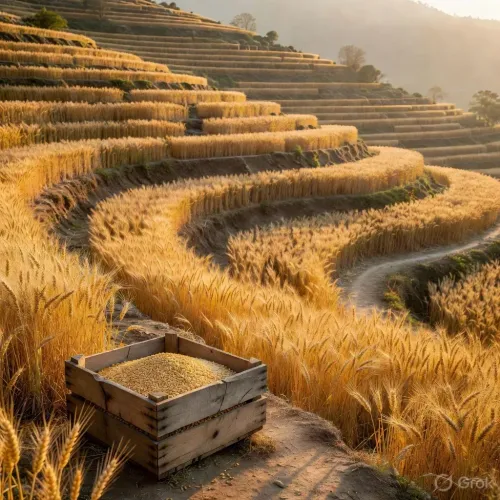
SAVA-134 FullPage is the commercial name of a rice variety that allows farmers to sow seeds directly into the soil — much like wheat — rather than raising seedlings in flooded mud nurseries and transplanting them by hand. This approach eliminates the prolonged waterlogging that drives methane-producing anaerobic conditions in paddy fields, which is the primary reason for the dramatic emissions reduction recorded in the study.
Conventional transplanted rice systems require flooded fields, intensive labour, and large volumes of water — inputs that are increasingly scarce and costly. Asia produces roughly 90 per cent of the world's rice, most of it through these traditional methods. Rice itself is grown on more than 164 million hectares globally and serves as the primary energy source for over half the world's population, making improvements to its production footprint consequential at scale.
Why This Matters for Farmers and Climate
Indian rice farmers face a convergence of pressures: acute labour shortages, worsening water scarcity, rising input costs, and increasingly erratic monsoons. Direct-seeded rice addresses several of these simultaneously. By reducing dependence on flooded nurseries and manual transplanting, it lowers both labour requirements and water consumption, while the sharp methane reduction positions farmers to access emerging carbon credit markets — a potential new income stream.
This comes amid growing urgency around agricultural GHG emissions in India, where rice cultivation is one of the largest single sources of methane in the farm sector. The CSKHPKV findings add peer-reviewed weight to the case for scaling direct-seeded systems beyond trial plots.
What the Researchers Said
'Our goal was to evaluate practical solutions that can help farmers improve productivity while reducing environmental impact,' said Dr Dhanbir Singh. 'The results demonstrate that direct-seeded rice can play an important role in advancing more climate-smart and resource-efficient rice production systems.'
Dr Vinod Sharma, Director of Research at CSKHPKV, described the research as 'a strong example of a public-private partnership working to develop climate-resilient and sustainable farming practices.'
What Comes Next
The university and Savannah Seeds have not yet announced a formal rollout timeline or adoption targets for Himachal Pradesh farmers, but the publication of results signals a move toward wider dissemination. Scaling the variety will depend on seed availability, farmer training, and policy support — factors that state agriculture departments and the Centre's climate-smart agriculture programmes will need to align on if the methane-reduction gains are to move beyond research plots.
Point of View
Which are not representative of the Indo-Gangetic plain where the bulk of India's rice is grown under very different soil, water, and labour conditions. The carbon credit angle is commercially compelling but remains speculative until verified carbon accounting protocols are applied at scale. The deeper question is whether India's state agriculture departments and the Centre's climate missions will back the seed system, extension infrastructure, and procurement assurances needed to take SAVA-134 from a multi-year trial to millions of hectares — the gap where most promising Indian agri-research quietly stalls.
NationPress
14 Sept 2026
Frequently Asked Questions
What is SAVA-134 FullPage and how is it different from regular rice?
SAVA-134 FullPage is a rice variety developed to be sown directly into the soil like wheat, bypassing the flooded mud nurseries and manual transplanting required by conventional paddy systems. This eliminates prolonged waterlogging, which is the primary driver of methane emissions in rice fields, and reduces labour and water demands significantly.
How much does direct-seeded SAVA-134 reduce methane emissions?
According to the CSKHPKV–Savannah Seeds study, SAVA-134 FullPage reduced methane emissions by nearly 90 per cent compared with conventional transplanted rice systems. The research was conducted across two major rice-growing regions of Himachal Pradesh over multiple growing seasons.
Can farmers earn carbon credits by switching to direct-seeded rice?
The study found that SAVA-134 FullPage showed the greatest potential for carbon credit generation among all the treatments evaluated. However, actual credit earnings would depend on verified carbon accounting under recognised protocols, which have not yet been detailed for this variety.
Who conducted the research and where was it carried out?
The study was led by Dr Dhanbir Singh, Assistant Soil Chemist at the Department of Soil Science, CSKHPKV, Palampur, with support from Savannah Seeds. It was conducted in two major rice-growing regions of Himachal Pradesh across multiple growing seasons, assessing yield, water use, GHG emissions, and soil health.
Why does rice farming produce so much methane?
Conventional transplanted rice requires fields to be flooded for extended periods, creating oxygen-starved (anaerobic) conditions in the soil where microbes produce methane as a byproduct. Rice cultivation is one of the largest agricultural sources of methane globally, and Asia — which produces about 90 per cent of world rice output — bears the bulk of these emissions.