CM Sukhu Launches Rajiv Gandhi Van Sanvardhan Yojana in HP
Synopsis
On World Environment Day 2026, Himachal Pradesh CM Sukhvinder Singh Sukhu announced the Rajiv Gandhi Van Sanvardhan Yojana, offering Rs 1,40,000 to Yuva Mandals, Mahila Mandals, and Self-Help Groups for planting saplings on one hectare of land, linking rural livelihoods to state forest-cover expansion.
Key Takeaways
Rajiv Gandhi Van Sanvardhan Yojana launched by CM Sukhvinder Singh Sukhu on World Environment Day, June 5, 2026 .
Eligible groups — Yuva Mandals, Mahila Mandals, and SHG women — receive Rs 1,40,000 for plantation on one hectare of land.
Scheme targets dual goals: increasing Himachal Pradesh's forest cover and providing direct financial support to rural communities.
Builds on the state's Joint Forest Management tradition dating to the 1990s under the National Forest Policy, 1988 .
Complements central programmes including CAMPA and the Green India Mission in pursuit of India's 33 per cent forest-cover target.
Implementation quality will depend on field verification, fund disbursement timelines, and sapling survival monitoring.
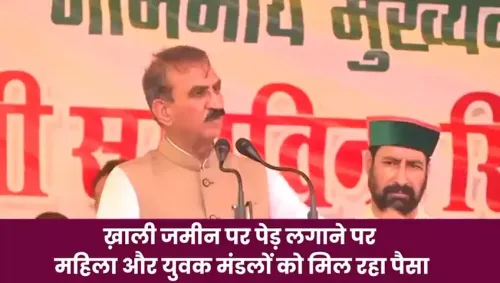
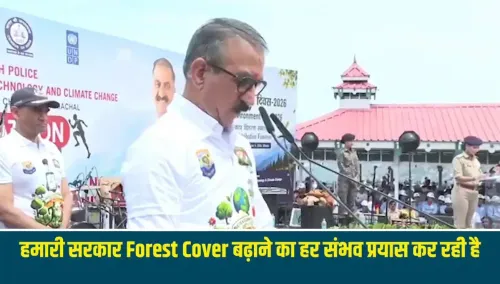
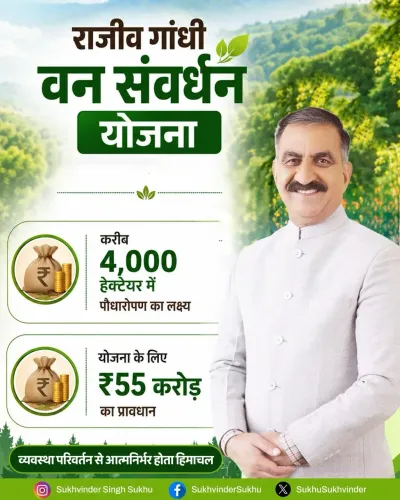
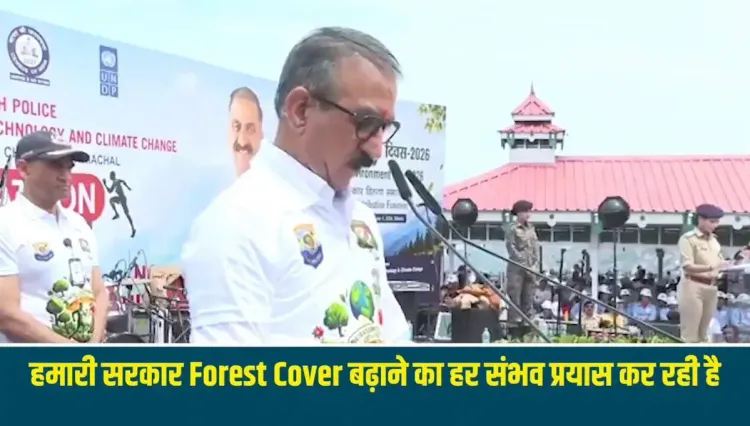
Himachal Pradesh Chief Minister Sukhvinder Singh Sukhu on Friday, June 5, 2026 — coinciding with World Environment Day — announced the launch of the Rajiv Gandhi Van Sanvardhan Yojana, a community-driven afforestation scheme that offers Rs 1,40,000 to local groups for planting saplings across one hectare of land in the state.
Context
Posting in Hindi on X, Chief Minister Sukhu declared: 'प्रदेश के जंगल हमारी जीवनरेखा हैं' ('The forests of the state are our lifeline'), adding that protecting and expanding them is 'a shared responsibility of all of us.' The announcement frames forest conservation not merely as a government obligation but as a civic compact between the state and its communities.
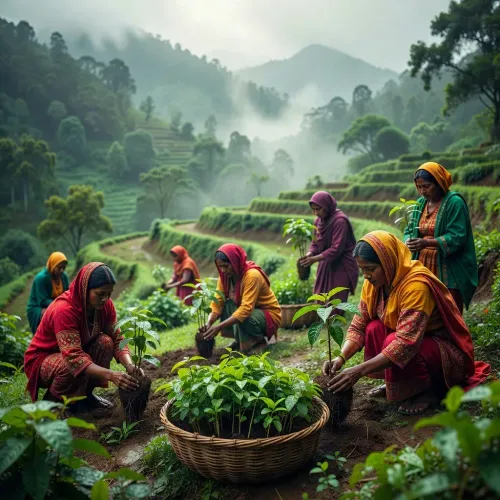
Under the scheme, Yuva Mandals (youth clubs), Mahila Mandals (women's associations), and women from Self-Help Groups (SHGs) who carry out plantation on one hectare of land will receive a financial incentive of Rs 1,40,000. The direct cash transfer model is designed to make afforestation economically rewarding for rural households.
Policy Backdrop
Himachal Pradesh has a long tradition of community forest stewardship. Since the 1990s, the state has operated Joint Forest Management (JFM) committees under the framework of the National Forest Policy, 1988, which brought village-level bodies into the governance of forest land. The new scheme builds on that lineage by attaching a direct monetary incentive to measurable plantation activity.
Himalayan states face acute climate pressures — including landslides, glacial retreat, and erratic monsoons — that make forest cover a critical buffer. National programmes such as CAMPA (Compensatory Afforestation Fund Management and Planning Authority) and the Green India Mission have channelled central funds to states for tree-cover expansion, and state-level schemes like this one complement those efforts. India's national target of bringing 33 per cent of its geographical area under forest and tree cover gives additional urgency to such initiatives.
Stakeholders and Impact
The scheme's design deliberately targets women-led institutions and youth groups, two segments that are both economically vulnerable and deeply embedded in village ecosystems. By routing the Rs 1,40,000 incentive through SHGs and Mahila Mandals, the government links livelihood support with ecological outcomes — a dual dividend that has found favour in development-policy circles.
Rural communities in Himachal Pradesh depend on forests for fodder, fuelwood, non-timber forest produce, and watershed services that sustain agriculture and drinking-water supplies. Expanding forest cover on degraded or marginal land can therefore strengthen household resilience alongside the state's broader environmental commitments. The inclusion of Yuva Mandals also signals an attempt to engage younger residents who might otherwise migrate to urban centres.
What's Next
The effectiveness of the Rajiv Gandhi Van Sanvardhan Yojana will hinge on the release of detailed implementation guidelines, transparent fund-disbursement timelines, and credible third-party monitoring of sapling survival rates — the metric that separates genuine afforestation from paper plantations. Observers will watch whether the state Forest Department has the field capacity to verify one-hectare plots across Himachal Pradesh's difficult terrain.
With the scheme announced on World Environment Day 2026, the Sukhu government has set a symbolic baseline. The coming months will test whether the financial incentive is sufficient to mobilise community groups at scale and whether the plantation targets translate into durable, measurable increases in the state's forest cover.
Point of View
Which is the architecture most likely to generate sustained community participation. Naming the scheme after Rajiv Gandhi on World Environment Day is also a deliberate piece of political messaging by the Congress-led Sukhu government, tying the party's legacy to ecological stewardship ahead of future electoral cycles. The Rs 1,40,000 per-hectare figure will face scrutiny — it needs to be high enough to cover labour and opportunity costs while remaining fiscally sustainable at scale. The broader test is institutional: whether the Himachal Pradesh Forest Department can administer verification and disbursement efficiently enough to build trust with the SHGs and Mandals whose participation the scheme depends on.
NationPress
20 Oct 2026
Frequently Asked Questions
What is the Rajiv Gandhi Van Sanvardhan Yojana in Himachal Pradesh?
The Rajiv Gandhi Van Sanvardhan Yojana is a state afforestation scheme launched by CM Sukhvinder Singh Sukhu that provides Rs 1,40,000 to Yuva Mandals, Mahila Mandals, and Self-Help Group women who carry out plantation on one hectare of land in Himachal Pradesh .
Who is eligible for the Rs 1,40,000 incentive under the scheme?
Eligible beneficiaries include members of Yuva Mandals (youth clubs), Mahila Mandals (women's associations), and women belonging to Self-Help Groups (SHGs) who undertake one-hectare plantation drives under the scheme.
When was the Rajiv Gandhi Van Sanvardhan Yojana announced?
CM Sukhu announced the scheme on June 5, 2026 , which is observed globally as World Environment Day .
How does this scheme connect to India's national forest targets?
India aims to bring 33 per cent of its geographical area under forest and tree cover. The scheme complements central programmes like CAMPA and the Green India Mission by mobilising community groups in Himachal Pradesh to expand local plantations.
What challenges could affect the scheme's success?
Key challenges include verifying plantation across Himachal Pradesh's difficult terrain, ensuring timely fund disbursement, and monitoring sapling survival rates to confirm that reported afforestation translates into durable forest cover.