CM Sukhu Launches Rs 55 Cr Afforestation Drive in Himachal
Synopsis
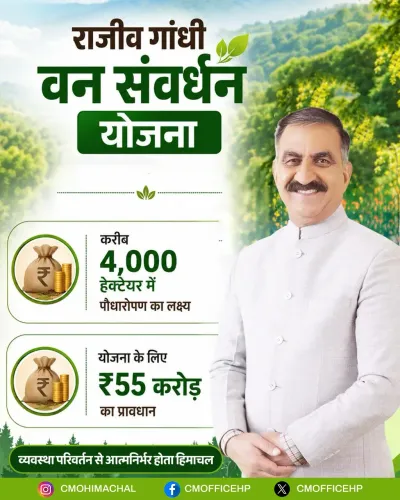
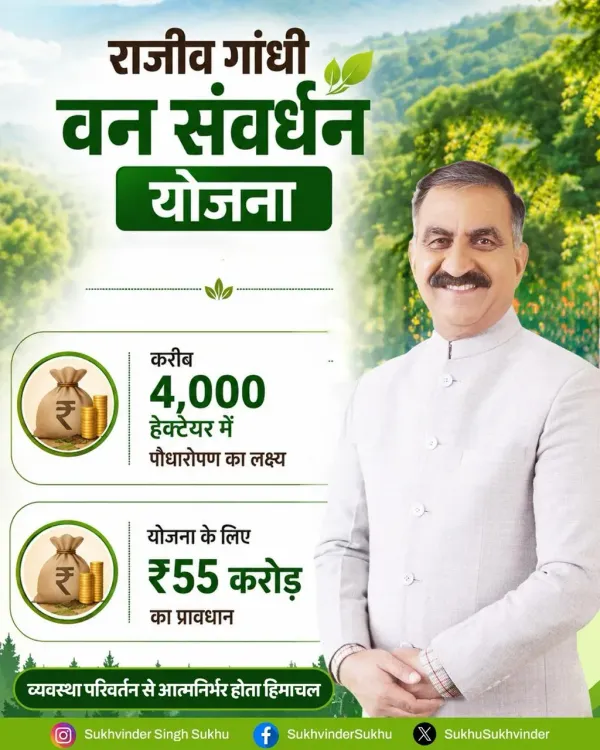
Chief Minister Sukhvinder Singh Sukhu has announced a Rs 55 crore plantation drive across 4,000 hectares under the Rajiv Gandhi Van Sanvardhan Yojana, aiming to bolster Himachal Pradesh's forest cover and secure a cleaner environment for future generations.
Key Takeaways
CM Sukhvinder Singh Sukhu announced the campaign on June 2, 2026 via X.
The drive targets approximately 4,000 hectares of land for plantation under the Rajiv Gandhi Van Sanvardhan Yojana .
The state government has earmarked Rs 55 crore for the initiative.
Himachal Pradesh already has over 60 percent recorded forest cover, one of the highest in India.
The campaign aligns with India's national target of 33 percent forest and tree cover and broader climate resilience goals.
The monsoon season of 2026 is expected to be the primary window for sapling planting and establishment.
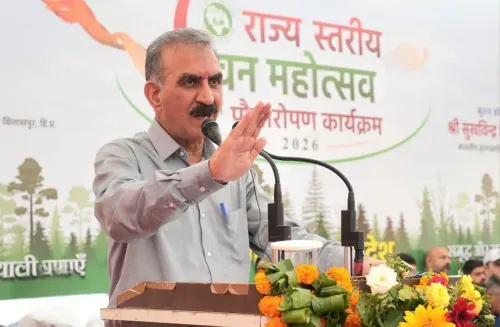
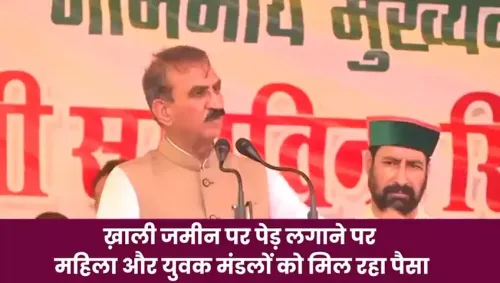
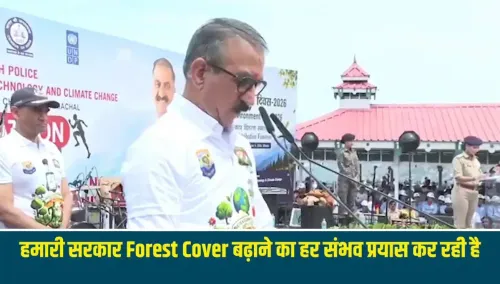
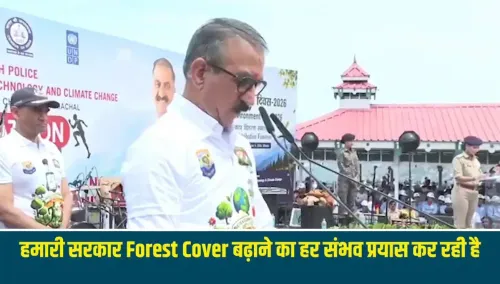
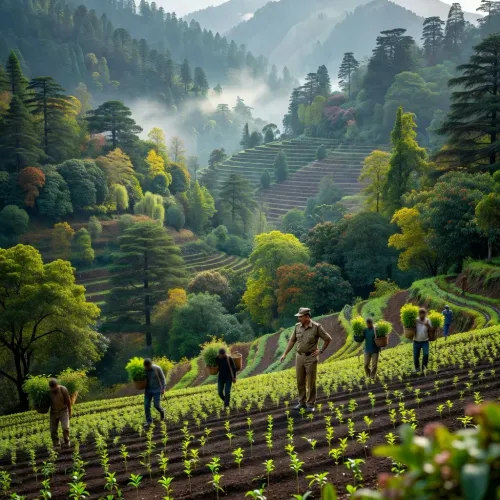
Himachal Pradesh Chief Minister Sukhvinder Singh Sukhu on Tuesday, June 2, 2026, announced a large-scale plantation campaign across approximately 4,000 hectares of land under the Rajiv Gandhi Van Sanvardhan Yojana, with a budgetary allocation of Rs 55 crore. The initiative aims to preserve and enhance the green cover, natural beauty, and ecological richness of the Himalayan state.
Context
Posting in Hindi on X, CM Sukhu described the campaign as central to his government's environmental vision: 'देवभूमि हिमाचल प्रदेश की हरियाली, प्राकृतिक सौंदर्य और पर्यावरणीय समृद्धि को संरक्षित करने के उद्देश्य से' — 'with the aim of preserving the greenery, natural beauty and environmental richness of Devbhoomi Himachal Pradesh.' He added that the effort is directed at making the valleys greener and providing future generations a clean, safe, and balanced environment.
Himachal Pradesh, often called Devbhoomi (Land of the Gods), already records over 60 percent forest cover — among the highest for any Indian state — yet faces mounting ecological pressure from climate-driven risks including glacial retreat, landslides, and biodiversity loss.
Policy Backdrop
The Rajiv Gandhi Van Sanvardhan Yojana is a state-level afforestation scheme named after former Prime Minister Rajiv Gandhi, continuing a tradition of welfare and development programmes bearing his name across several Congress-governed states. The scheme draws on the broader national afforestation framework established under the National Afforestation Programme, launched by the Government of India in 2000, which promotes regeneration of degraded forest lands through joint forest management.
Himachal Pradesh has maintained an annual Van Mahotsav plantation drive since the 1950s, making large-scale tree-planting a longstanding institutional practice in the state. The current campaign scales that tradition with dedicated state funding and a defined area target, aligned with India's national goal of achieving 33 percent forest and tree cover nationwide.
Stakeholders and Impact
The plantation drive is expected to directly benefit hill communities and forest-dependent households across Himachal Pradesh, who rely on stable forest ecosystems for water security, livelihood, and protection from natural hazards. Afforestation at this scale also contributes to carbon sequestration targets under India's commitments within the Forest Conservation Act framework.
Himalayan states have increasingly intensified such programmes as a response to climate-induced risks. A successful campaign covering 4,000 hectares would represent a meaningful addition to the state's green infrastructure, with downstream benefits for soil retention, groundwater recharge, and local biodiversity.
What's Next
The plantation campaign is expected to gain momentum during the 2026 monsoon season, the optimal window for sapling establishment in Himalayan terrain. Observers will track sapling survival rates and actual area coverage as key performance indicators for the scheme's effectiveness.
The Himachal Pradesh state forest department is likely to conduct mid-term reviews of fund utilisation and field progress, with outcomes informing future allocations under the Rajiv Gandhi Van Sanvardhan Yojana. The initiative also signals the Sukhu government's intent to position environmental stewardship as a core policy plank ahead of the state's political calendar.
Point of View
000-hectare target give the scheme measurable benchmarks, raising the stakes for delivery. Himalayan states are under growing pressure to demonstrate climate action beyond rhetoric, and a credible monsoon-season rollout could strengthen the Sukhu government's standing with both hill communities and urban voters attuned to environmental concerns. The scheme's success, however, will ultimately be judged by sapling survival rates and independent assessments of actual forest gain — metrics that past afforestation drives across India have often struggled to meet.
NationPress
21 Oct 2026
Frequently Asked Questions
What is the Rajiv Gandhi Van Sanvardhan Yojana in Himachal Pradesh?
The Rajiv Gandhi Van Sanvardhan Yojana is a state-level afforestation scheme in Himachal Pradesh aimed at expanding forest cover and restoring degraded land. The Sukhu government has allocated Rs 55 crore under this scheme for a plantation drive covering around 4,000 hectares.
How much has Himachal Pradesh allocated for its 2026 plantation campaign?
Himachal Pradesh has allocated Rs 55 crore for the plantation campaign announced by CM Sukhvinder Singh Sukhu on June 2, 2026, under the Rajiv Gandhi Van Sanvardhan Yojana.
How much forest cover does Himachal Pradesh have?
Himachal Pradesh has over 60 percent recorded forest cover, making it one of the most forested states in India. The new plantation drive aims to further increase this cover.
Why is afforestation important for Himalayan states like Himachal Pradesh?
Himalayan states face climate-induced risks such as glacial melt, landslides, and biodiversity loss. Afforestation helps stabilise soil, recharge groundwater, support local livelihoods, and contribute to India's carbon sequestration commitments.
When will the Himachal Pradesh plantation drive take place?
The plantation campaign is expected to be carried out primarily during the 2026 monsoon season, which provides optimal conditions for sapling establishment in Himalayan terrain.