HP CM Office Launches 4,000-Hectare Plantation Drive
Synopsis
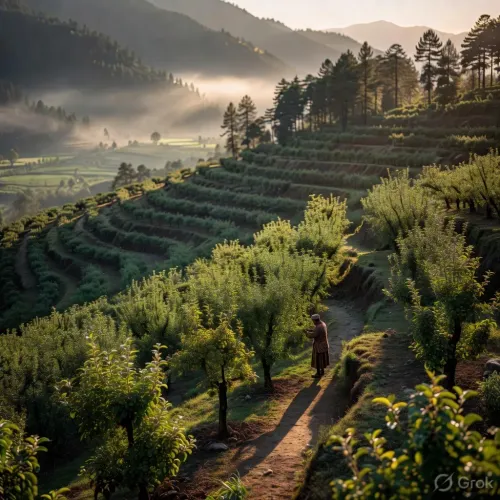
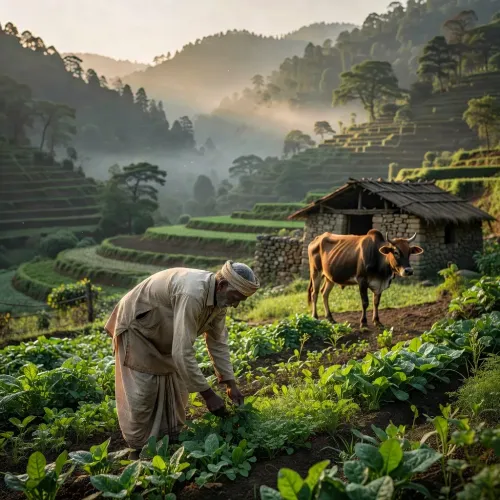
The Himachal Pradesh government has announced a large-scale plantation campaign covering approximately 4,000 hectares under the Rajiv Gandhi Van Sanvardhan Yojana. The drive aims to protect the Himalayan state's greenery, biodiversity, and natural heritage, with implementation expected during the upcoming monsoon planting season.
Key Takeaways
The Chief Minister's Office of Himachal Pradesh announced the campaign on 2 June 2026 .
The plantation drive will cover approximately 4,000 hectares of land.
The campaign operates under the Rajiv Gandhi Van Sanvardhan Yojana , a state afforestation scheme.
The stated goal is to preserve Himachal Pradesh's greenery, natural beauty, and environmental richness.
Key stakeholders include the state forest department , forest communities, and the tourism sector .
Implementation is expected during the monsoon planting season, with species survival rates a key metric to watch.
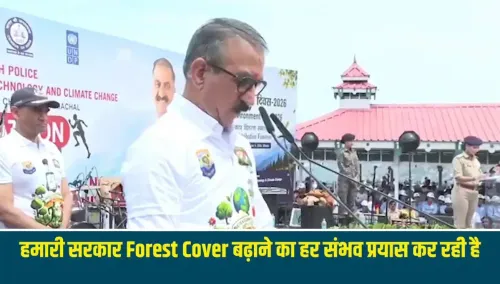
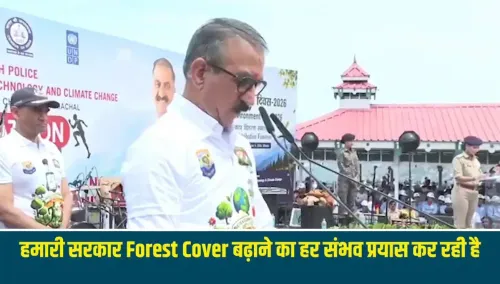
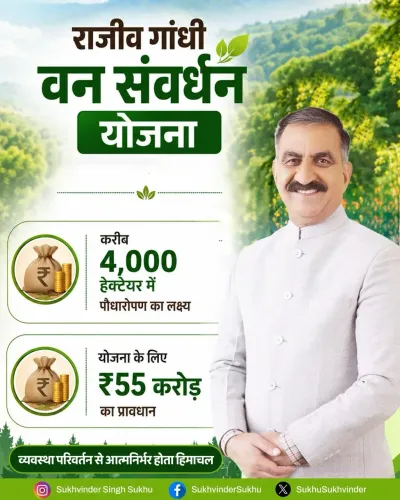
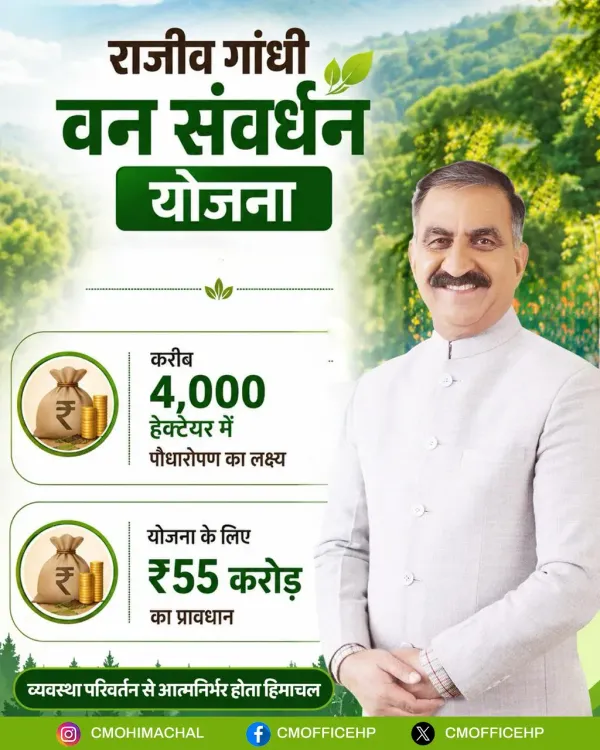
The Chief Minister's Office of Himachal Pradesh announced on Tuesday, 2 June 2026 that the state government will conduct a large-scale plantation campaign covering approximately 4,000 hectares under the Rajiv Gandhi Van Sanvardhan Yojana, aimed at preserving the greenery, natural beauty, and environmental richness of the hill state.
The post, shared in Hindi, states: 'देवभूमि हिमाचल प्रदेश की हरियाली, प्राकृतिक सौंदर्य और पर्यावरणीय समृद्धि को संरक्षित करने के उद्देश्य से हमारी सरकार राजीव गांधी वन संवर्धन योजना के अंतर्गत लगभग 4000 हेक्टेयर भूमि में व्यापक पौधरोपण अभियान चलाने जा रही है।' — translated: 'With the objective of preserving the greenery, natural beauty and environmental richness of Devbhoomi Himachal Pradesh, our government is going to run a comprehensive plantation campaign on approximately 4,000 hectares of land under the Rajiv Gandhi Van Sanvardhan Yojana.'
Context
Himachal Pradesh, often called Devbhoomi (Land of the Gods), is a Himalayan state whose economy and identity are closely tied to its forest cover, river systems, and biodiversity. The state's forests support livelihoods for forest-dependent communities, sustain a thriving eco-tourism sector, and serve as critical watersheds for rivers that flow into the plains. Himalayan states have faced growing pressure from climate change, soil erosion, and biodiversity loss, making afforestation a recurring policy priority.Policy Backdrop
India's National Forest Policy of 1988 set a benchmark of 33 percent forest and tree cover for the country, which has since guided state-level plantation programmes. The Rajiv Gandhi Van Sanvardhan Yojana is a Himachal Pradesh state scheme named after former Prime Minister Rajiv Gandhi, designed to expand and conserve forest cover through targeted plantation drives. Such state schemes often align with central missions such as the National Mission for a Green India, channelling resources toward species diversity, canopy restoration, and green corridor creation across degraded lands. Himalayan afforestation efforts carry particular significance because mountain forests regulate snowmelt, reduce landslide risk, and buffer downstream communities from flash floods — challenges that have intensified across the region in recent years.Stakeholders and Impact
The campaign is expected to engage the Himachal Pradesh Forest Department as the primary implementing agency, alongside local forest communities who often provide labour and local ecological knowledge for such drives. The tourism sector stands to benefit indirectly: denser forest cover enhances landscape appeal, supports wildlife corridors, and reduces the risk of erosion-related damage to roads and trekking routes that underpin the state's visitor economy. For residents in forest-fringe villages, plantation programmes can translate into non-timber forest produce, fodder availability, and employment under schemes linked to the Mahatma Gandhi National Rural Employment Guarantee Act. The 4,000-hectare scale of this drive signals a significant single-season commitment to land restoration.What's Next
The announcement sets the stage for on-ground mobilisation by the Himachal Pradesh Forest Department in the upcoming planting season, typically aligned with the monsoon months of July and August when soil moisture conditions favour seedling survival. Observers and policymakers will watch for progress reports detailing species composition, survival rates, and geographic spread of the plantations across the state's varied agro-climatic zones. Mid-term reviews by the forest department will be key to assessing whether the 4,000-hectare target translates into durable forest gain or remains a headline figure. The drive, if executed effectively, could reinforce Himachal Pradesh's standing as a model for climate-adaptive governance among Himalayan states.Point of View
000-hectare plantation drive under the Rajiv Gandhi Van Sanvardhan Yojana fits into a broader pattern of Himalayan state governments deploying afforestation as both an environmental and political signal — invoking a Congress-era legacy scheme while addressing present-day climate anxieties. For the ruling dispensation in Shimla, a visible green campaign ahead of the monsoon season serves dual purposes: it advances genuine ecological goals and reinforces the government's stewardship credentials with forest-dependent and tourism-reliant constituencies. The scale — 4,000 hectares in a single campaign — is ambitious by state standards, but the real test will be post-planting survival audits, which have historically been the weak link in India's afforestation programmes. If robust monitoring follows, this drive could set a credible benchmark for climate-adaptive governance in the western Himalayas.
NationPress
18 Oct 2026
Frequently Asked Questions
What is the Rajiv Gandhi Van Sanvardhan Yojana in Himachal Pradesh?
The Rajiv Gandhi Van Sanvardhan Yojana is a Himachal Pradesh state afforestation scheme named after former Prime Minister Rajiv Gandhi , focused on expanding and conserving forest cover through targeted plantation campaigns across the state.
How many hectares will be covered in the Himachal Pradesh plantation drive?
The Himachal Pradesh government has announced a plantation campaign covering approximately 4,000 hectares of land under the Rajiv Gandhi Van Sanvardhan Yojana.
Why is afforestation important for Himachal Pradesh?
Himachal Pradesh is a Himalayan state where forests regulate watersheds, reduce soil erosion and landslide risk, support biodiversity, and sustain the eco-tourism economy that many communities depend upon.
When will the HP plantation campaign take place?
While a precise start date was not specified in the announcement, plantation drives in Himachal Pradesh are typically conducted during the monsoon months of July and August , when soil conditions favour seedling survival.
Which government body will implement the Himachal Pradesh afforestation campaign?
The Himachal Pradesh Forest Department is the primary agency responsible for implementing the plantation drive, often working alongside local forest communities.