CM Sukhu: Rs 1.4 Lakh for Groups Planting on 1 Hectare
Synopsis
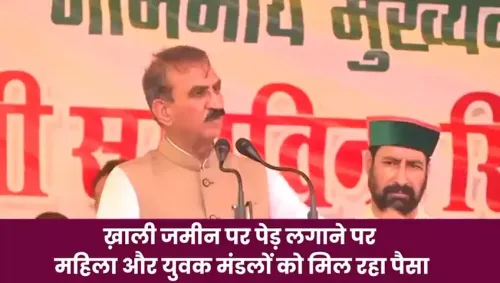
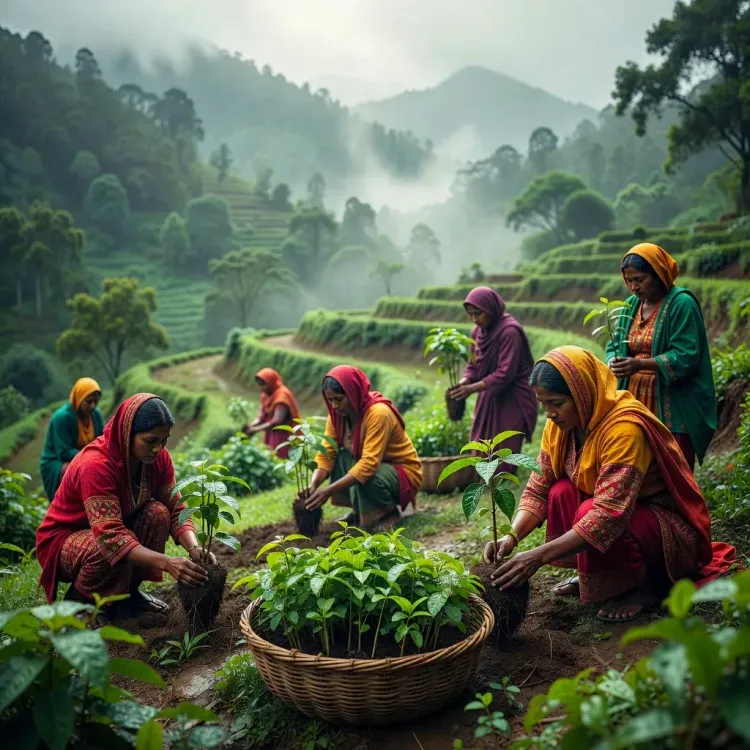
Chief Minister Sukhvinder Singh Sukhu announced on World Environment Day 2026 that Yuva Mandals, Mahila Mandals and Self-Help Groups in Himachal Pradesh will receive Rs 1,40,000 in financial assistance for planting saplings on one hectare of land, linking rural livelihoods directly to afforestation targets.
Key Takeaways
Rs 1,40,000 in financial assistance will be given to eligible groups for plantation on 1 hectare of land under the scheme.
Three categories of grassroots bodies are eligible: Yuva Mandals , Mahila Mandals , and Self-Help Groups (SHGs) .
The announcement was made by CM Thakur Sukhvinder Singh Sukhu on World Environment Day, June 5, 2026 .
Himachal Pradesh has over 27 percent forest cover and a history of community-based forest management dating to 1993 .
The scheme ties a direct cash payment to plantation performance, building on the National Afforestation Programme and Green India Mission frameworks.
The 2026 monsoon planting window is the critical period for scheme implementation and disbursement.
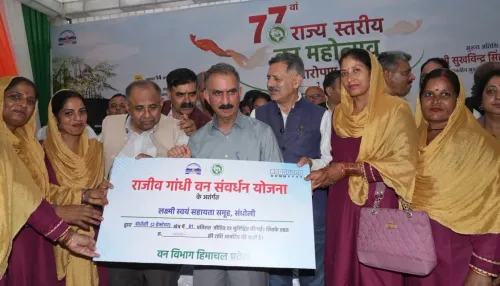
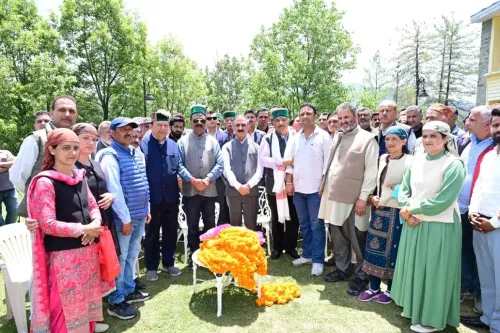
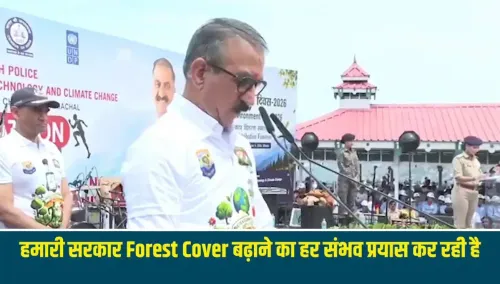
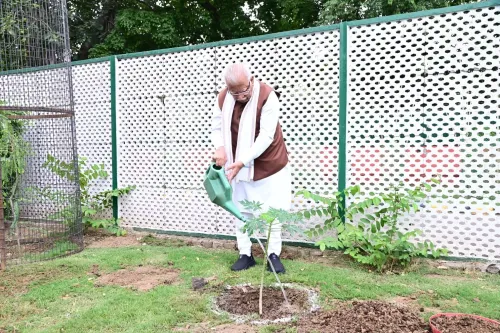
The Chief Minister's Office of Himachal Pradesh shared a statement from Chief Minister Thakur Sukhvinder Singh Sukhu on Friday, June 5, 2026 — World Environment Day — announcing a financial incentive of Rs 1,40,000 for village-level groups that undertake plantation on one hectare of land under a state scheme.
Context
In his statement, CM Sukhu said: 'Is yojana ke tahat yuva mandal, mahila mandal aur swayam sahayata samuh ki mahilaen 1 hectare bhoomi mein paudhaaropan karti hain, to unhe 1,40,000 rupaye ki aarthik sahayata pradan ki jayegi' — ('Under this scheme, if youth associations, women's associations, and women of self-help groups carry out plantation on 1 hectare of land, they will be provided financial assistance of Rs 1,40,000.')
The announcement targets three categories of grassroots institutions: Yuva Mandals (youth associations), Mahila Mandals (women's associations), and Self-Help Groups (SHGs) — all of which are registered village-level bodies with an established presence across Himachal Pradesh's rural landscape.
Policy Backdrop
Himachal Pradesh, which holds over 27 percent forest cover, has pursued afforestation and soil conservation as core environmental priorities for decades. The state adopted Joint Forest Management guidelines as far back as 1993, institutionalising community participation in forest protection and regeneration.
The state also participated in the National Afforestation Programme from 2000 onward, channelling funds to village forest committees for plantation on degraded lands. The current scheme extends that tradition by attaching a direct, performance-linked cash payment to community groups — particularly women-led collectives — rather than routing funds through forest department intermediaries.
This approach aligns with India's broader Green India Mission commitment to expand forest and tree cover while simultaneously generating rural livelihoods. Himalayan states have increasingly adopted such cash-incentive models to meet both ecological targets and income-support goals for rural households.
Stakeholders and Impact
Self-Help Groups, promoted under the National Rural Livelihoods Mission since 2011, are the primary institutional vehicle for women's economic empowerment in rural Himachal Pradesh. Linking plantation work to a direct payout of Rs 1,40,000 per hectare gives these groups a concrete livelihood incentive alongside the environmental objective.
Mahila Mandals and Yuva Mandals have historically been active in social mobilisation and local development in the state's villages. Their inclusion broadens the scheme's reach beyond SHGs and brings in youth participation, which is critical for sustained maintenance of newly planted saplings over multiple seasons.
Rural women stand to benefit most directly, given the explicit mention of women members of SHGs in the announcement. The scheme effectively monetises environmental stewardship at the village level, turning afforestation into a paid community activity rather than a voluntary one.
What's Next
The announcement coincides with the onset of the 2026 monsoon planting window, the primary season for afforestation work across Himalayan terrain. Timely disbursement of the Rs 1,40,000 assistance to eligible groups will be critical to mobilising community participation before the planting season peaks.
Independent assessment of sapling survival rates in subsequent years will determine whether the performance-linked payment model delivers durable ecological gains or merely incentivises initial planting without ensuring long-term tree cover. Himachal Pradesh's experience could serve as a template for other hill states seeking to integrate livelihood payments with afforestation mandates under India's climate commitments.
Point of View
Incentive-linked programmes. By routing the Rs 1,40,000 payment directly to SHGs and mandals rather than through forest department budgets, the Sukhu government is betting that financial ownership will improve both participation rates and sapling survival. The timing on World Environment Day is politically astute, reinforcing the administration's green credentials ahead of a monsoon season when afforestation optics matter. If the disbursement mechanism proves efficient, the model could attract attention from other Himalayan states grappling with the twin imperatives of ecological restoration and rural income support.
NationPress
22 Sept 2026
Frequently Asked Questions
How much money will SHGs get for plantation under the Himachal Pradesh scheme?
Under the scheme, Self-Help Groups, Mahila Mandals, and Yuva Mandals will receive Rs 1,40,000 in financial assistance if they carry out plantation on 1 hectare of land.
Who is eligible for the Rs 1.4 lakh plantation scheme in Himachal Pradesh?
Yuva Mandals (youth associations), Mahila Mandals (women's associations), and women members of Self-Help Groups (SHGs) registered in Himachal Pradesh are eligible to apply.
When did CM Sukhu announce the plantation financial assistance scheme?
Chief Minister Thakur Sukhvinder Singh Sukhu made the announcement on June 5, 2026 , which is observed as World Environment Day .
What is the Green India Mission and how does this scheme relate to it?
The Green India Mission is a national programme aimed at expanding India's forest and tree cover while generating rural livelihoods. The Himachal scheme directly supports that goal by paying village-level groups to undertake afforestation on degraded or eligible land.
What is the history of community forest management in Himachal Pradesh?
Himachal Pradesh adopted Joint Forest Management guidelines in 1993 and participated in the National Afforestation Programme from 2000 , building a long tradition of community involvement in forest protection and plantation work.