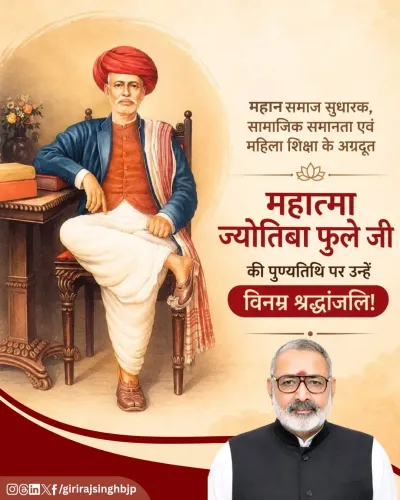
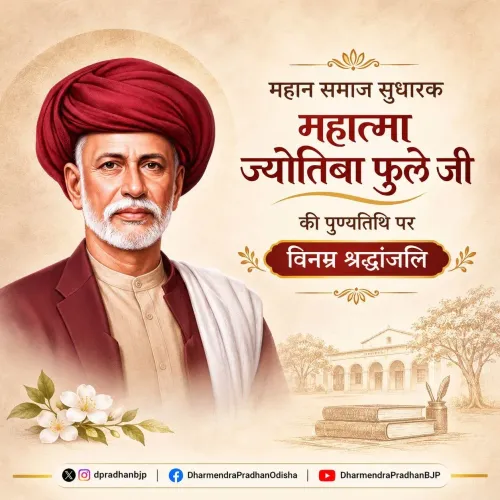
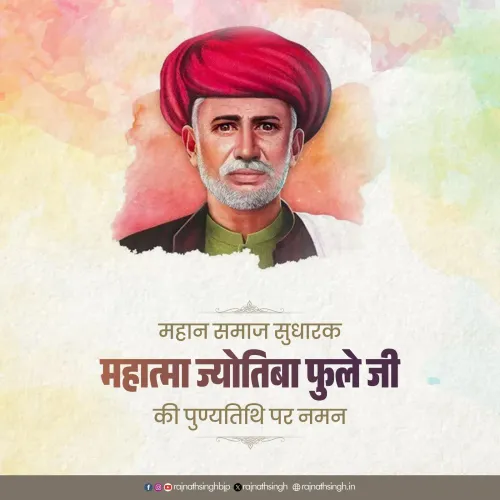
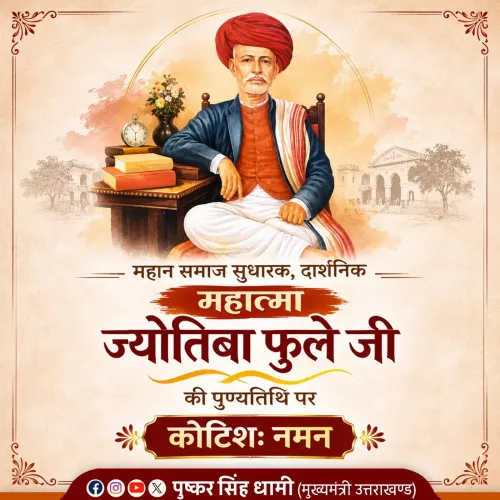
Culture Minister Shekhawat pays tribute to Jyotiba Phule
Synopsis
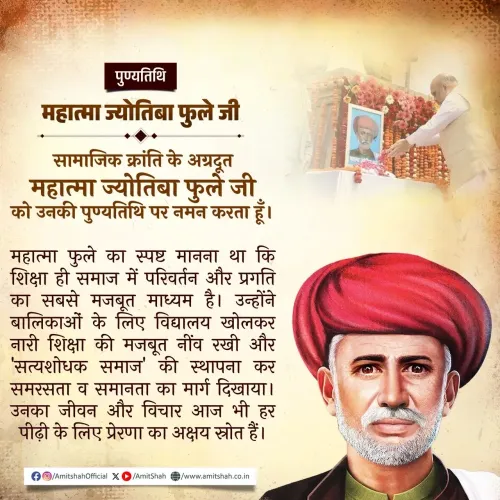
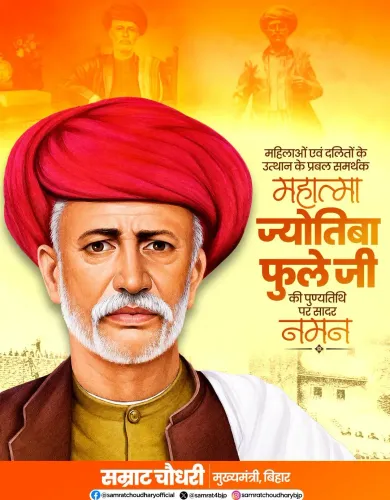
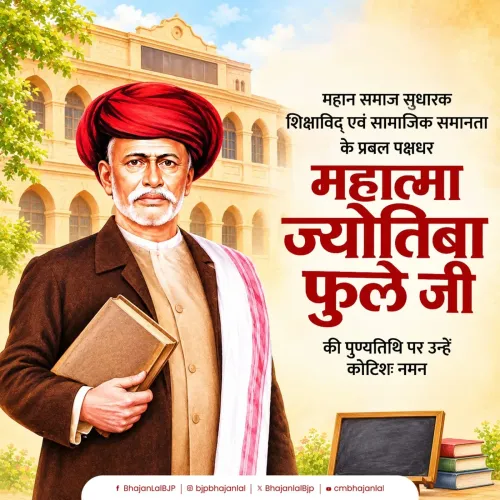
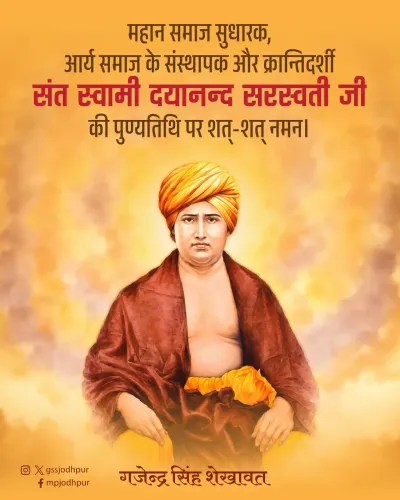
Culture Minister Gajendra Singh Shekhawat offered a hundredfold salute to Mahatma Jyotiba Phule on the reformer's death anniversary, honouring the Satyashodhak Samaj founder whose anti-caste and education campaigns still mark 28 November.
Key Takeaways
Union Culture and Tourism Minister Gajendra Singh Shekhawat paid homage to Mahatma Jyotiba Phule on the reformer's punyatithi.
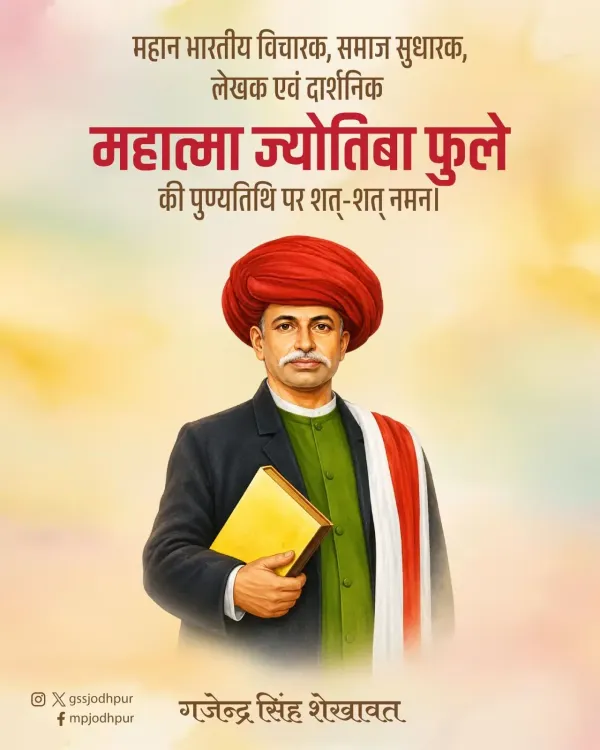
The X post on 28 November called Phule a great Indian thinker, social reformer, writer and philosopher.
Phule founded the Satyashodhak Samaj and campaigned against caste discrimination and for women's education.
Ministers across parties routinely mark this date as official recognition of 19th-century social reformers.
Bahujan communities regard Phule as a central figure in anti-caste thought.
A hundredfold salute from Union Culture and Tourism Minister Gajendra Singh Shekhawat landed on Saturday for Mahatma Jyotiba Phule, the 19th-century social reformer whose punyatithi falls on 28 November. The homage named a thinker, writer and philosopher who fought caste discrimination and pressed the case for women's education — a memory Indian public life still cannot treat as closed.
In a post on X, Shekhawat wrote: महान भारतीय विचारक, समाज सुधारक, लेखक एवं दार्शनिक महात्मा ज्योतिबा फुले की पुण्यतिथि पर शत-शत नमन। In English: hundreds of salutations on the punyatithi of the great Indian thinker, social reformer, writer and philosopher Mahatma Jyotiba Phule.
The Satyashodhak who challenged caste
Jyotiba Phule founded the Satyashodhak Samaj and turned caste from a custom into a public argument. He wrote, organised and campaigned so that education — especially for women — would not remain a privilege of the few. That is why his death anniversary still pulls ministers, movements and Bahujan communities onto the same date every year.
Indian ministers from major parties routinely issue tributes on the death anniversaries of 19th-century social reformers. The pattern is official recognition for anti-caste and education-reform figures, and it returns, with clockwork regularity, on Phule's punyatithi.
November 28 on the official calendar
For Bahujan communities, Phule is not a ceremonial footnote. He is an intellectual ancestor whose name still organises claims to dignity, schooling and equality. A Culture Minister's naman folds that legacy into the state's calendar of remembrance rather than leaving it only to community observances.
The post is a salute, not a scheme. What to watch is whether the Culture Ministry follows such anniversaries with actual memorials or programmes in the year ahead. Phule's name still does heavier work than any single message.
Point of View
The message is remembrance and also an assertion that Satyashodhak memory belongs in the official canon, not only in Bahujan political vocabulary. Parties across the spectrum copy that move because Phule's name still travels farther than any one organisation can own. The real test is whether homage on 28 November is matched by culture policy that treats caste and girls' education as living questions.
NationPress
28 Nov 2026
Frequently Asked Questions
When is Mahatma Jyotiba Phule's death anniversary?
Mahatma Jyotiba Phule's punyatithi, or death anniversary, is observed on 28 November. Indian public figures regularly issue tributes on this date each year.
Who was Mahatma Jyotiba Phule?
Mahatma Jyotiba Phule was a 19th-century Indian social reformer, thinker and writer. He founded the Satyashodhak Samaj and campaigned against caste discrimination and for women's education.
What did Gajendra Singh Shekhawat say on Phule's punyatithi?
Union Culture and Tourism Minister Gajendra Singh Shekhawat offered shat-shat naman, or hundreds of salutations, to Mahatma Jyotiba Phule. He described Phule as a great Indian thinker, social reformer, writer and philosopher.
What is the Satyashodhak Samaj?
The Satyashodhak Samaj is the truth-seekers' society founded by Jyotiba Phule in the 19th century. It organised anti-caste and social-equality work and remains central to how Phule is remembered among Bahujan communities.
Why do Union ministers tribute Jyotiba Phule?
Indian ministers from major parties routinely issue public tributes on the death anniversaries of 19th-century social reformers. The statements form a recurring pattern of official recognition for anti-caste and education-reform figures, especially on 28 November.