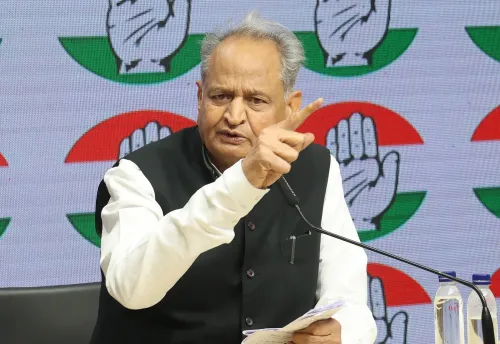
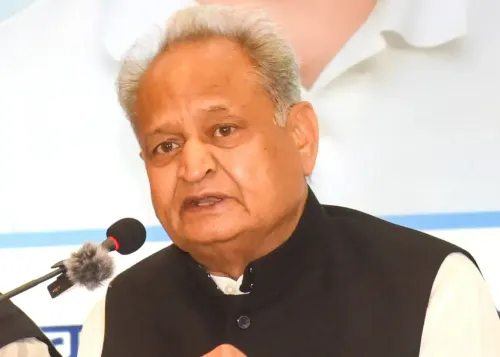
Caste census process deeply flawed, Centre must fix it now: Gehlot
Synopsis
Ashok Gehlot says the caste census is being deliberately sabotaged — not by accident. His sharpest charge: the open-ended self-reporting format and the exclusion of OBC as a category could shatter usable data into thousands of fragments, making the exercise politically safe for the government but socially meaningless.
Key Takeaways
Ashok Gehlot on 25 August called the ongoing caste census process 'completely flawed' and questioned the Centre's intentions.
The government's 'open-ended question' format records castes exactly as self-reported, risking fragmentation of a single caste into thousands of entries.
The term Other Backward Classes (OBCs) has not been included in the census framework, making accurate OBC population counts impossible, according to Gehlot.
Congress President Mallikarjun Kharge and LoP Rahul Gandhi have written to PM Modi demanding a pre-prepared comprehensive caste list.
Gehlot cited the Telangana 2024 and Bihar 2022 caste surveys as models that used structured lists for more reliable data.
He demanded the Centre immediately withdraw the current process and redesign the questionnaire through multi-stakeholder consultations.
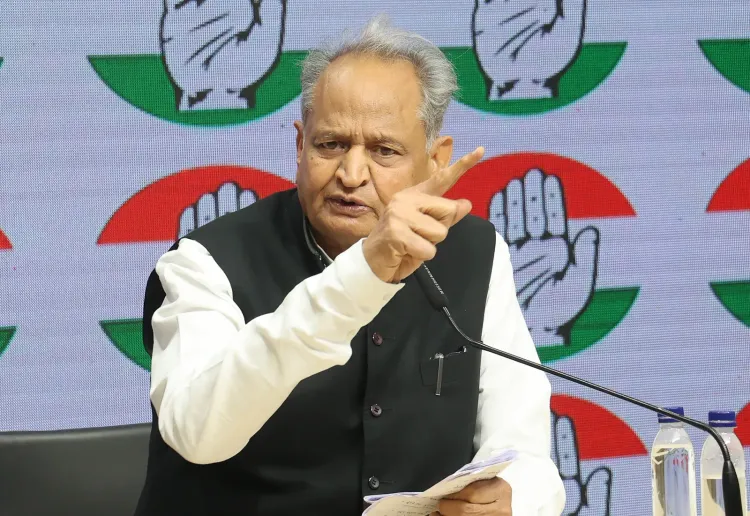
Former Rajasthan Chief Minister Ashok Gehlot on 25 August launched a sharp attack on the Central Government, calling the ongoing caste census process 'completely flawed' and questioning the intentions behind its design. Gehlot argued that the confusion being created around the exercise is not accidental but a deliberate strategy to undermine the census's core objective and prevent accurate social data from emerging.
The Open-Ended Question Problem
At the heart of Gehlot's criticism is the government's decision to adopt an 'open-ended question' format, under which each respondent's caste is recorded exactly as they self-report it. Given that the same caste is known by different names, sub-castes, and linguistic variations across India's regions, this approach risks fragmenting a single community into thousands of distinct entries — rendering the final dataset unreliable and, critics argue, practically unusable for policy purposes.
Notably, the term Other Backward Classes (OBCs) has not been included in the census framework at all, according to Gehlot. This omission, he warned, would make it impossible to accurately determine the population of Backward Classes — the very communities the exercise was meant to count.
Congress Writes to PM Modi
Gehlot said Congress President Mallikarjun Kharge and Leader of Opposition in the Lok Sabha, Rahul Gandhi, have written to Prime Minister Narendra Modi demanding that a comprehensive, pre-prepared list of castes be used as the basis for data collection. He pointed to precedent: both the Telangana caste survey of 2024 and the Bihar caste survey of 2022 employed structured caste lists rather than open-ended self-reporting — an approach that produced far more usable data.
What Gehlot Is Demanding
The former chief minister demanded that the Centre immediately withdraw the current questionnaire and formulate a revised one through consultations with political parties, domain experts, and the public. He argued that a caste census can only fulfil its mandate if it generates accurate, meaningful data that reflects the country's social realities.
Such data, Gehlot stressed, is essential for framing effective policies on social justice, equitable representation, and the welfare of disadvantaged communities — goals that would be defeated if the data itself is fragmented and contested.
The Broader Political Context
This comes amid mounting pressure on the Bharatiya Janata Party (BJP)-led Centre from Opposition parties over the design of the national caste census, which was announced to widespread initial approval. The BJP government's methodology choices have since become a flashpoint, with critics arguing that procedural decisions — particularly the exclusion of OBC as a category and the open-ended format — could effectively dilute the political and policy impact of the exercise. The Congress's direct letter to PM Modi signals an escalation from criticism to formal accountability demand.
Point of View
Because OBC population share is precisely the number that Opposition parties want on record. Whether the flaws are deliberate or administrative is contested, but the effect is the same: a census that cannot produce a clean OBC count will struggle to anchor the reservation-expansion arguments that drove the demand for it in the first place. The Bihar and Telangana precedents Gehlot cites are instructive — both used pre-coded lists and still faced methodological criticism. The Centre has yet to offer a public defence of its format choice, which itself is a political signal.
NationPress
25 Aug 2026
Frequently Asked Questions
What is Ashok Gehlot's objection to the caste census process?
Gehlot argues the caste census is using an open-ended self-reporting format that records each person's caste exactly as stated, which could split a single caste into thousands of name variants and make the data unreliable. He also flags that OBC has not been included as a category, preventing an accurate count of Backward Classes.
Why does the open-ended format matter for the caste census?
In India, the same caste is known by different names, sub-castes, and regional linguistic variations. Without a standardised pre-prepared list, self-reported entries could fragment one community into thousands of distinct labels, making the dataset practically unusable for policy decisions on reservations and social welfare.
What have Congress leaders demanded from PM Modi?
Congress President Mallikarjun Kharge and Lok Sabha Leader of Opposition Rahul Gandhi have written to Prime Minister Narendra Modi demanding that a comprehensive list of castes be prepared in advance before data collection, similar to the approach used in the Telangana 2024 and Bihar 2022 caste surveys.
How do the Bihar and Telangana caste surveys differ from the current national approach?
Both the Bihar caste survey of 2022 and the Telangana caste survey of 2024 used structured, pre-coded caste lists rather than open-ended self-reporting. Gehlot has cited these as models that produced more usable and verifiable data compared to the methodology currently being followed nationally.
What is Gehlot demanding the Centre do immediately?
Gehlot has demanded that the Central Government withdraw the current flawed questionnaire immediately and formulate a new one through consultations with political parties, subject experts, and the public, to ensure the census produces accurate data capable of informing social justice policy.