ISI builds unified terror command linking J&K, Punjab groups: NIA probe
Synopsis
India's NIA has uncovered what officials call a structural overhaul of Pakistan's terror proxy network — the ISI has merged Islamist outfits targeting J&K and Khalistan groups targeting Punjab under one command, with two named ISI officers at the top. The shift eliminates coordination gaps, complicates Indian attribution, and comes with a major digital radicalisation push via Telegram bots.
Key Takeaways
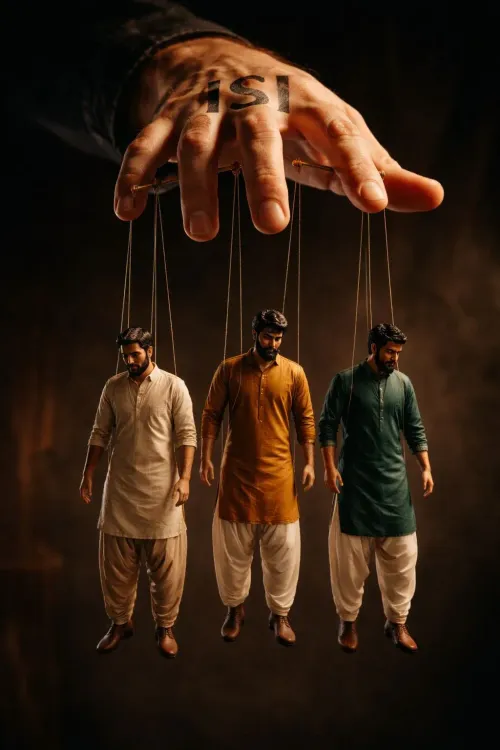
The ISI has established a unified operating command in Pakistan coordinating terror groups active in Jammu and Kashmir and Punjab , according to an NIA probe into the Pahalgam terror attack .
Outfits brought under the unified command include Lashkar-e-Tayiba , Jaish-e-Mohammad , Hizbul Mujahideen , Babbar Khalsa International (BKI) , and Khalistan Zindabad Force (KZF) .
The ISI — not individual outfit commanders — is directly issuing operational instructions to all constituent groups.
At infiltration points, terrorists from multiple outfits are now reportedly entering India in joint groups, replacing the earlier practice of separate cadre infiltration.
Operatives are using Telegram bots and automated channels to spread radical content, bomb-making manuals, and attack instructions targeting audiences in J&K and Punjab.
Two senior ISI officials — Brigadier Iqbal and Colonel Owaiz — reportedly head the unified command, with all groups reporting to them.
Pakistan's Inter-Services Intelligence (ISI) has established a unified operating command that coordinates the activities of terror outfits active in both Jammu and Kashmir and Punjab, according to findings from an ongoing probe by the National Investigation Agency (NIA). The development, which surfaced during the NIA's investigation into the Pahalgam terror attack, signals a significant structural shift in how Pakistan-backed terror networks are being managed and deployed against India.
What the Unified Command Covers
According to officials, the ISI has brought Lashkar-e-Tayiba (LeT), Jaish-e-Mohammad (JeM), and Hizbul Mujahideen — the principal Islamist terror outfits targeting Jammu and Kashmir — under a single command centre based in Pakistan. Alongside these, Khalistan-focused groups including Babbar Khalsa International (BKI), Khalistan Zindabad Force (KZF), and affiliated outfits have reportedly been directed to operate as a unified bloc, with the ISI issuing that instruction approximately four months ago.
The command also encompasses The Resistance Front (TRF), widely regarded as a proxy of Lashkar-e-Tayiba. Critically, the ISI — rather than individual outfit commanders — is directly overseeing operations and issuing instructions to all constituent groups, officials said.
How the Structure Works on the Ground
Despite the shared command, geographic specialisation reportedly remains intact. An official clarified that a BKI operative would not be deployed in Jammu and Kashmir, nor would LeT or JeM cadres operate in Punjab. However, the unified command eliminates coordination gaps and, according to officials, is deliberately designed to complicate India's counter-terror attribution — making it harder for investigators to quickly identify which specific outfit is behind a given operation.
Notably, at infiltration points along the border, terrorists from all three Islamist outfits are now reportedly forming joint groups and attempting to enter India together — a departure from the earlier practice where each outfit infiltrated separately with its own cadres under distinct command structures.
The Digital Radicalisation Push
The NIA probe found that the unified command has placed a heavy emphasis on online activity. Operatives linked to these groups have created multiple social media accounts targeting audiences in Jammu and Kashmir and Punjab. Beyond propaganda, the NIA found that these operatives were using Telegram bots and automated channels to disseminate radical content, bomb-making manuals, and instructions on attacking Indian targets — extending the command's reach well beyond physical infiltration.
Post-Operation Sindoor Strategy
An Intelligence Bureau (IB) official said this unified approach has been the ISI's dominant strategy following Operation Sindoor. The ISI's decision to consolidate disparate terror networks under one roof is seen as a direct response to the pressure its proxy infrastructure came under. Officials described the development as dangerous, noting that a unified command eliminates miscommunication risks, strengthens inter-group coordination, and multiplies the effective reach of each constituent outfit.
Two senior ISI officials, identified by investigators as Brigadier Iqbal and Colonel Owaiz, are reportedly at the apex of this unified command, with all constituent groups reporting to them, according to officials.
What Indian Agencies Are Watching
The NIA and IB are now tracking the online infrastructure built by the unified command, with particular attention to Telegram-based channels used for recruitment and radicalisation of youth. Officials indicated that the bigger near-term threat is less about cross-border infiltration and more about remotely directed lone-wolf or small-cell attacks, enabled by the command's digital outreach. The investigation into the Pahalgam attack is ongoing, and further details are expected to emerge as the probe advances.
Point of View
Deniable, and harder to interdict. India's counter-terror framework, built largely around border management and outfit-specific tracking, may need a fundamental rethink if the threat is now a unified, ISI-directed network with no clear organisational seams to exploit.
NationPress
25 Aug 2026
Frequently Asked Questions
What is the ISI's unified terror command uncovered by the NIA?
It is a centralised operating structure established by Pakistan's Inter-Services Intelligence (ISI) in Pakistan that coordinates the activities of terror outfits targeting both Jammu and Kashmir and Punjab. The NIA discovered it during its investigation into the Pahalgam terror attack, finding that groups including Lashkar-e-Tayiba, Jaish-e-Mohammad, Hizbul Mujahideen, Babbar Khalsa International, and Khalistan Zindabad Force are all receiving instructions from this single command.
Which terror groups are part of the ISI's unified command?
The unified command brings together Lashkar-e-Tayiba (LeT), Jaish-e-Mohammad (JeM), and Hizbul Mujahideen — the main Islamist outfits targeting J&K — along with Khalistan-focused groups including Babbar Khalsa International (BKI) and Khalistan Zindabad Force (KZF). The Resistance Front (TRF), a proxy of LeT, is also part of the structure.
Who leads the ISI's unified terror command?
According to officials cited in reports, two senior ISI officers identified as Brigadier Iqbal and Colonel Owaiz are at the apex of the unified command, with all constituent terror groups reportedly reporting to them.
How does the unified command change the terror threat to India?
The unified command eliminates coordination gaps between previously separate outfits, making operations more effective and complicating India's attribution efforts — it becomes harder for investigators to quickly identify which specific group is behind an attack. It also enables a coordinated digital push using Telegram bots to spread radical content, bomb-making manuals, and attack instructions targeting youth in J&K and Punjab.
What is the connection between this development and Operation Sindoor?
An Intelligence Bureau official stated that the ISI's strategy of consolidating terror networks under a unified command has been its dominant approach following Operation Sindoor. The move is seen as the ISI's structural response to the pressure its proxy terror infrastructure faced in the aftermath of that operation.