Has Customs Duty on Imported Personal Goods Been Halved to 10 Percent?

Synopsis
The Union Budget 2026-27 introduces a significant cut in customs duty for personal imports, from 20% to 10%. This move aims to simplify tariff structures, support local manufacturing, and enhance export competitiveness, while also providing relief for patients needing essential medicines. Explore how these changes can impact your imports and exports.
Key Takeaways
Customs duty reduced for personal imports from 20% to 10%.
Exemption on 17 essential medicines for cancer patients.
Increased duty-free allowances for international travelers.
Extended duty deferral period for Tier 2 and Tier 3 AEOs from 15 to 30 days.
Validity of advance rulings extended from 3 years to 5 years.
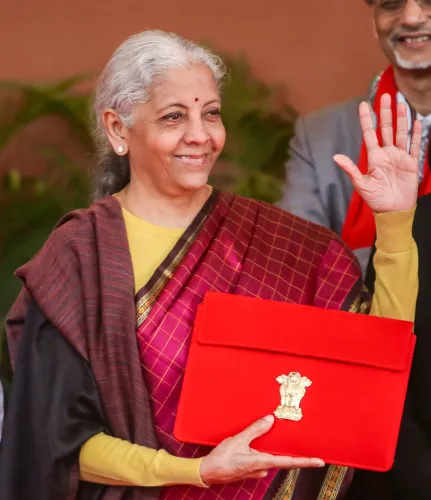
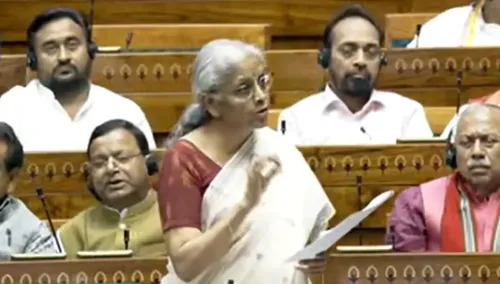
In New Delhi on February 1, Finance Minister Nirmala Sitharaman unveiled the Union Budget for 2026-27 during a session in Parliament. The budget aims to streamline the customs and central excise regulations to enhance the tariff framework, bolster domestic production, increase export competitiveness, and rectify duty inversion.
The new budget proposes slashing the customs duty on all taxable goods brought in for personal use from 20 percent down to 10 percent, thereby rationalizing the customs duty structure.
To assist patients, especially those battling cancer, the budget includes a proposal to waive basic customs duty on 17 essential medications. Additionally, it aims to expand the list by adding 7 more rare diseases for which import duties will be exempted on personal imports of drugs, medicines, and Food for Special Medical Purposes (FSMP) used in their treatment.
The Union Budget also outlines revisions to the baggage clearance regulations for international travelers to address legitimate passenger concerns. The updated guidelines will increase duty-free allowances and clarify the temporary transport of items brought in or taken out. Furthermore, honest taxpayers will have the opportunity to settle their dues by paying a nominal additional amount in place of a penalty, as mentioned by the Finance Minister.
Several measures in the budget aim to ensure minimal intervention in customs processes, facilitating smoother and quicker movement of goods, along with greater certainty for trade.
Among the proposals is the extension of the duty deferral period for Tier 2 and Tier 3 Authorised Economic Operators (AEOs) from 15 days to 30 days. The budget also aims to extend this duty deferral option to qualifying manufacturer-importers, encouraging them to gain accreditation as a full-fledged Tier 3 AEO over time.
Moreover, the Union Budget proposes to increase the validity period of advance rulings binding on Customs from the current 3 years to 5 years. Government agencies will be encouraged to make use of AEO accreditation for preferential treatment in cargo clearance.
Regular importers with dependable, long-standing supply chains will be acknowledged in the risk management system, minimizing the need for cargo verification on each occasion.
Export cargo will benefit from electronic sealing, allowing clearance from factory premises to the ship, as noted in the Budget. For imports of goods that do not require compliance, the bill of entry will automatically notify Customs for completing clearance formalities when goods arrive, as stated by the Finance Minister.
Sitharaman also disclosed plans to revamp the Customs warehousing framework into a system centered around warehouse operators, incorporating self-declarations, electronic tracking, and risk-based audits. These reforms will transition away from the current officer-dependent approval system, thereby reducing transaction delays and compliance costs.
Point of View
The proposed changes in customs duties reflect a progressive approach towards enhancing economic resilience and competitiveness. By simplifying the tariff structure and extending support to both consumers and manufacturers, the government is not only addressing immediate concerns but also laying a foundation for sustainable growth. As we navigate through these reforms, it's crucial to monitor their real-world impacts and ensure they benefit all stakeholders involved.
NationPress
17 Oct 2026
Frequently Asked Questions
What is the new customs duty rate for personal imports?
The new customs duty rate for personal imports has been reduced from 20% to 10%.
Which medicines are exempt from customs duty?
The budget proposes to exempt basic customs duty on 17 essential medicines, particularly for cancer patients, and aims to include 7 more rare diseases.
How will baggage clearance procedures change?
The revised baggage clearance procedures will enhance duty-free allowances and clarify the temporary transport of goods, addressing passenger concerns.
What is an Authorised Economic Operator (AEO)?
An Authorised Economic Operator (AEO) is a trusted trader recognized by customs authorities, eligible for various benefits including duty deferral.
How long will advance rulings be valid under the new budget?
The validity period for advance rulings binding on Customs will be extended from 3 years to 5 years.